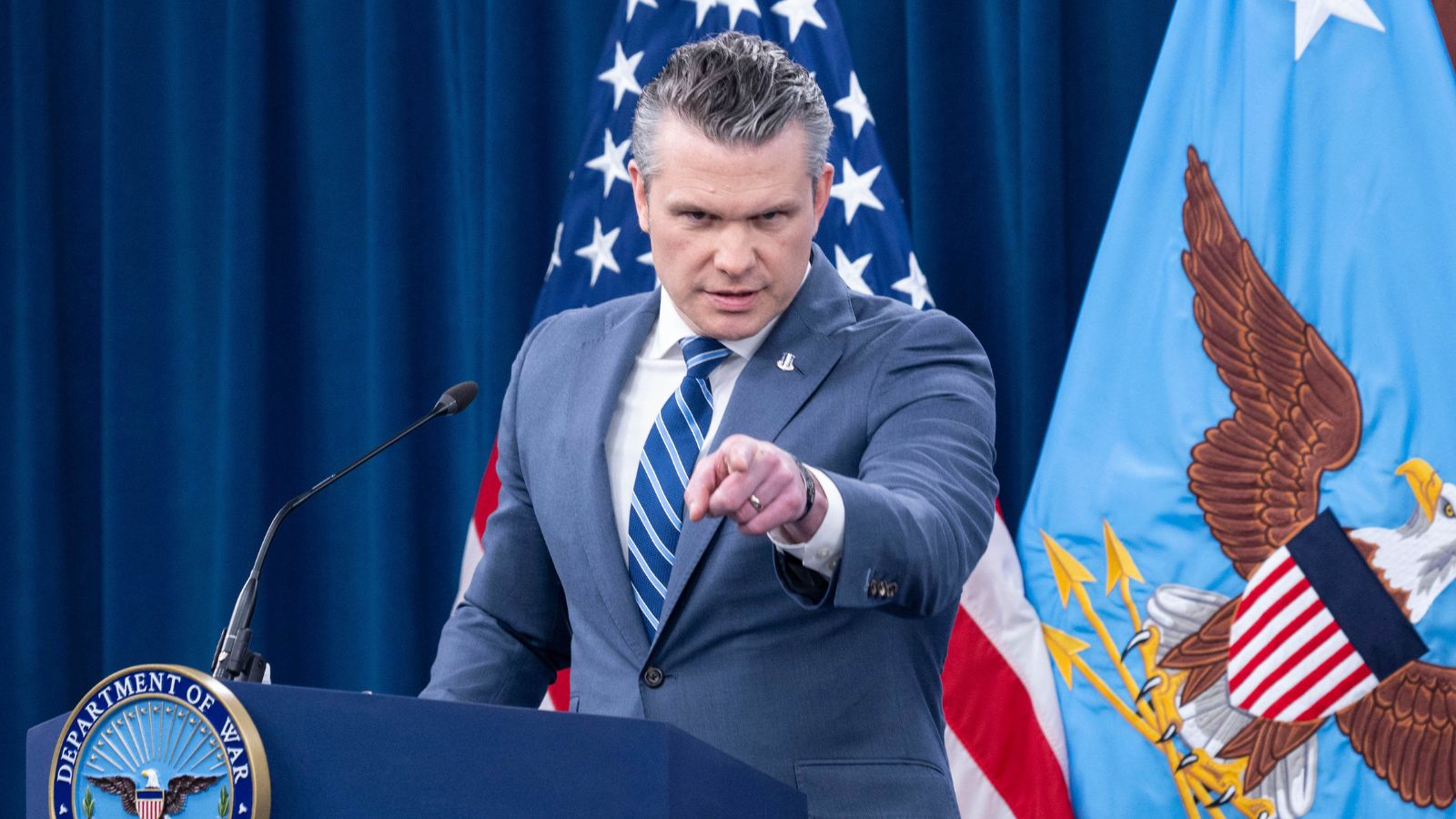
The air in the Situation Room doesn't smell like history. It smells like stale coffee and the faint, ozone tang of overworked electronics. When the maps glow blue and red against the dark walls, you aren't looking at geography. You are looking at the collective heartbeat of millions of people who are currently asleep, unaware that their morning might begin with the roar of an afterburner or the silent, shattering arrival of a precision-guided munition.
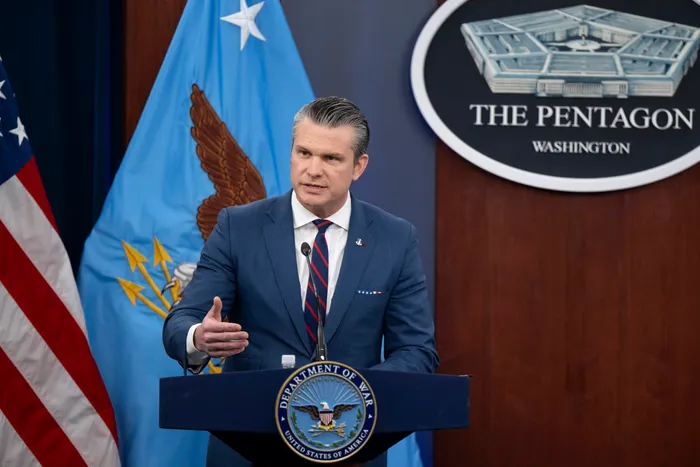
Pete Hegseth understands this tension. He doesn't see the map as a series of border lines; he sees it as a pressure cooker with a fractured lid. When the Defense Secretary-designate speaks about Iran, he isn't just reciting a briefing memo. He is describing a predator that has finally begun to bleed. Don't forget to check out our recent post on this related article.
"Locked and loaded" is a phrase that carries a specific weight in the corridors of the Pentagon. It isn't just bravado. It is a mathematical certainty. It means the coordinates are already punched in. The fuel is in the tanks. The only thing missing is the final nod from a man sitting behind a desk in Washington.
The Wounded Lion in Tehran
Imagine a man who has spent forty years building a fortress, only to realize the foundation is made of sand. Ayatollah Ali Khamenei is that man. To understand the current volatility, we have to look past the fiery rhetoric and the staged rallies in the streets of Tehran. We have to look at the cracks in the porcelain. To read more about the context of this, Al Jazeera provides an excellent summary.
Hegseth’s assessment of Khamenei isn't just about physical health, though rumors of the Supreme Leader’s frailty have circled the capital for months. It is about a psychological wounding. When your proxies—the long arms of Hezbollah and Hamas—are being systematically dismantled, you aren't just losing a war. You are losing your identity.
Power in the Middle East is built on the perception of invincibility. Once that veil is torn, the reaction is rarely a quiet retreat. It is a lashing out. Hegseth is betting on the fact that a wounded regime is the most dangerous version of itself. He isn't suggesting we wait for them to heal. He is suggesting that the window of opportunity is narrow, and the American response must be as sharp as a scalpel.
The Pakistan Pivot
While the world watches the Persian Gulf, a quieter, perhaps more significant drama is unfolding to the east. Pakistan, a nation that has spent decades balancing on a high wire between its own internal chaos and its role as a nuclear-armed power, is signaling a breakthrough.
A ceasefire.
Those two words should bring relief, but in the chess match of global geopolitics, they often bring a different kind of anxiety. Why now?
For the average family in Islamabad or Peshawar, a ceasefire isn't a policy shift. It is the ability to walk to the market without checking the sky. It is the chance to send a child to school without a knot of dread in the stomach. But for the strategists, Pakistan’s sudden eye toward de-escalation is a massive piece of the puzzle falling into place.
If Pakistan steps back from the brink, it isolates Iran further. It closes a door that Tehran has long used for regional leverage. This isn't a coincidence. It is the result of a crushing weight of economic reality and the quiet, persistent pressure of a Western alliance that is tired of playing defense.
The Invisible Stakes of the Strait
To understand why a change in leadership at the Pentagon matters, you have to look at a narrow stretch of water called the Strait of Hormuz.
It is a choke point. If you were to stand on the deck of a tanker there, you would realize that nearly a fifth of the world’s oil consumption passes through that tiny needle’s eye. If Iran decides to "wound" the world back, they don't need to win a naval battle. They just need to sink a few ships.
Suddenly, the price of gas in a small town in Ohio isn't just a number on a plastic sign. It is a direct reflection of the ego of a cleric in Tehran. This is the human element of the "locked and loaded" stance. Hegseth’s warning is a deterrent designed to keep the lights on in homes thousands of miles away. It is an admission that the global economy is a fragile web, and a single match in the Middle East can set the whole thing ablaze.
The Hypothetical Soldier
Let’s consider a person we will call Specialist Miller. Miller is twenty-three years old. He is currently stationed on a carrier in the North Arabian Sea. He doesn't spend his time analyzing the Supreme Leader’s internal monologues or the diplomatic nuances of Pakistani ceasefire breakthroughs.
He checks the seals on a missile casing. He recalibrates a radar array.
For Miller, the "locked and loaded" rhetoric isn't a headline. It is his daily reality. When the Secretary of Defense speaks, Miller’s life changes. The tension in the Middle East isn't a ghost story told in think tanks; it is the weight of the body armor Miller wears in 110-degree heat.
The strategy Hegseth is advocating for is one of "Peace Through Strength," a phrase that has been polished by decades of use but rarely implemented with such bluntness. The logic is simple: if the enemy knows exactly what will happen if they cross the line, they are less likely to step over it.
But what happens if they don't believe you?
The Psychology of Deterrence
Deterrence is a mind game. It requires the other person to believe you are just crazy enough to follow through, but just stable enough not to do it without cause.
Hegseth’s background as a combat veteran informs this. He has seen what happens when rules of engagement are murky. He has lived through the consequences of a "wait and see" approach. His rhetoric is an attempt to remove the "wait" and the "see." He wants the regime in Tehran to look at the American military and see a loaded spring.
This is where the "wounded" Khamenei comes back into play. A rational actor responds to deterrence by pulling back. A wounded, ideological actor might see the loaded spring and decide to jump on it, hoping to break the mechanism in the process.
The breakthrough in Pakistan acts as a counterweight to this madness. It provides a path toward a different kind of regional order, one where Iran isn't the primary orbit around which everything else spins. It suggests that the neighbors are getting tired of the fire.
The Weight of the Choice
We often talk about these events as if they are inevitable, like the weather. They aren't. They are the result of choices made by people in rooms, driven by fear, ambition, and a desperate desire for survival.
The shift we are seeing—the aggressive posture of the incoming American defense establishment paired with the shifting loyalties of regional players like Pakistan—is a tectonic move. It is a departure from the cautious, incremental diplomacy of the last decade. It is a gamble that the only way to prevent a massive war is to show that you are entirely ready for one.
The stakes are invisible until they aren't. They are the silent satellites overhead, the encrypted cables humming under the ocean, and the quiet conversations between generals who know that a single mistake can change the world forever.
There is a specific kind of silence that happens right before a storm breaks. It is heavy. It feels like the world is holding its breath. As Hegseth prepares to take the helm and Pakistan signals its breakthrough, we are in that silence.
The maps are still glowing. The coffee is still stale. Somewhere in the Gulf, Specialist Miller is looking out over the dark water, waiting for a signal that may or may not come, while an old man in Tehran watches his empire fray at the edges.
The spring is coiled. The trigger is clear. The world waits to see if anyone has the courage, or the madness, to pull it.