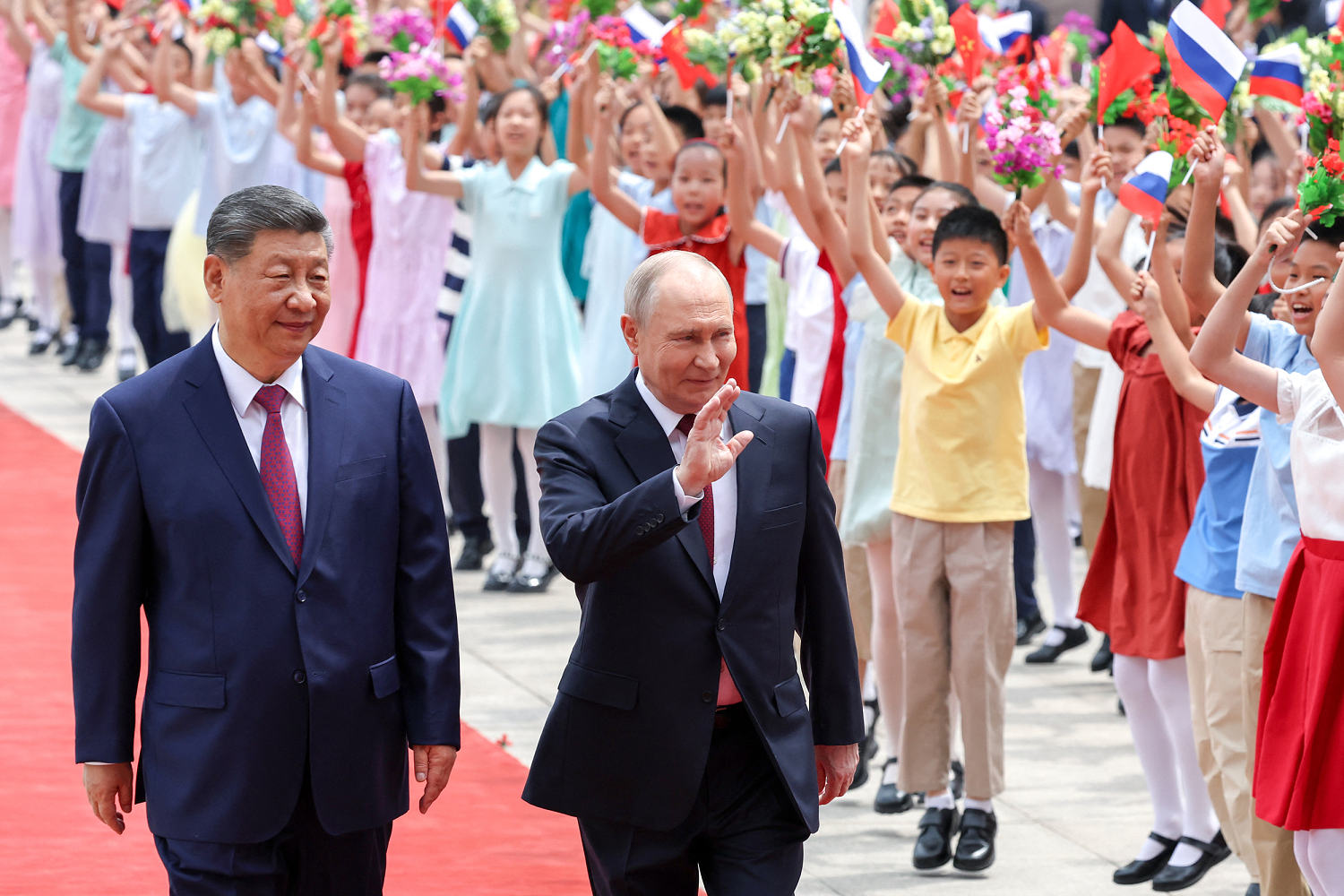
The public optics of the recent summit between Vladimir Putin and Xi Jinping in Beijing carried a distinct air of choreography, designed to project absolute unity in the wake of shifting American diplomatic maneuvers. While mainstream coverage focused on the warm rhetoric and declarations of an unprecedented partnership, the actual mechanics of this relationship operate on a much more calculated, transactional level. Moscow and Beijing are not bound by shared ideological purity, but by a mutual, urgent need to counter Western economic and military dominance.
The summit, occurring shortly after Donald Trump’s latest high-profile international engagements, was intentionally timed to signal that the Eurasian axis remains unshaken by political shifts in Washington. For the Kremlin, securing a public reaffirmation of support from China is vital as it navigates prolonged international sanctions. For Beijing, maintaining a compliant, resource-rich partner to its north provides a critical buffer as it prepares for heightened trade friction and strategic competition in the Indo-Pacific. Understanding this dynamic requires looking past the superficial displays of camaraderie and analyzing the hard economic and military realities driving their cooperation.
The Asymmetric Balance of Power
The partnership is fundamentally unequal. Russia has increasingly assumed the role of the junior partner, a reality that Moscow’s diplomats meticulously attempt to obscure behind grand declarations.
Following the severe restriction of Russian access to Western European energy markets, China became the primary buyer of Russian crude oil and natural gas. This is not a charitable arrangement. Beijing commands significant buyers' leverage, securing deep discounts on Urals crude and demanding favorable pricing structures for pipeline natural gas. The Power of Siberia pipeline, once hailed as a symbol of economic defiance, operates under terms that heavily favor Chinese state enterprises, demonstrating how dependency has shifted eastward.
Furthermore, the rouble's systemic isolation has forced the Russian financial system to rely heavily on the Chinese yuan. Over half of Russia’s commercial trade is now settled in yuan, effectively giving Beijing a regulatory window into the Kremlin’s financial health. This monetary shift creates an economic vulnerability for Russia that did not exist a decade ago. If Beijing chooses to tighten compliance rules for its banks operating with Russian entities—often out of fear of triggering secondary US sanctions—the Russian domestic market feels the friction immediately.
Industrial Life Support and Dual Use Channels
While Beijing publicly maintains a stance of neutrality regarding the conflict in Ukraine, its industrial base provides the essential life support keeping Russia’s military apparatus operational.
This support does not come in the form of overt weaponry shipments, which would trigger immediate, severe Western retaliation. Instead, it flows through the steady supply of dual-use technologies. Chinese firms have filled the void left by European and American component manufacturers, exporting vast quantities of microelectronics, CNC machine tools, and optical equipment. These are the foundational blocks required to manufacture modern armor, missiles, and drones.
The supply chain is complex and highly adaptive. Shipments frequently route through intermediary hubs in Central Asia or the South Caucasus before reaching Russian factories.
- Microelectronics: Advanced semiconductor imports from Chinese distributors keep Russian radar systems and guided munitions functional.
- Heavy Machinery: Chinese-made manufacturing equipment has replaced German and Italian machinery in Russian defense industrial plants.
- Logistical Transport: Thousands of Chinese civilian terrain vehicles and heavy trucks are now standard logistics equipment for the Russian military.
This economic reality complicates Washington’s sanctions strategy. Targeting major Chinese state-owned banks could fracture the global financial system, meaning Western regulators are forced to play an endless game of whack-a-mole with smaller, regional Chinese trading firms that dissolve and reform under new names faster than compliance officers can track them.
The Limits of a Security Alliance
Despite deep defense cooperation, including joint naval maneuvers in the East China Sea and bomber patrols over the Sea of Japan, the relationship stops short of a formal military alliance. Neither nation wishes to be dragged into a war triggered by the other.
Beijing has watched Russia’s conventional military struggles with intense scrutiny. For China’s People's Liberation Army, which is focused on a potential high-tech conflict over Taiwan, the attritional, artillery-heavy warfare in Eastern Europe offers critical lessons in logistics, drone integration, and the consumption rate of modern ammunition. However, Xi Jinping has no intention of writing a blank check for Vladimir Putin’s regional ambitions. China values stability in its primary export markets in Europe and North America; it will not jeopardize its broader economic objectives to bail Moscow out of a strategic quagmire.
Similarly, Russia remains deeply protective of its traditional sphere of influence in Central Asia. As China’s Belt and Road Initiative expands infrastructure and economic leverage across Kazakhstan, Uzbekistan, and Kyrgyzstan, Moscow watches with quiet unease. The Kremlin views Central Asia as its historical backyard, yet it lacks the financial capital to compete with Beijing’s infrastructure investments. This underlying tension is suppressed for the sake of the anti-Western united front, but it remains a structural fault line in their long-term relations.
Diplomatic Counterweights to Washington
The timing of the summit, following a series of diplomatic maneuvers by Donald Trump, highlights how both leaders use their alignment as a tactical counterweight.
Washington’s current foreign policy strategy often seeks to leverage bilateral deals and unpredictable tariff threats to disrupt established trade blocs. By presenting a unified, unyielding front, Putin and Xi aim to convince Western policymakers that attempts to drive a wedge between them are futile. The message is directed not just at the White House, but at European capitals, suggesting that isolating Russia only drives it deeper into Beijing's strategic embrace.
This diplomatic shield extends to international bodies like the United Nations Security Council, where the two nations consistently coordinate their vetoes to block Western-led resolutions. They are actively working to expand alternative multilateral forums, such as the BRICS alignment and the Shanghai Cooperation Organisation, aiming to build an international architecture completely insulated from Western financial leverage and political values.
The Western expectation that China will eventually act as an honest broker to restrain Russia misjudges Beijing’s strategic calculations. A weakened, dependent Russia that keeps Western military attention divided between Europe and Asia suits China's long-term interests perfectly. For the United States and its allies, countering this alignment requires acknowledging that the relationship is driven by cold, survivalist logic rather than personal affinity between leaders, and addressing the deep-seated economic dependencies that sustain it.