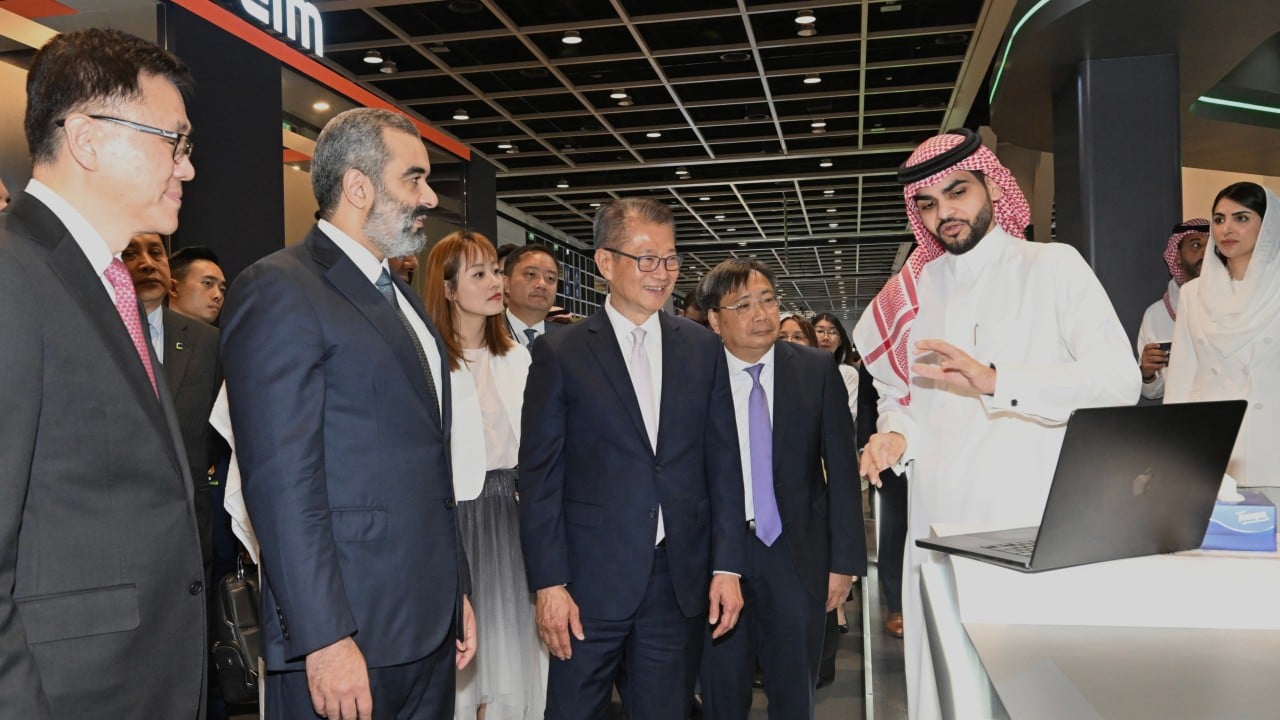
Hong Kong Financial Secretary Paul Chan recently unveiled a fresh rhetorical framing for the city, positioning the financial hub as a "super converter" and "super adapter" tasked with translating mainland Chinese corporate standards, tech innovations, and capital into formats acceptable to global markets.
The ambition sounds compelling on paper. By converting mainland technical standards—ranging from ultra-high-strength steel specifications to artificial intelligence protocols—into international frameworks, Hong Kong seeks to solidify its status as China's indispensable financial and operational valve. Yet this strategy faces immediate structural friction. Translating regulatory, financial, and technical systems across increasingly hostile geopolitical borders requires far more than rebranded rhetoric. It demands navigating a global market that is actively seeking to decouple, scrutinize, and ring-fence Western capital away from Beijing’s regulatory sphere.
The Financial Mechanics of Regulatory Translation
For decades, the city operated under a straightforward thesis: act as a passive bridge. Western capital flowed in; mainland state-owned enterprises and private tech giants listed on the Stock Exchange of Hong Kong (HKEX) to draw dollars out.
That arrangement depended on global regulatory consensus.
Today, that consensus is fractured. When officials describe Hong Kong as a converter, they are pitching a complex technical function. The goal is to take mainland innovations—which often operate under domestic state frameworks, localized data regimes, and internal accounting standards—and re-package them under common law, international accounting practices, and Western capital protections.
               +--------------------------------------+
               |    MAINLAND CHINA INDUSTRIAL BASE   |
               |  (Domestic standards, RMB capital,   |
               |     localized data sovereignty)      |
               +------------------+-------------------+
                                  |
                                  v
               +--------------------------------------+
               |      HONG KONG "SUPER CONVERTER"     |
               |  (Common Law, HKD peg, convertible   |
               |    capital, international standards)  |
               +------------------+-------------------+
                                  |
                                  v
               +--------------------------------------+
               |        GLOBAL CAPITAL MARKETS        |
               |   (USD clearing, international VC,   |
               |     strict Western regulatory audit) |
               +--------------------------------------+
Consider the mechanism for hard-tech firms. A mainland enterprise producing advanced components often relies on RMB-denominated state guidance funds for early research. Once it needs foreign capital, it hits a wall. Western venture funds face regulatory restrictions on direct mainland investments.
Hong Kong proposes to solve this by creating a legal buffer. The mainland firm establishes an offshore structure in the territory, converts its technical compliance into Hong Kong’s internationalized intellectual property framework, and accesses what Chan calls "patient capital"—long-term institutional funds willing to back early-stage industrial technology.
The strategy assumes Western institutional capital remains willing to play along.
In practice, global fund managers are increasingly bound by strict compliance mandates from their home jurisdictions. Setting up an entity in the territory no longer automatically shields a firm from primary or secondary sanctions, export controls, or heightened investment screening. The conversion process is getting harder, expensive, and legally perilous for global compliance officers.
Standard Setting and the Steel Dilemma
The official push isn’t limited to equity capital. The administration is pitching the territory as a conduit for national technical standards.
Chan highlighted ultra-high-strength steel and advanced material manufacturing as primary examples where mainland engineering leads globally, yet struggles for adoption in overseas infrastructure projects due to divergence in technical certification. The logic dictates that if Hong Kong’s testing laboratories, certification bodies, and engineering associations accredit these products under international standards, global buyers will adopt them without hesitation.
It is a clever workaround. But standard-setting is rarely an abstract technical exercise. It is political.
European and American engineering standard bodies have spent a century building dominant regulatory moats. When an emerging power attempts to introduce alternative technical specifications through an intermediary city, established industrial lobbies resist. Certification is not simply about proving a piece of steel can bear a load; it involves verifying supply chain origin, carbon intensity metrics, and labor practices.
If Western buyers raise tariffs or environmental border adjustments against mainland materials, testing those materials in a Hong Kong lab does not alter their underlying point of origin.
Patient Capital versus Market Liquidity
The administration’s focus on attracting "patient capital" exposes another structural challenge facing the local financial sector. Historically, the city flourished on high-velocity capital—quick initial public offerings, rapid secondary market trading, and aggressive venture liquidity.
Hard-tech innovation requires a completely different investment lifecycle.
Hypothetically, an autonomous robotics firm operating in the Greater Bay Area may require seven to ten years of capital expenditure before achieving profitability. If domestic mainland markets cannot support that horizon due to local liquidity constraints, and foreign public markets remain risk-averse, Hong Kong must build its own deep pool of private equity and family office funding capable of holding illiquid debt and equity over decades.
The city has made legislative moves to attract family offices, granting tax concessions and streamlined setup procedures. Yet family offices typically prioritize capital preservation over high-risk, long-gestation industrial technology investments. Asking family wealth to act as patient venture funding for deep-tech enterprises requires a fundamental shift in risk appetite that policy incentives alone cannot manufacture.
The Dual Circulation Strain
Under Beijing’s broader economic policy, the national economy relies on "dual circulation"—strengthening domestic demand while remaining engaged with foreign markets. The territory’s assigned role is to anchor the external loop.
This division of labor places immense structural pressure on the city's legal and economic infrastructure.
To serve as an effective converter, Hong Kong must retain total free flow of capital, maintain the US dollar peg, preserve the integrity of its common law legal system, and allow unrestricted access to global information networks. Simultaneously, it must integrate seamlessly with the mainland economy, particularly through physical and regulatory projects like the Northern Metropolis and cross-border data initiatives.
These two imperatives pull in opposite directions.
       FOREIGN MARKETS                           MAINLAND INTEGRATION
+---------------------------+                +---------------------------+
| Unrestricted Capital Flow | <------------> | Capital Controls & RMB    |
| Common Law Precedent      |    HONG KONG   | State Regulatory Oversight|
| Open Information & Data   |   TIGHTROPE    | Cross-Border Data Rules   |
+---------------------------+                +---------------------------+
When cross-border data transfer protocols are established between the mainland and Hong Kong, international firms evaluate whether data residing in Hong Kong remains legally distinct from data subject to mainland cybersecurity laws. If global corporate compliance teams perceive that the boundary between the two systems has dissolved, the converting mechanism breaks down. The city ceases to be viewed as an international converter and is treated simply as another mainland jurisdiction.
Corporate Realities on the Ground
Mainland companies attempting to go global through the territory are finding the transition more demanding than marketed.
Consider a medium-sized green tech manufacturer based in Jiangsu seeking to expand across Southeast Asia and Europe. Entering those markets directly exposes the firm to tariff headwinds and regulatory skepticism. By setting up corporate headquarters in Hong Kong, the company attempts to establish local banking relationships, secure international ESG certifications, and restructure its corporate governance.
The immediate bottleneck is commercial banking.
International banks operating in the city have escalated anti-money laundering and know-your-customer checks to unprecedented levels. Mainland firms frequently report taking six to nine months just to open institutional bank accounts, as compliance teams dissect ownership structures, state subsidies, and ultimate beneficial ownership. The very bridge designed to accelerate global expansion often subjects firms to intense operational friction before they ever clear port.
The Cost of Strategic Ambiguity
For decades, Hong Kong thrived on strategic ambiguity—a Western-facing capital hub sitting on Chinese soil.
The "super converter" strategy is an effort to operationalize that ambiguity into a formal economic service. But in an era defined by explicit geopolitical alignment, formalizing a mechanism designed to bypass trade friction and standard mismatches draws immediate attention from overseas regulators.
If Hong Kong successfully converts mainland standards and tech products into international market entries, Western trade regulators will focus their oversight on the converter itself. The city cannot act as a neutral transformer without inheriting the political and trade friction associated with the underlying products it converts. Success in this strategy inevitably brings greater external scrutiny, creating a paradox that no government budget or policy speech can easily resolve.