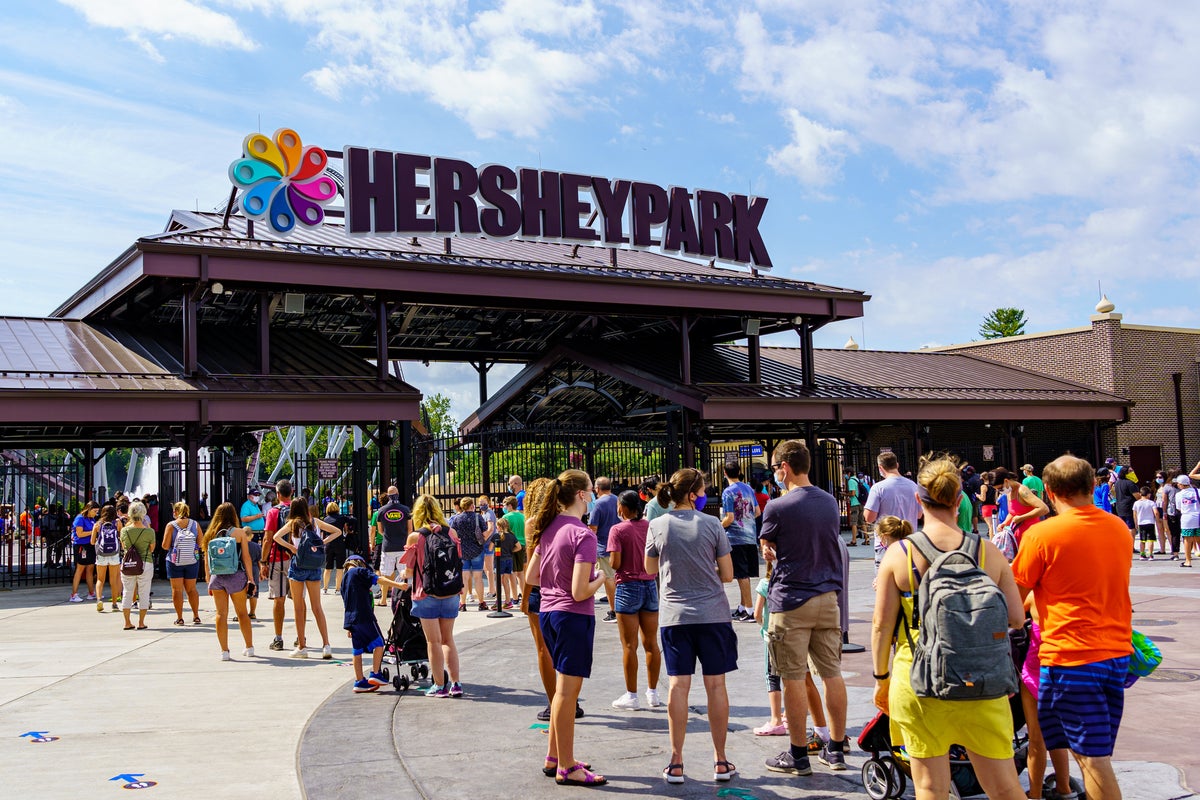
Fifty-five teenagers get charged after a massive brawl on opening day at a historic Pennsylvania amusement park, Kennywood. The media immediately pivots to its favorite, well-worn scripts. Moral panic ensues. Commentators demand more metal detectors, heavier police presence, stricter curfews, and digital chaperones.
They are missing the entire point.
The lazy consensus treats these chaotic flash mobs as isolated incidents of societal breakdown or sudden failures in private security. That view is fundamentally flawed. What happened in Pennsylvania is not a security failure. It is the predictable, systemic consequence of how modern entertainment spaces are engineered, marketed, and managed.
When you crowd thousands of highly stimulated, hyper-connected young people into physical bottlenecks designed purely to maximize per-capita spending, friction is not an accident. It is a mathematical certainty.
The Myth of the Chaperone Policy
After every high-profile park brawl, executives rush to microphones to announce a new weapon: the mandatory chaperone policy. Under these rules, anyone under a certain age must be accompanied by an adult after 4:00 PM.
It sounds responsible. It looks great on a corporate press release. In reality, it is theater.
I have spent years analyzing the operational flow of high-capacity entertainment venues. Chaperone policies do not eliminate the risk of crowd friction; they merely shift the bottleneck to the front gates and parking lots. Parents drop their kids off fifty yards outside the boundary line. Teens bypass the system by paying strangers a few bucks to walk them through the turnstiles, or they simply wait until inside the gates to scatter.
More importantly, a chaperone policy misdiagnoses the root cause of the chaos. The issue is not a lack of parental supervision in the traditional sense. The issue is the physical architecture of the modern amusement park.
Amusement parks are designed to trap people. To maximize revenue, parks deliberately create choke points. Long lines, narrow choke points between themed lands, and centralized food courts are all designed to keep you stationary long enough to open your wallet.
When you compress a volatile demographic into these high-friction, high-heat environments, you create a pressure cooker. Expecting a few dozen underpaid, overworked security guards to manage the inevitable explosion is an operational fantasy.
The Operational Failure of Hard Security
The standard response to crowd violence is to turn amusement parks into green-zone fortresses. More cameras. Facial recognition. K-9 units at the gate.
This approach ignores a well-documented psychological reality: heavy-handed, highly visible policing in leisure environments often increases tension rather than defusing it. When a space feels like a detention center, patrons stop treating it like a community asset and start treating it like a combat zone.
Consider the layout of a standard mid-tier regional park.
| Feature | Design Intent | Actual Behavioral Outcome |
|---|---|---|
| Centralized Food Plazas | Maximize vendor efficiency | Massive, unmonitored crowds with high wait times |
| Gated Queue Lines | Organized waiting | High-density confinement that breeds agitation |
| Bottleneck Exit Paths | Funnel traffic through retail shops | Extreme congestion during peak exit hours |
When fifty kids start fighting in a centralized plaza, a line of security guards fifty yards away cannot move through the dense infrastructure fast enough to intervene. The physical environment itself protects the disruptors and hinders the responders.
If you want to stop brawls, you do not build higher fences. You change the geometry of the park. You decentralize food options. You eliminate the physical bottlenecks that force thousands of people into static friction points. But that costs money and reduces immediate retail foot traffic, so corporate offices choose the cheap alternative: hire more security guards and blame the parents.
The Flawed Premise of the Digital Chaperone
People frequently ask: why can't parks just use technology to track troublesome groups and ban them?
This question assumes that modern park brawls are organized by distinct, identifiable gangs with clear hierarchies. They are not. The modern flash crowd is an algorithmic product.
Social media algorithms incentivize rapid, large-scale gatherings by hyper-localizing trends. A minor dispute on a high school campus on a Thursday becomes a digital rallying cry by Friday night, localized entirely around a high-foot-traffic landmark like an amusement park on Saturday. The kids showing up do not belong to a unified organization; they are disparate groups responding to the same digital signal.
Geofencing and digital tracking fail because they operate on old models of threat assessment. They look for known bad actors. They do not know how to handle spontaneous synchronization driven by TikTok or Snapchat.
By the time a crowd of two hundred teenagers forms near a roller coaster, the park's digital security infrastructure has already lost. The incident is already being recorded, broadcasted, and monetized for views, which in turn draws more participants into the fray.
The Unpopular Solution Corporate Boards Avoid
Fixing this trend requires steps that major entertainment companies are terrified to take because they directly threaten short-term profitability.
First, parks must drastically lower their maximum daily capacity limits. For decades, the industry metric of success has been pure attendance volume. Shoving 30,000 people into a park built for 20,000 creates an unmanageable baseline of frustration. Lowering capacity reduces line times, lowers environmental stress, and allows existing staff to maintain actual situational awareness. But lowering capacity means lower gate revenue, which means angry shareholders.
Second, the industry must abandon the discount season pass model that treats amusement parks as low-cost daycare centers. For years, regional parks have subsidized their operations by selling incredibly cheap season passes. This strategy intentionally targets teens looking for a cheap place to hang out for eight hours without spending money on food or merchandise.
When your entire business model relies on packing a venue with thousands of unsupervised, non-spending minors just to inflate your attendance metrics for Wall Street, you cannot act surprised when that demographic behaves like teenagers left alone in a parking lot.
The downside to fixing this is obvious: amusement parks will become more expensive, more exclusive, and less accessible to the average local teenager. It is a brutal, elitist trade-off. But the alternative is what we are seeing play out every summer: historic parks turning into tactical management exercises where families pay a premium to dodge stampedes.
Stop asking how many police officers it takes to secure a midway. Start asking why the park's business model required that midway to be a powder keg in the first place.