China has spent decades playing a quiet game of shadows in the Middle East, balancing a thirst for cheap Iranian crude with a public commitment to non-interference. That era of strategic ambiguity officially ended this week. In a high-stakes phone call on Wednesday, Chinese Foreign Minister Wang Yi issued a direct and rare demand to Tehran: ensure the "freedom and safety" of international navigation through the Strait of Hormuz.
This is not a routine diplomatic nudge. It is a moment of desperation for a superpower that suddenly finds its energy lifeline and regional influence caught in a pincer movement. To understand why Beijing is finally raising its voice, one must look past the polite transcripts of the call and into the chaos of a 2026 maritime landscape where the rules of the sea are being rewritten by force.
The Chokepoint Paradox
The Strait of Hormuz is the world's most critical energy artery, a 55-km-wide passage that handles roughly 20% of global oil trade. For years, China viewed this waterway through a lens of cynical security. It benefited from the protection provided by the U.S. Fifth Fleet while simultaneously financing the very regime—Iran—that frequently threatened to close it.
That parasitic stability has collapsed. Following the failure of the Islamabad talks regarding Iran's nuclear program, the United States has initiated a naval blockade on vessels linked to Iranian ports. In retaliation, Tehran has tightened its grip on the Strait, moving from threats to active interference with international shipping.
Beijing is now realizing that its "limitless" partnership with Iran has a hard ceiling. China is the world's largest importer of Iranian oil, and any disruption in the Strait does not just hurt the West; it triggers a domestic industrial heart attack in provinces like Shandong, where independent "teapot" refiners rely almost exclusively on Iranian grades.
Why the Silence Broke
Wang Yi’s call to Iranian Foreign Minister Abbas Araghchi was framed as a plea for maritime stability, but the underlying subtext was one of betrayal. China has provided Iran with a diplomatic shield at the UN and a financial bypass for U.S. sanctions. In return, Beijing expected Tehran to keep the oil flowing and the shipping lanes predictable.
Instead, Iran’s escalation has trapped dozens of Chinese-owned container ships and tankers within the Persian Gulf. Satellite imagery from early April shows a growing graveyard of idling vessels near the UAE and Omani coasts, unable to risk the transit through a waterway that has become a live combat zone.
The Cost of Support
- Insurance Premiums: War risk premiums for transiting the Strait have surged to over $120 per ton, erasing the "discount" China usually enjoys on Iranian crude.
- Inventory Squeeze: Chinese domestic PE (polyethylene) inventories have spiked by over 100% since February as export routes to the West remain severed.
- Diplomatic Overstretch: Beijing is currently trying to position itself as a global mediator, yet it cannot even guarantee the safety of its own commercial fleet in a region where it claims to be the primary partner.
The US Factor
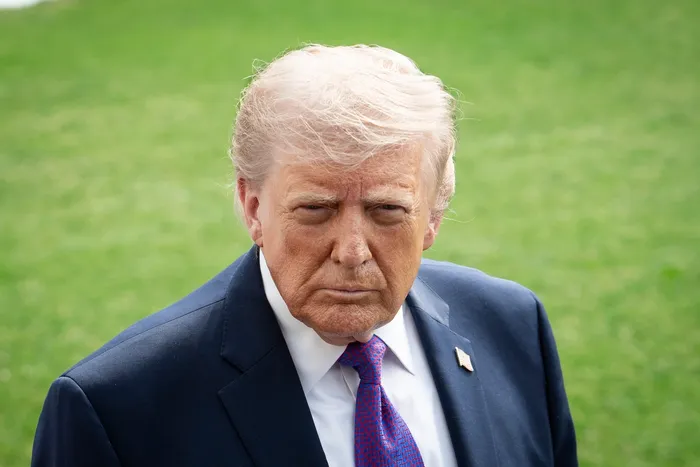
Donald Trump’s return to the White House has introduced a volatility that Beijing is struggling to manage. The U.S. blockade is designed to force Iran into a "rational and realistic solution," but it also serves as a secondary strike against the Chinese economy. By forcing a confrontation in the Strait, Washington is effectively testing China’s willingness to defend its interests in the Middle East.
If China remains silent, it looks weak to its regional partners in Riyadh and Abu Dhabi. If it pushes Iran too hard, it risks losing its most significant anti-Western ally in the Global South. The call to Araghchi was a desperate attempt to find a middle path, but the reality on the water suggests that "middle paths" are increasingly non-existent.
The Failed Mediation
While Pakistan leads a formal mediation effort in Tehran, Beijing’s intervention carries a different weight. China is the only nation with the economic leverage to actually change Iran’s calculus. However, that leverage is a double-edged sword. If China cuts oil purchases to punish Tehran for closing the Strait, it risks its own energy security.
Iran knows this. Tehran is using the Strait of Hormuz as a bargaining chip not just against the U.S., but against China itself. By creating a crisis that Beijing cannot ignore, Iran is attempting to force China to take a more active, perhaps even military, role in breaking the U.S. blockade.
A Systemic Failure of Influence
For all the talk of the 25-year Comprehensive Cooperation Agreement, the current crisis proves that China’s influence in Tehran is transactional, not transformational. When the Iranian regime faces an existential threat—as it does following the recent strikes on its leadership—it will prioritize its own survival over Beijing’s desire for stable shipping rates.
The "window for peace" that Wang Yi mentioned is closing rapidly. As long as Iranian-backed forces continue to target energy hubs like Fujairah and Duqm, no amount of diplomatic phrasing will lower the insurance rates or move the tankers. China is learning a bitter lesson that the U.S. learned decades ago: being a superpower in the Middle East means being responsible for the security of the very infrastructure your enemies want to destroy.
Beijing’s demand for "freedom of navigation" is a signal of a major shift. The era of China as a passive consumer of Middle Eastern stability is over. Whether it has the stomach to become an active enforcer of that stability remains the most dangerous question of 2026.
The ships stay anchored. The prices keep climbing. And for the first time, Beijing is the one holding the bill.