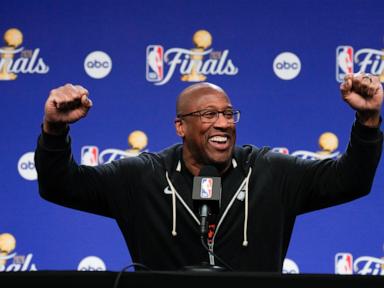
The New York Knicks are leading the San Antonio Spurs 2-0 in the NBA Finals, a sentence that would have sounded like absolute delusion just two months ago. This postseason run has defied every analytical projection, but as the series shifts to Madison Square Garden for Game 3, the conversation is shifting from schematic advantages to an entirely different kind of pressure. The local celebrity contingent, traditionally viewed as wealthy decoration sitting courtside in expensive leather jackets, has actively crossed the line from spectators to participants. During Sunday’s practice session, director Spike Lee, actor Ben Stiller, and rapper Fat Joe did not just watch from afar; they occupied the media rooms, cornered head coach Mike Brown, and effectively turned a high-stakes championship practice into a neighborhood block party.
This is not a harmless PR stunt or a collection of rich fans enjoying a hobby. It is a calculated, high-energy ecosystem that weaponizes fame to create an incredibly hostile environment for visiting teams. While the mainstream media treats these interactions as lighthearted human-interest stories, the reality is far more intense. The presence of these prominent figures changes the psychology of the arena, applying pressure to opposing players while offering an intense, localized support system for a Knicks roster that finished a fairly mundane regular season before exploding into an historic 11-game postseason winning streak.
The Performance Art of Courtside Influence
When Mike Brown walked off the podium on Sunday, he expected the usual tactical questions about slowing down Victor Wembanyama. Instead, Fat Joe hijacked the microphone from the back of the room to critique the coach's choice of sneakers and demand an autographed pair upon winning a title. Ben Stiller stood off to the side, filming the interaction like an eager intern.
To the casual observer, this looks like Hollywood elite overstepping their boundaries. To anyone who understands the unique mechanics of New York basketball, it represents the activation of the Garden's secondary defense.
Unlike modern arenas in Los Angeles or Miami, where celebrity attendance is largely transactional and passive, the Madison Square Garden front row functions as a psychological extension of the bench. When Spike Lee travels to Cleveland to stand on the court while the team clinches the Eastern Conference championship, or when Timothée Chalamet and Tracy Morgan follow the team on the road, it alters the baseline environment of the game. Visiting players are not just competing against five men on the floor; they are performing inside a fishbowl where some of the most recognizable faces on earth are actively treating them like uninvited guests in their living room.
The Cultural Unification Myth and the Brutal Reality
Fat Joe made headlines during the media session by claiming that this specific Finals run has achieved the greatest unification of New York City since the aftermath of September 11. He painted a picture of Hasidic Jews breakdancing with Black kids outside the arena and neighbors opening each other’s refrigerators to watch the games together.
It is a beautiful narrative. It is also an emotional exaggeration that masks a much colder, more effective sporting truth.
The unity surrounding the Knicks right now is not born out of civic sentimentality; it is fueled by an unexpected, predatory winning streak. Before April 23, this team was an afterthought. They were ranked tenth in points per game and ninth in effective field goal percentage. They were a thoroughly average squad that figured out how to execute a brutally physical style of play at precisely the right moment, outscoring postseason opponents by an unprecedented average of 19.4 points per game.
The celebrities are not gathering at the Garden because they want to heal the city. They are gathering because the Knicks have become the most compelling theater in the world, and their presence amplifies that theater to a degree that makes visiting teams uncomfortable. The energy inside the building is predatory, and the front-row elite are the loudest hype men in the stadium.
Postseason Performance Shift
| Metric | Regular Season Rank | Postseason Rank |
|---|---|---|
| Points Per Game | 10th | 1st |
| Effective Field Goal % | 9th | 1st |
| Defensive Rating | 7th | 1st |
| Scoring Margin | 5th | +19.4 (All-Time Record) |
The Mike Brown Factor
Managing this level of external noise requires a specific type of leadership. A rigid tactician would find the intrusion of rappers and Hollywood actors into a Finals practice session to be an intolerable distraction. Mike Brown has taken the opposite approach. He has embraced it entirely, recognizing that the energy of these figures can be funneled directly into his players' confidence.
“A great day for me today,” Brown remarked after the sneaker exchange. “For the first time I got a chance to meet Ben Stiller. I actually gave him a handshake and a hug. I got my man Fat Joe sitting in the back. This is a great day for Mike Brown.”
This is not a coach losing control of his team's focus. It is a coach acknowledging the unique home-court advantage that only Manhattan can provide. By validating the fans, Brown ensures that the energy remains positive rather than critical. For a franchise that has spent 53 years chasing a championship title, that distinction is vital.
The Psychological Toll on the San Antonio Spurs
The ultimate target of this media circus is not the fans or the coach. It is the young roster of the San Antonio Spurs.
Playing a championship series in Madison Square Garden is already an isolating experience. When the front row is populated by icons who are actively engaging with the home coach and disrupting the standard protocol of a press conference, the sense of isolation deepens. The Spurs are facing an historic offensive juggernaut that has scored over 108 points in every single playoff game since late April. Adding an unpredictable, celebrity-driven crowd into that mix transforms Game 3 from a standard basketball game into a psychological endurance test.
The Knicks have built an 11-game postseason winning streak on discipline and a relentless, well-oiled defense. The celebrities are simply the public face of that momentum, turning a basketball court into a fortress where the line between the audience and the team no longer exists.