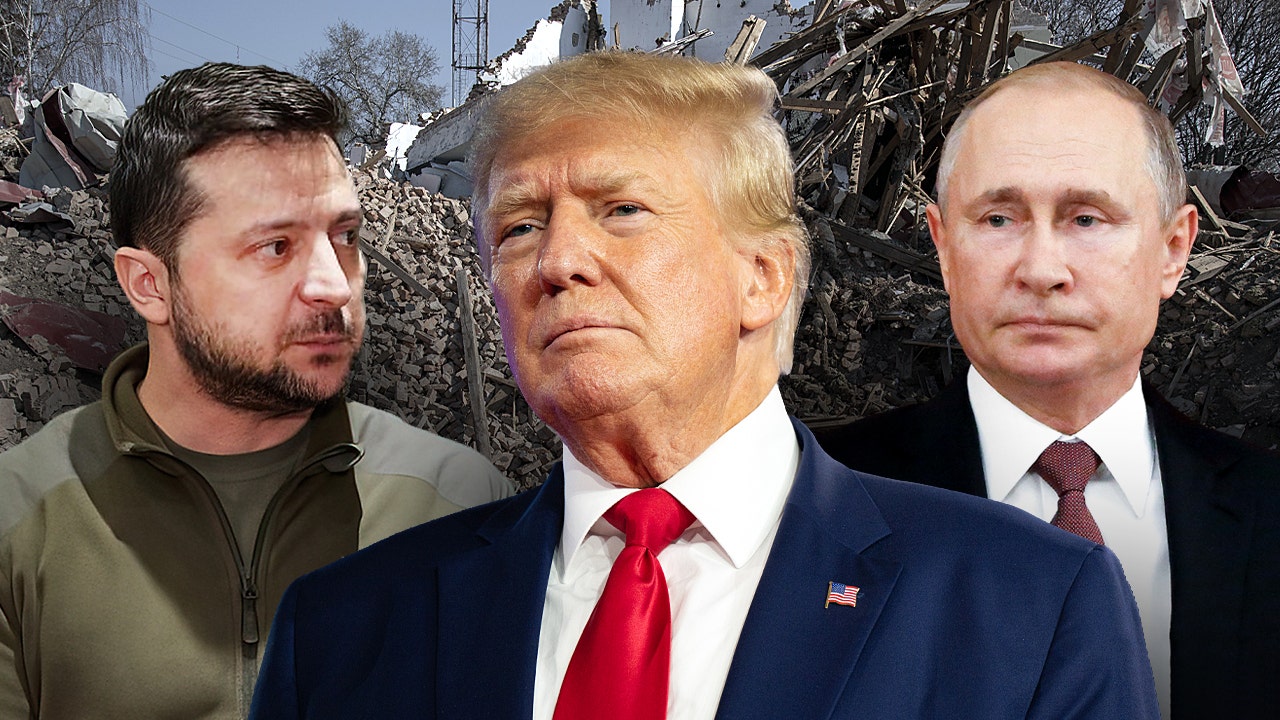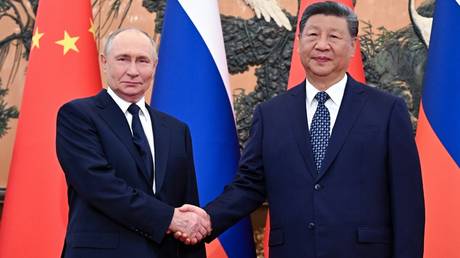
Russian President Vladimir Putin will arrive in Beijing on May 19 for a high-stakes two-day summit with Chinese leader Xi Jinping. The Kremlin framed the visit as a routine celebration of the 25th anniversary of the Sino-Russian Treaty of Friendship, but the timing betrays a far more urgent reality. Putin is moving fast to shore up Moscow's primary economic lifeline less than 24 hours after U.S. President Donald Trump concluded a major state visit to the Chinese capital. This sequence of events signals a intense diplomatic chess match over trade, sanctions, and global conflicts.
The official agenda promises a joint declaration, trade talks with Premier Li Qiang, and the launch of bilateral educational programs. Beneath the diplomatic choreography lies an uncomfortable truth. Moscow is entering these talks with a weaker hand, increasingly dependent on Chinese financial systems to sustain its multi-year military campaign in Ukraine, while Beijing balances its allegiance to Russia against the threat of fresh trade barriers from Washington.
The Shadow of the White House
Trump just completed his first visit to China in nearly a decade, leaving a trail of unresolved friction regarding Chinese trade policies and Beijing's indirect support for the Russian defense sector. Western pressure on China’s banking industry has intensified, complicating the cross-border payment networks that keep Russian commerce afloat.
Putin’s sudden arrival serves as an immediate counterweight to American diplomacy. The Kremlin needs to ensure that whatever assurances or warnings Trump delivered to Xi do not translate into a tightening of the economic chokehold on Russia. For Beijing, hosting Putin immediately after Trump is a deliberate show of independence, sending a clear message to Washington that China will not allow its strategic partnerships to be dictated by foreign powers.
Banking on the Yuan
The economic relationship between Moscow and Beijing is no longer an equal partnership. Western sanctions have effectively severed Russia from the SWIFT banking system and frozen its dollar reserves, forcing the Kremlin to look east.
- Trade Disbalance: Russia relies heavily on China for consumer goods, automotive parts, and microelectronics that keep its economy functioning under wartime pressures.
- Energy Dependency: Deprived of European markets, Russia sells vast quantities of oil and natural gas to China, often at steep discounts that favor Beijing.
- Financial Integration: The Russian domestic market has turned heavily toward the Chinese yuan, transforming the currency into the primary vehicle for corporate savings and international settlements.
This economic reliance creates an underlying tension. Chinese banks, deeply integrated into the global financial architecture, are terrified of secondary U.S. sanctions. Over the past year, several major Chinese financial institutions have slowed or halted transactions with Russian entities out of caution. Putin’s primary objective during his talks with Li Qiang is to establish reliable, state-backed payment mechanisms that bypass the standard banking infrastructure vulnerable to Western surveillance.
Diplomatic Cover and Regional Conflicts
The Beijing summit takes place against a backdrop of escalating global instability. While the war in Ukraine enters its fifth year, a stalemated conflict involving the U.S., Israel, and Iran has added new complications to the geopolitical calculus.
China presents itself as a neutral arbiter, regularly calling for peace talks and refusing to provide direct lethal weaponry to Russia. Beijing has never explicitly condemned the invasion of Ukraine. This stance provides Russia with invaluable diplomatic cover on the UN Security Council, keeping Moscow from total global isolation.
The two leaders will also address the Middle East crisis. Both nations view the conflict as an opportunity to erode American influence in the Global South, positioning themselves as alternative security partners to nations frustrated by Western foreign policy.
The Asymmetrical Alliance
The Kremlin’s rhetoric will inevitably focus on a multipolar world order and a friendship with no limits. The structural reality reveals a deeply transactional bond. Xi Jinping views Russia as a useful buffer against American encirclement in the Indo-Pacific and a secure source of cheap natural resources. Beijing understands that a desperate Russia is a compliant Russia.
Putin will likely secure the trade agreements and the public show of solidarity he requires to reassure his domestic audience. He cannot alter the fundamental trajectory of the relationship. Russia is steadily moving into a subordinate position, providing raw materials to a dominant neighbor that controls the financial terms of their engagement. Moscow's survival depends entirely on the strategic patience of Beijing.