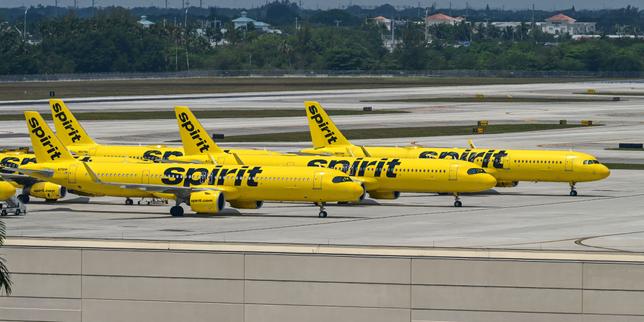
Spirit Airlines didn't just stumble. It plummeted. When the yellow planes of America’s most famous budget carrier stopped flying under the weight of bankruptcy filings, most pundits blamed "market conditions." That's a lazy answer. The truth is much more specific and frankly, a lot more punishing. A brutal cocktail of rising energy costs, failed mergers, and a fleet of grounded engines created a debt spiral that even the most aggressive cost-cutting couldn't fix.
You’ve probably seen the headlines blaming the energy crisis in the United States. They aren't wrong, but they only tell half the story. High fuel prices hit every airline. Most carriers passed those costs onto you with higher fares or fuel surcharges. Spirit couldn't do that. Their entire brand was built on being the cheapest option available. When your "no-frills" model hits a wall where the cost of the fuel is higher than the price of the ticket, you're dead in the water.
Why the Energy Crisis Hit Spirit Harder Than the Big Three
United, Delta, and American Airlines have different ways to survive when oil prices spike. They have international routes. They have business class seats that sell for five times the price of coach. They have loyalty programs that basically function as banks. Spirit had none of that. They had a single-class cabin and a customer base that would abandon them for a $5 difference in price.
During the recent energy volatility, Spirit’s fuel expenses surged by nearly 40% in a single year. For a company operating on razor-thin margins, that's not a hurdle. It's an extinction event. While the "Big Three" were using sophisticated fuel hedging strategies to lock in lower prices months in advance, Spirit was often buying at spot prices. They were exposed. They were vulnerable. And they got burned.
But let's be honest. Fuel wasn't the only fire.
The Pratt and Whitney Engine Disaster
Imagine buying a fleet of brand-new, fuel-efficient planes only to find out the engines might literally fall apart. That's exactly what happened to Spirit with the Pratt & Whitney Geared Turbofan (GTF) engines. Because of a rare metal powder contamination issue, hundreds of engines across the industry had to be pulled for inspections.
For a massive carrier, grounding ten planes is an annoyance. For Spirit, it was a catastrophe. At one point, they had dozens of aircraft sitting on the tarmac doing nothing but accumulating interest payments.
- Fixed costs stayed high: They still had to pay pilots, leases, and ground crews.
- Revenue vanished: Those grounded planes weren't flying passengers to Vegas or Orlando.
- Compensation was too little, too late: While Pratt & Whitney offered credits, it didn't cover the lost opportunity cost of being unable to fly during peak travel seasons.
If you're wondering why your flight was canceled last minute in 2024 or 2025, look no further than the engine shop. Spirit’s reliance on a single aircraft type (the Airbus A320 family) meant that when one part of the supply chain broke, the entire airline broke. Diversification isn't just a buzzword for your 401k. It's how airlines survive mechanical recalls.
The JetBlue Merger That Never Was
I've talked to plenty of folks in the industry who saw the JetBlue-Spirit merger as the only viable exit strategy. It made sense on paper. JetBlue wanted the planes and the pilots. Spirit needed the cash and the bigger balance sheet. Then the Department of Justice stepped in.
The Biden administration’s antitrust regulators blocked the deal, arguing it would hurt low-income travelers by removing a budget competitor. It was a classic "save the village by destroying it" scenario. By "protecting" the competition, they essentially guaranteed that the weakest competitor would go under.
Once the deal died, Spirit was left holding a massive bag of debt with no partner to help carry it. Their stock price didn't just dip. It cratered. Investors saw the writing on the wall. If they couldn't merge and they couldn't fix their engines, they couldn't pay their bills.
The Shift in How Americans Travel
There’s a deeper trend here that the news often ignores. Post-pandemic travel changed. People stopped wanting the "misery-class" experience just to save fifty bucks. We saw a massive surge in "premium leisure" travel. Even budget-conscious travelers started opting for "Main Cabin" on Delta rather than paying $60 for a carry-on bag and a cramped seat on Spirit.
Spirit’s "unbundled" pricing—where you pay for everything from water to a boarding pass printout—became a meme. And not a good one. When the price gap between a "luxury" airline and a "budget" airline narrows because fuel costs are driving everyone’s prices up, the budget airline loses its only advantage.
I’ve seen this before in other industries. When the "cheap" version of a product becomes almost as expensive as the "good" version, people buy the good version every single time.
Financial Reality Check
Let's look at the numbers because they don't lie. Spirit had over $1 billion in debt maturing in 2025 and 2026. Their cash reserves were bleeding out at an alarming rate. To survive, an airline needs a high "load factor"—meaning the planes need to be full. But even with full planes, Spirit was losing money on every seat because their operating costs (labor and fuel) outpaced their ticket revenue.
You can't make up for a loss on every sale with "volume." That’s a fast track to bankruptcy court.
The company tried to pivot. They introduced "Go Big" and "Go Comfy" packages, essentially trying to mimic the bigger airlines by offering snacks and more legroom. It was too late. You can't rebrand a decade of "cheap and basic" reputation in six months while your planes are grounded and your fuel bill is doubling.
What Happens to Your Miles and Tickets
If you have a Spirit flight booked or a pile of Free Spirit miles, don't panic yet. Chapter 11 bankruptcy is about restructuring, not necessarily immediate liquidation. Usually, the airline keeps flying while they talk to the people they owe money to.
However, you should keep your eyes open.
- Use your miles now: In a restructuring, loyalty programs can change or lose value. Don't sit on them.
- Have a backup plan: If you're booking a flight for a wedding or a crucial business meeting, maybe spend the extra money for a carrier with a more stable balance sheet.
- Check your credit card protections: Many premium cards offer travel insurance if a carrier ceases operations.
The fall of Spirit is a warning. The era of the "ultra-low-cost" carrier is under siege. Between environmental regulations pushing up fuel costs and the high cost of maintaining modern engines, the math for $19 flights just doesn't work anymore.
If you're looking for the next airline to struggle, watch the ones with the highest debt-to-income ratios and the least diversified fleets. Spirit was the canary in the coal mine. The mine is getting deeper, and the air is getting thinner.
Watch the secondary markets for aircraft leases. If more budget carriers start offloading their "neo" fleet, you'll know the contagion is spreading. For now, the days of crossing the country for the price of a nice dinner are likely over.