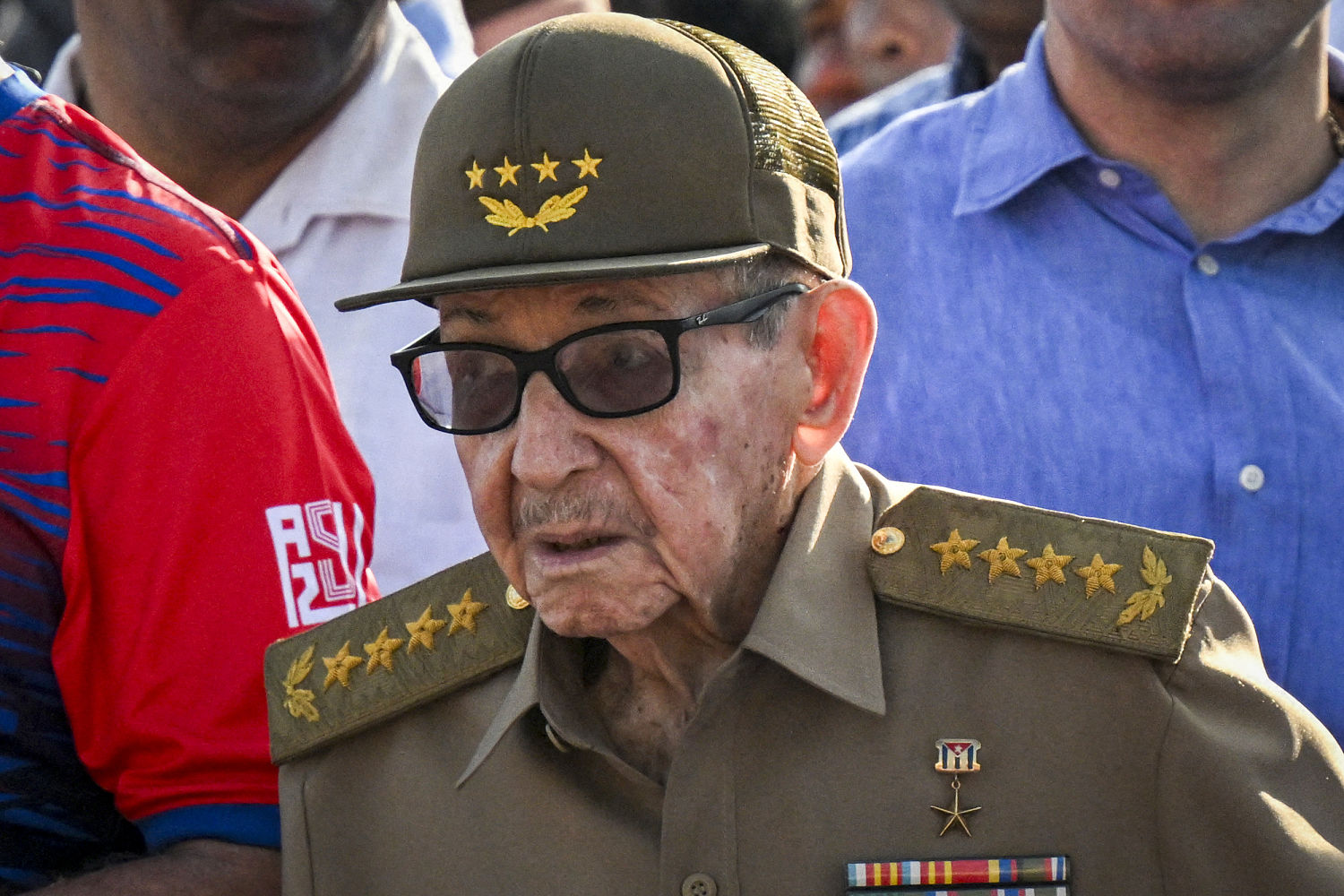
The United States Department of Justice is preparing to unseal a federal indictment against 94-year-old former Cuban President Raúl Castro in Miami on Wednesday. The criminal charges tie back to the February 24, 1996, shootdown of two unarmed civilian aircraft operated by the exile humanitarian group Brothers to the Rescue, an attack by Cuban MiG fighters that killed four Cuban-American men over international waters.
While the legal paperwork will focus on an act of military aggression committed three decades ago, the true catalyst for this indictment is not a sudden breakthrough in a cold case. It is the architectural centerpiece of a coordinated, aggressive push by the Trump administration to force immediate regime change on an economically strangled island.
By using a thirty-year-old tragedy to legally brand Cuba’s ultimate power broker a criminal, Washington is deploying criminal law as a geopolitical wrecking ball. The indictment comes directly on the heels of a de facto energy blockade that has left the island entirely without diesel and fuel oil, triggering unprecedented blackouts across the nation of 11 million people. This is not standard diplomatic friction. This is an orchestrated campaign to push the Cuban government to total collapse, using the threat of criminal prosecution to dictate terms to a dying regime.
The Long Fuse of the 1996 Shootdown
To understand the mechanics of the impending indictment, one must look at the specific chain of command on the afternoon of February 24, 1996. Three small Cessna 337 Skymasters, operated by the Miami-based Brothers to the Rescue organization, took off from Florida to search the straits for rafters fleeing the island.
The group, led by Bay of Pigs veteran José Basulto, had previously flown into Cuban airspace to drop anti-communist leaflets directly over Havana. The Cuban government viewed these acts as intolerable violations of sovereignty and potential covers for sabotage.
When two of the civilian planes neared the 12-mile territorial limit, Cuban military jets intercepted them and fired air-to-air missiles. Carlos Costa, Armando Alejandre Jr., Mario de la Peña, and Pablo Morales died instantly.
A subsequent investigation by the International Civil Aviation Organization confirmed the attacks occurred in international airspace, a finding Havana has always rejected.
At the time, Raúl Castro was the Minister of the Revolutionary Armed Forces. He held absolute administrative control over the air defense networks that tracked, intercepted, and destroyed those planes.
While the Clinton administration responded by signing the Helms-Burton Act to codify the US trade embargo into permanent law, it consciously stopped short of pursuing criminal indictments against the Castro brothers. The calculus then was stability. The calculus now is disruption.
Federal prosecutors in the Southern District of Florida previously indicted three Cuban military pilots and a general in 2003 for their roles in the shootdown, but those individuals remained safely out of reach on the island.
Targeting Raúl Castro directly, even in his deep retirement, alters the legal architecture completely. It strips away the historical fiction that the shootdown was an isolated action by overzealous regional commanders and places the criminal culpability explicitly at the feet of the political elite.
The Secret Leverage Game in Havana
The timing of the indictment reveals a highly calculated strategy of carrot-and-stick diplomacy. Just hours before leaks of the grand jury proceedings surfaced, CIA Director John Ratcliffe led a high-level American delegation on a sensitive visit to Havana.
Ratcliffe met with senior Cuban intelligence officials and Interior Minister Lázaro Álvarez Casas, alongside Raúl Castro’s own son, Alejandro "Raúlito" Rodríguez Castro.
During those closed-door sessions, Ratcliffe reportedly delivered an explicit message from the White House. The United States offered a $100 million humanitarian assistance package to alleviate the island's crippling food and medicine shortages.
The catch was non-negotiable. The Cuban government had to agree to immediate, fundamental economic and political reforms.
The unsealing of this indictment is the penalty for Cuba's refusal to capitulate on the spot. It signals to the remaining political structure in Havana that the alternative to compliance is systemic legal and financial decapitation.
By naming Raúl Castro, Washington is effectively informing the next generation of Cuban leaders, including President Miguel Díaz-Canel, that their survival cannot be guaranteed by the old guard's shadow network.
The Strategy of the Carribean Chokehold
The indictment does not exist in a vacuum. It follows a highly coordinated campaign by the administration to sever Cuba's external lifelines, particularly its historical energy dependence on Venezuela.
Following the recent US military operation that removed Nicolás Maduro from power in Caracas, Washington immediately choked off the flow of subsidized oil that had kept Cuba’s power grid alive for a quarter of a century.
The results on the ground are immediate and severe. Energy Minister Vicente de la O Levy conceded that the island’s reserves of diesel and fuel oil have reached absolute zero.
Havana is dark. Industrial output has stalled, and the government has been forced to ration electricity to vital infrastructure like hospitals, leaving residential neighborhoods without power for days at a time.
Cuban Energy Reserve Status (May 2026)
---------------------------------------
Diesel Fuel Stocks:      0%
Fuel Oil Reserves:       0%
Grid Operational Margin: Critical Breakdown
Primary Supply Source:   Terminated (Post-Maduro Venezuela)
The administration is betting that the combination of total economic deprivation and the public criminalization of their revolutionary icon will break the internal cohesion of the Cuban military.
Historically, the Revolutionary Armed Forces have maintained a monopoly over the most lucrative sectors of the Cuban economy, including the tourism infrastructure through the state-run conglomerate GAESA.
By threatening the leadership with federal criminal trials in Miami, the Justice Department is attempting to drive a wedge between the ideological hardliners and the younger officers who manage the daily operations of the state.
The Gray Areas of Extradition and Realpolitik
The legal reality of Wednesday’s press conference in Miami is that Raúl Castro will never sit in a federal courtroom in the United States. At 94 years old, the former leader is highly unlikely to ever leave the sovereign protection of Cuba, making actual execution of an arrest warrant impossible without total military intervention.
This brings the utility of the entire exercise into question. If the target cannot be captured, the indictment functions primarily as a psychological weapon rather than a traditional instrument of justice.
There is a distinct danger that this strategy could backfire by hardening internal resistance. For decades, the Cuban state has sustained itself by exploiting the narrative of the defensive underdog resisting American imperialism.
An indictment centered on an event from 1996 allows the state apparatus to re-mobilize its base, framing the current economic collapse not as a failure of communist central planning, but as a direct, aggressive assault by Washington.
Furthermore, the legal precedent introduces significant complications for international diplomacy. Charging a former head of state for a military action taken during an ongoing, decades-long geopolitical standoff tests the boundaries of sovereign immunity.
While the United States asserts jurisdiction because the victims were American citizens killed in international airspace, foreign adversaries may look at this template as a justification to launch retaliatory criminal proceedings against American political and military figures for historical actions taken abroad.
The Unravelling Architecture of Cuban Power
The true test of Washington's gambit lies in how the internal mechanics of the Cuban state respond once the indictment becomes official. The current government is already facing structural instability unlike anything seen since the Special Period of the 1990s.
Spontaneous protests over blackouts and food scarcity are becoming more frequent, and the state's ability to suppress dissent through material concessions has evaporated alongside its fuel reserves.
By removing the possibility of a slow, managed transition of power from the Castro era to a modernized civilian administration, the United States is intentionally accelerating a flashpoint.
The impending announcement in Miami, scheduled alongside a ceremony honoring the four dead pilots, marks the formal end of strategic patience. Washington is no longer waiting for the old guard to die out. It is actively forcing the collapse of the house they built.