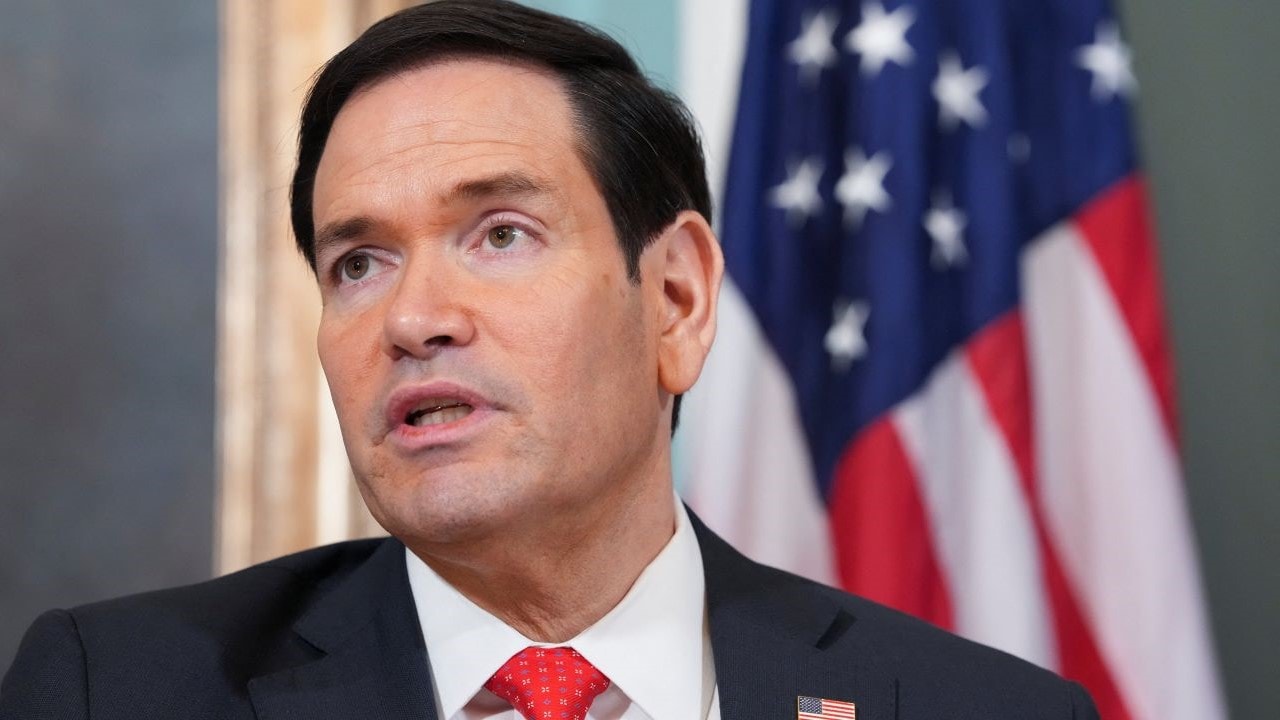
The United States wants to sell India as much energy as it can pump. That is the official diplomatic line from US Secretary of State Marco Rubio as he prepares for a high-stakes, multi-city tour of India. On its surface, the offer sounds like a standard geopolitical win-win: Washington gets a reliable buyer for its surging, record-breaking domestic fossil fuel production, and New Delhi gets a lifeline to replace the oil and gas choked off by the ongoing war in the Middle East.
But look beneath the platitudes of partnership and the reality is far more transactional, complicated, and desperate.
The sudden American eagerness to flood the Indian market with oil, liquefied natural gas, and even Venezuelan crude is not just an act of bilateral goodwill. It is an emergency salvage operation for a global economy buckling under a severe energy shock. By pushing American crude onto New Delhi, Washington is trying to break India’s dependence on traditional Middle Eastern supply lines while simultaneously trying to enforce a shifting web of sanctions that India has spent the last few years quietly ignoring.
The Hormuz Chokepoint and the Price of War
The timing of Rubio’s trip is entirely dictated by geography and gunfire. For nearly three months, the Strait of Hormuz has been effectively closed, the result of a devastating conflict involving the US, Israel, and Iran. That narrow waterway is the throat of the global oil trade. With the gates slammed shut, global energy flows have crimped dramatically, sending Brent crude prices skyrocketing by more than 50% since late February.
For India, this is an existential crisis. New Delhi imports roughly 85% of its crude oil. Even more critical is liquefied petroleum gas, the basic cooking fuel used by hundreds of millions of Indian households. Before the war, nearly 90% of India’s LPG imports passed directly through the now-blocked Strait of Hormuz.
American officials are quick to deflect blame. US Ambassador Sergio Gor recently noted that the economic fallout is entirely Iran's fault for closing the strait, asserting that Washington is merely trying to help a friend diversify its energy portfolio.
Predictive data shows that India is already on track to import record amounts of American LPG and LNG this month. The shift is born out of raw necessity, but it comes with a massive financial penalty.
The Hidden Costs of the American Lifeline
Buying American energy is easy to talk about in a press briefing, but brutal to execute on a balance sheet. The physical infrastructure of oil refining is highly specialized. Indian refineries, particularly the massive complexes on the western coast owned by Reliance Industries and Indian Oil Corporation, were built to process specific grades of crude.
- The Chemistry Mismatch: Most US crude is light and sweet. Indian refiners generally prefer heavier, sourer grades from the Middle East or Russia, which yield a higher percentage of the diesel and transport fuels that power the Indian economy. Processing American crude requires refiners to alter their yields, often reducing their overall profit margins.
- The Freight Penalty: Shipping a tanker of oil from Texas or Louisiana to India takes weeks longer than sending one from the Persian Gulf. The longer distances mean higher freight costs and insurance premiums, adding a permanent premium to every barrel India buys from the West.
Because of these structural friction points, political promises rarely dictate long-term refinery buying patterns. Refiners chase margins, not diplomatic communiqués.
To sweeten the deal, Rubio dropped an intriguing diplomatic breadcrumb before his departure, mentioning that Washington sees "opportunities with Venezuelan oil" for New Delhi. This is a subtle admission of a complex geopolitical shell game. The US is essentially offering to look the other way, or actively facilitate, the flow of heavy Venezuelan crude to India—acting as a middleman for a regime it otherwise sanctions—just to keep the Indian economy from collapsing or running back into the arms of Moscow.
The Russian Elephant in the Room
The elephant in every room Rubio will enter during his stops in New Delhi, Kolkata, Agra, and Jaipur is Russia.
When Western sanctions hit Moscow following the invasion of Ukraine, India did not join the boycott. Instead, New Delhi snapped up deeply discounted Russian Urals crude, turning Moscow into its largest single oil supplier. The Biden administration grumbled but ultimately tolerated the move, realizing that completely removing Russian oil from the global market would cause a catastrophic price spike.
However, Washington's patience has limits. Last August, Donald Trump slapped an additional 25% tariff on a range of Indian goods specifically to punish New Delhi for its persistent Russian oil purchases.
Now, with the Middle East in flames and global supply chains fractured, the US Treasury Department has adopted an uneven, highly selective enforcement strategy. Ambassador Gor admitted that Washington has let India buy Russian oil that would otherwise be subject to strict penalties.
This creates a deeply contradictory US policy. On one hand, Washington uses punitive tariffs to scold India for dealing with Moscow. On the other hand, it quietly relaxes sanctions enforcement because it needs Russian crude to keep flowing to prevent global inflation from spiraling completely out of control. Rubio’s job is to negotiate a delicate trade deal that formalizes a massive increase in Indian purchases of US energy, theoretically giving New Delhi an off-ramp from Russian dependence, while knowing full well that India cannot afford to quit Moscow cold turkey.
What the Quad is Really Discussing
While energy security is the immediate economic fire that needs extinguishing, Rubio’s visit also coincides with a critical meeting of the Quad foreign ministers on May 26. He will sit down with India's S. Jaishankar, Australia’s Penny Wong, and Japan’s Toshimitsu Motegi.
The official agenda will highlight technology-sharing, maritime security, and defense cooperation. The unvarnished reality is that the US views energy exports as a tool of hard power to lock India into a Western security alignment.
Washington watches with growing unease as China continues to expand its influence across Asia. A vulnerable India, starved of energy and economically hobbled by the closure of the Strait of Hormuz, is an unstable counterweight to Beijing. By positioning the US as India's primary energy guarantor, Washington hopes to gain significant leverage in defense and military sales.
But India has a long history of strategic autonomy. New Delhi has spent decades refusing to become a formal junior partner to any superpower, whether Moscow or Washington. Indian diplomats view energy procurement through the lens of national survival, not ideological alignment. They will happily take American LNG and Venezuelan crude to keep the lights on today, but they will not sign away their strategic independence or their relationship with Russia to do it.
The long-term success of Rubio’s mission will not be measured by the optimistic rhetoric generated during his four days in India. It will be measured by whether the economic fundamentals of American crude can overcome the harsh realities of freight costs, refinery engineering, and India’s stubborn refusal to let Washington dictate its friends.
:max_bytes(150000):strip_icc()/ar-American-Cheese-taste-test-horizon-4x3-54cc339550cd44b9a818c17bdfd5428d.jpg)