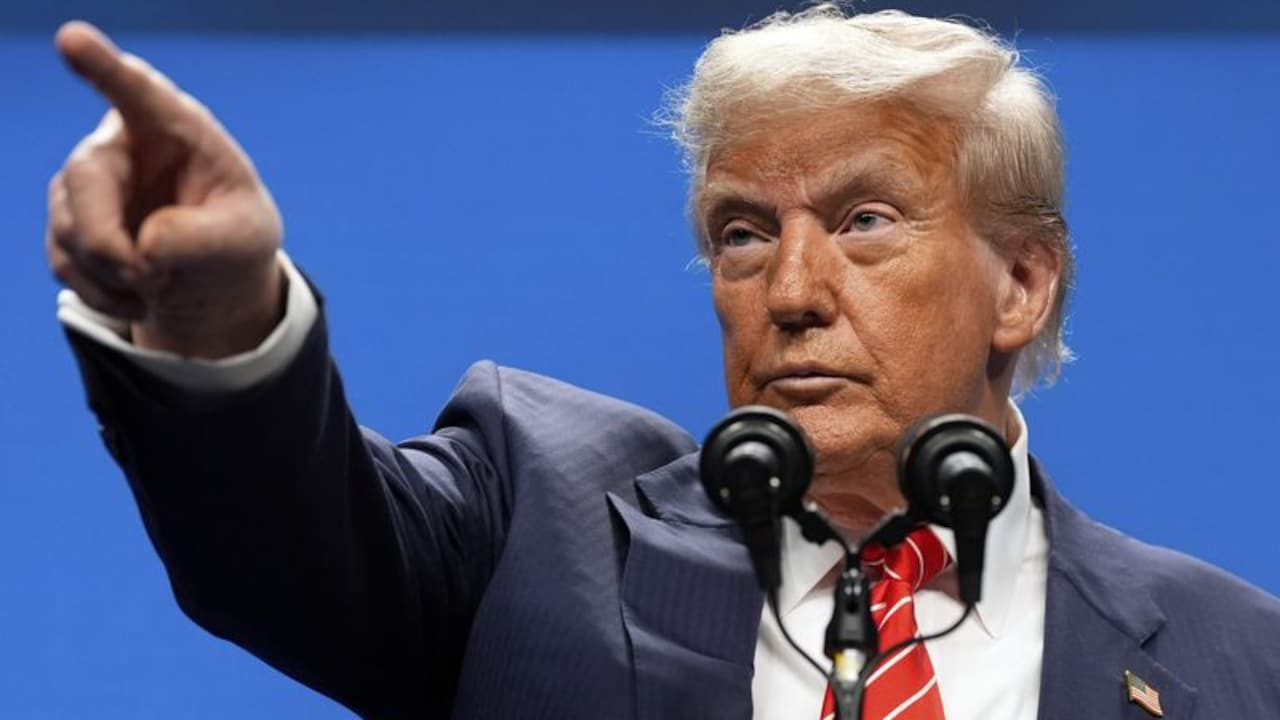
The arrival of a high-level American trade delegation in New Delhi this week was supposed to be a victory lap. For fifteen months, negotiators have been hammering out the first tranche of a comprehensive Bilateral Trade Agreement to solidify economic ties under the second Trump administration. Instead, the narrative was instantly upended when the Office of the United States Trade Representative dropped a bombshell Section 301 report proposing a new 12.5% tariff on Indian goods over alleged failures to police forced labor.
Superficial accounts have treated this as a sudden diplomatic breakdown or a direct accusation that Indian factories are exploiting forced labor. That reading misses the mechanics of modern trade warfare. If you liked this piece, you should check out: this related article.
The USTR investigation does not claim that Indian exports to the US are made by forced laborers. Rather, Washington is punishing New Delhi for not having a strict legal framework to ban the importation of forced-labor goods from third-party nations into India. By failing to police its own borders against these illicit supply chains, the USTR argues, India allows global trade ecosystems to be distorted, giving its domestic manufacturers an unfair cost advantage over American workers.
This sudden escalation is not a random act of aggression. It is a highly calculated legal maneuver designed to replace a crumbling tariff strategy, and it serves as the ultimate leverage play while American negotiators sit across the table from their Indian counterparts in Delhi. For another perspective on this event, see the recent coverage from NPR.
The Legal Shell Game Behind Trump 2.0 Tariffs
To understand why the USTR acted this week, look at the legal battlefield back in Washington. Earlier this year, the US Supreme Court struck down a sweeping executive action intended to enforce broad reciprocal tariffs. That judicial rebuke left the administration scrambling for alternative statutory authority to sustain its aggressive protectionist agenda before its temporary 10% global baseline levy expires next month.
Enter Section 301 of the Trade Act of 1974.
By weaponizing institutional investigations into systemic issues like excess industrial capacity and labor standards, the administration has found a legally resilient backdoor to implement the exact same economic penalties. The forced-labor probe, launched in March 2026, evaluated 60 economies accounting for the vast majority of US imports.
The USTR divided the world into two tiers. Nations with active, partial, or negotiated enforcement mechanisms against forced-labor imports face a 10% penalty. Meanwhile, 54 economies deemed completely non-compliant, including India, China, Japan, and South Korea, have been slapped with the maximum proposed 12.5% rate.
By shifting the battlefield from executive decrees to institutional labor investigations, Washington has immunized its tariff policy against domestic court challenges while preserving its ability to penalize foreign competitors.
The Illusion of the February Breakthrough
Just four months ago, Washington and New Delhi celebrated a major breakthrough. Under a joint framework announced in February 2025, India agreed to slash duties on American agricultural products and industrial machinery. In exchange, the United States established a reciprocal tariff structure that set a predictable path for bilateral trade.
Commerce Minister Piyush Goyal recently noted that the technical legal text was down to "commas and full stops." Yet, the underlying stability of that deal was entirely dependent on Washington's ability to maintain its domestic trade policy. The moment federal courts dismantled that framework, the architecture of the bilateral agreement fractured.
Indian exporters are now caught in an administrative nightmare. Companies are currently fighting legal battles in US courts to recoup millions of dollars in duties paid under the previous, invalidated tariff regimes.
The introduction of the Section 301 threat effectively resets the clock on these negotiations. The American trade team currently in Delhi is not there to simply sign a finalized document. They are wielding the 12.5% tariff proposal as an active weapon to extract deeper market access concessions from India.
Why the Supply Chain Argument Rings Hollow
The strategic friction between the two nations exposes a fundamental policy contradiction in Washington's global economic vision. For years, the United States has explicitly encouraged American corporations to diversify away from China. India has been a primary beneficiary of this friend-shoring initiative, rapidly expanding its manufacturing capacity in electronics, pharmaceuticals, and textiles.
http://googleusercontent.com/image_content/235
Yet, the USTR's latest mandate penalizes India for the very structural realities that make it an attractive alternative to China. Developing economies rely heavily on complex, transnational supply chains for raw materials and intermediate components. Expecting New Delhi to instantly erect a microscopic customs enforcement apparatus mirror-imaging the US Uyghur Forced Labor Prevention Act is an impossible logistical standard.
If Washington enforces these tariffs uniformly, it will actively penalize the exact supply chains it spent years trying to cultivate. The administrative cost of proving the origin of every thread, chemical precursor, or mineral input will disproportionately harm mid-sized Indian exporters who lack the legal compliance budgets of multinational corporations.
The Clock is Ticking for Indian Exporters
Despite the alarming headlines, the economic sky is not falling tomorrow. The proposed USTR measures are currently entering a mandatory public review phase. The American trade agency has set a July 6 deadline for written public comments, followed by formal Section 301 panel hearings beginning on July 7.
This multi-week window provides both nations with a critical off-ramp. History shows that the administration uses these public comment periods as a pressure cooker. The threat of a 12.5% tariff is real, but its primary function is to compel India to alter its trade laws, sign stricter enforcement pledges, or accept less favorable terms in the pending bilateral trade agreement.
For New Delhi, the strategic priority during this week's three-day session is ensuring that Indian goods maintain a competitive tariff advantage relative to direct regional rivals like Vietnam or Bangladesh. If India can negotiate an exemption or a lower, capped cumulative rate through the final trade deal, it can bypass the worst of the Section 301 fallout.
If negotiations stall, the economic impact will be immediate. The uncertainty alone will cause American buyers to hesitate, freezing long-term purchase orders and driving capital toward jurisdictions with more predictable trade statuses. In the theater of international commerce, the threat of a tariff is often just as damaging as the tax itself.