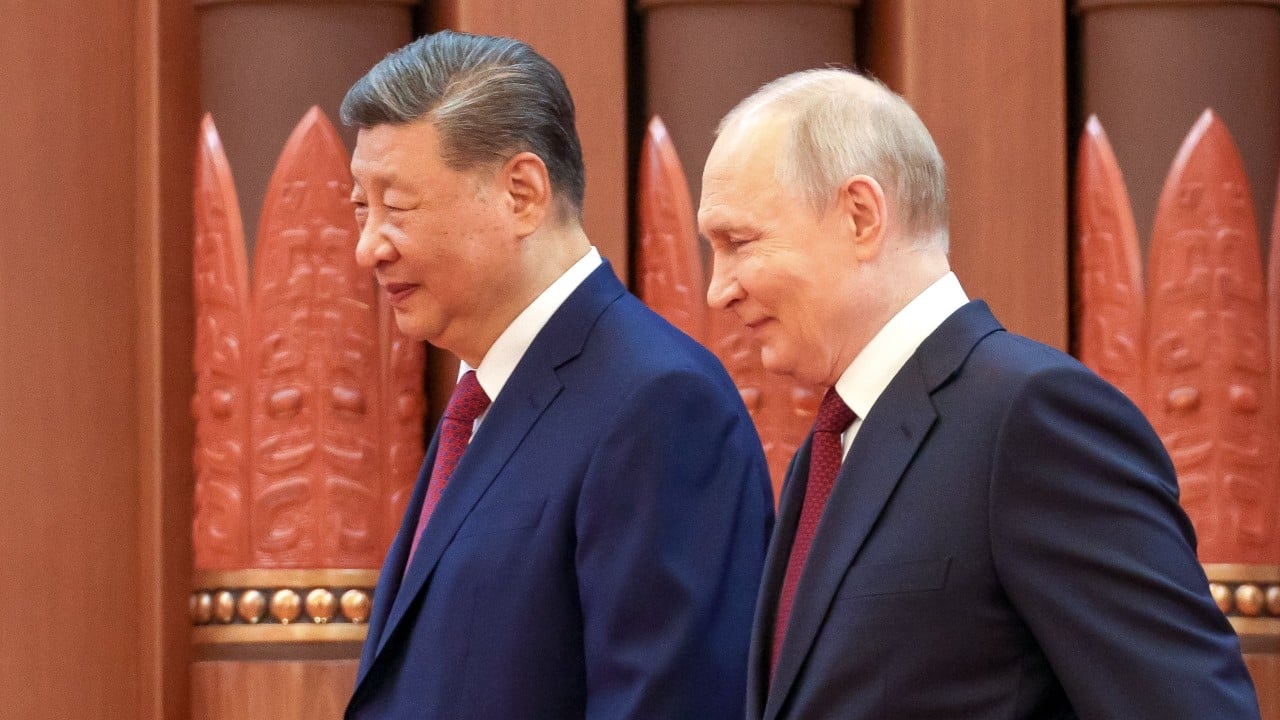
The global scientific balance of power has shifted. For decades, Western policymakers operated under the comfortable assumption that authoritarian regimes could copy, but never truly innovate. That assumption is dead. A formidable scientific alliance between Beijing and Moscow is systematically dismantling Western technological dominance, pooling resources to create an independent research ecosystem that functions entirely outside the influence of Washington, London, or Brussels.
This is not a vague, future threat. It is happening now. By combining China’s massive capital, manufacturing scale, and computational power with Russia’s historical brilliance in theoretical physics, aerospace engineering, and advanced materials, this axis is actively moving the center of gravity of global research. While Western universities grapple with funding shortfalls, political polarization, and increasingly restrictive security protocols, the Eurasian bloc is executing a cold, transactional strategy designed to achieve total technological self-reliance. Learn more on a similar issue: this related article.
The Machinery of the Eurasian Scientific Axis
To understand how this alliance operates, one must look past the superficial diplomatic photo-ops and examine the concrete mechanisms of state-directed research. This is not a marriage of mutual affection. It is a marriage of acute geopolitical necessity.
Russia, severed from Western supply chains and capital markets by sweeping sanctions, possesses an urgent need for hardware, industrial machinery, and microelectronics. China, staring down its own impending technological containment by the West, requires rapid breakthroughs in fundamental sciences where Russia has historically excelled, such as hypersonic aerodynamics, nuclear physics, and deep-sea exploration. Additional journalism by Mashable delves into comparable views on this issue.
The division of labor is highly efficient. Consider the field of aerospace and satellite technology. Russia's Roscosmos and China's National Space Administration are no longer merely sharing data; they are co-developing the International Lunar Research Station. This project runs in direct competition with the NASA-led Artemis Accords.
The integration runs much deeper than headlines suggest. It manifests in joint laboratories embedded within universities across Siberia and northeastern China. These institutions are quietly working on specialized areas like Arctic maritime engineering and high-performance computing algorithms designed to bypass Western software monopolies.
The Capital and Brain Integration
Money and minds are moving in new patterns. Western academic institutions once served as the ultimate destination for the world's brightest minds. That reality is fracturing under the weight of geopolitics.
The numbers tell a clear story. According to data tracking global research publications, joint Chinese-Russian scientific papers have risen sharply over the last five years. These are not low-tier, superficial studies. They are highly cited papers concentrated in critical disciplines:
- Advanced Materials Science: Developing synthetic crystals and superalloys capable of withstanding extreme temperatures, vital for military and aerospace hardware.
- Quantum Communications: Building unhackable encryption networks that utilize satellite-to-ground laser systems, operating entirely outside Western-controlled internet architecture.
- Deep-Sea Engineering: Creating autonomous submersibles capable of operating at extreme depths, crucial for both resource extraction and undersea infrastructure monitoring.
Beijing has poured hundreds of billions of dollars into its "Double First-Class University Plan" to elevate its domestic institutions to world-class status. Russia contributes its elite, specialized institutes like the Moscow Institute of Physics and Technology and the Novosibirsk State University. When Chinese capital meets Russian theoretical expertise, the incubation period for new technology shrinks dramatically.
Breaking the Western Software and Hardware Monopoly
For years, the West maintained a chokehold on global science through its control of foundational tools. If you wanted to design a microchip, run a complex molecular simulation, or analyze vast climate datasets, you used Western software running on Western-designed semiconductors.
That structural advantage is eroding. Driven by the threat of further sanctions, Chinese and Russian engineers are collaborating on open-source architectures like RISC-V to design microprocessors that do not rely on American intellectual property.
In the realm of scientific software, the shift is equally pronounced. Russian mathematicians are highly skilled in creating custom simulation tools from scratch, bypassing the need for commercial Western software suites. By integrating these custom tools with China’s massive supercomputing clusters, the alliance can run complex aerodynamic and nuclear simulations without a single piece of Western technology.
This creates a self-sustaining loop. The more isolated these countries become from Western tools, the faster they develop their own. Once these proprietary systems reach maturity, they are exported to other nations across the Global South, creating an alternative scientific infrastructure that the West cannot monitor, regulate, or penalize.
The Structural Rot in Western Academia
While the Eurasian bloc executes a hyper-focused, state-directed scientific strategy, the Western research apparatus is struggling with self-inflicted wounds. The Western model, which relied on open international collaboration, global talent recruitment, and corporate-academic partnerships, is buckling under structural strain.
Funding is the primary driver of this decay. Public investment in fundamental research across many Western nations has stagnated in real terms, forcing universities to rely heavily on corporate funding or tuition fees from international students. Corporate-driven research naturally prioritizes short-term commercial viability over long-term scientific breakthroughs. A company wants an app or a marketable drug within three years; it rarely funds a twenty-year exploration into fundamental quantum mechanics.
Furthermore, the atmosphere within Western research labs has grown defensive. Increased regulatory scrutiny, meant to prevent intellectual property theft, has created a climate of suspicion. Intellectual containment protocols have slowed down international collaborations, bogged researchers down in bureaucratic compliance, and alienated talented foreign scientists who now choose to return home or move to non-Western research hubs.
The West is inadvertently decoupling itself from the global talent pool at the exact moment its competitors are unifying theirs.
The Myth of Authoritarian Stagnation
A persistent narrative in Western policy circles suggests that science cannot truly flourish without political freedom. This view argues that top-down, authoritarian control inevitably stifles creativity, leads to falsified data, and crushes the independent thinking required for genuine innovation.
This is a dangerous misreading of history and current reality. While political interference can certainly damage social sciences and humanities, fundamental hard sciences like physics, mathematics, and chemistry operate on objective, measurable laws. A particle accelerator does not care about the political system of the country it is built in.
The Soviet Union proved that state-directed science could achieve monumental breakthroughs, from the first artificial satellite to pioneering work in nuclear fusion and theoretical mathematics. Current Chinese advancements in quantum computing, hypersonic flight, and 5G infrastructure demonstrate that a centralized, authoritarian state can direct resources with a speed and scale that democratic market economies simply cannot match.
By pooling their distinct strengths, Beijing and Moscow are mitigating their individual weaknesses. China provides the industrial scale and data processing power; Russia provides the deep, foundational theory. This combination bypasses the traditional bottlenecks of authoritarian science, creating a highly adaptive system.
The Global South Tilts Toward the New Center
This scientific realignment is not happening in a vacuum. It is exerting a powerful gravitational pull on the rest of the world, particularly across developing nations in Asia, Africa, and Latin America.
The West has traditionally offered scientific aid with strings attached, requiring adherence to specific governance standards, intellectual property regimes, and environmental criteria. The Chinese-Russian alternative comes with no such conditions.
Through initiatives like the "Digital Silk Road," Beijing is exporting advanced scientific infrastructure to developing nations. This includes satellite tracking stations, biotechnology laboratories, and regional supercomputing centers. Russia supplements this by offering turnkey nuclear power plants, advanced agricultural technology, and deep-well drilling expertise.
When a developing nation requires high-tech solutions to secure its energy grid, build its communication networks, or modernize its agricultural sector, it no longer looks exclusively to Boston, Silicon Valley, or Geneva. The alternative pipeline is cheaper, faster, and free from Western political moralizing. As these nations adopt Eurasian technology standards, their own scientific communities become integrated into the Beijing-Moscow orbit, permanently shifting the global flow of data, talent, and influence.
The Failure of Containment
Western strategies to halt this scientific realignment have relied heavily on economic sanctions, export controls, and visa restrictions. The explicit goal was to starve the Russian and Chinese research sectors of critical components and elite talent.
The strategy has failed. Instead of crippling their capabilities, containment has acted as an accelerant for self-reliance. When the US restricted China's access to top-tier artificial intelligence chips, it forced Chinese tech giants and state labs to collaborate on optimizing domestic hardware and developing superior software efficiency. When the West cut ties with Russian universities, it pushed those institutions directly into the arms of Chinese partners who were waiting with open checkbooks.
Sanctions work on the assumption that the target has no viable alternatives. By creating an alternative scientific ecosystem, China and Russia have nullified that assumption. They have built an internal market for ideas and technology that is large enough to sustain itself indefinitely, rendering Western embargoes increasingly obsolete.
The West is facing an entirely new paradigm. The historical monopoly on high-end scientific innovation is gone, replaced by a permanent, highly competitive bipolar system. Survival in this new era requires more than defensive containment; it demands a radical reinvestment in the fundamental structures of Western science, free from bureaucratic inertia and short-term corporate thinking. The race is no longer about stopping the competitor; it is about out-running them.