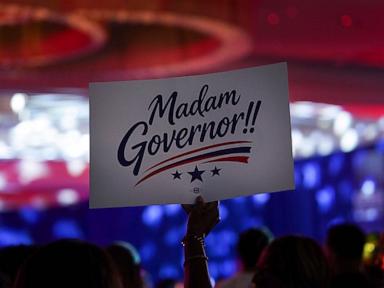
History in American politics rarely arrives as an accident. When the dust settled on the 2026 midterm elections earlier this month, cable news panels rushed to compile tidy lists of demographic firsts, breaking down who shattered which glass ceiling in statehouses, governor's mansions, and the halls of Congress. The surface narrative is inspiring, easy to digest, and largely misses the point. The candidates who made history in the 2026 midterm elections did not merely ride a wave of changing demographics; they exploited structural shifts in campaign finance, redistricting battles, and localized voter realignment that political operatives have spent a decade quietly engineering.
To understand what actually happened on November 3, 2026, you have to look past the biographical bullet points. A "first" on election night is almost always the trailing indicator of a much deeper institutional change. Whether it was younger millennial and Gen Z challengers toppling multi-term incumbents in safe districts, or barrier-breaking statewide nominees winning in territories long written off by national party committees, the 2026 cycle proved that traditional political gatekeeping is losing its grip. For a more detailed analysis into this area, we suggest: this related article.
How Traditional Gatekeepers Lost Control of the Ballot
For decades, making history in a midterm election required surviving a gauntlet designed to weed out outsiders. Party bosses, legacy donors, and national committee consultants controlled ballot access, media buys, and ballot-line endorsements. If a candidate did not fit the rigid mold of "electability"—a term historically used to describe older, wealthy, predominantly white men—the institutional money simply dried up before the primary.
That firewall cracked in 2018, fractured in 2022, and effectively collapsed in 2026. To get more information on this development, extensive reporting can be read at TIME.
The mechanism behind this shift is straightforward, even if the pundits prefer to treat it like magic. Small-dollar digital fundraising platforms, combined with decentralized local organizing networks, allowed non-traditional candidates to bypass regional party chairs entirely. Instead of begging for ten-thousand-dollar checks at country club luncheons, barrier-breaking candidates built financial war chests through thousands of twenty-dollar contributions from across the country, fueled by hyper-targeted short-form video campaigns.
Consider the math of a modern House race. In previous eras, a challenger needed early institutional validation to prove viability to major donors. In 2026, viral authenticity became its own currency. Candidates who looked, sounded, and lived like the working-class or marginalized communities they sought to represent turned their outsider status from a liability into their primary fundraising engine. When national party committees finally woke up to these races in late autumn, the historic nominees had already locked down the infrastructure needed to win.
The Redistricting Paradox Nobody Wants to Admit
There is an uncomfortable truth buried beneath the celebratory headlines about representation in the 119th and incoming 120th Congress. Many of the historic victories in the 2026 midterm elections were made possible by aggressive, partisan gerrymandering.
Following the post-2020 census redistricting cycle and a string of subsequent court-ordered map redraws between 2023 and 2025, both major parties spent years packing voters into hyper-partisan districts. The goal was predictability. Strategists wanted to guarantee safe seats for their respective sides, eliminating competitive general elections in favor of ideological predictability.
They got predictability in November, just not the kind the incumbents wanted.
When a congressional or state legislative district is engineered to lean twenty points toward one party, the general election becomes a formality. The real contest moves to the primary, where turnout is lower, the electorate is more engaged, and ideological or generational divides cut sharpest. In dozens of districts across the country in 2026, that primary dynamic became the exact vehicle that propelled historic candidates into office.
Why Safe Seats Became Dangerous for Incumbents
In a competitive swing district, party leaders successfully argue that voters must stick with a "safe," familiar incumbent to avoid handing the seat to the opposition. That argument evaporates in a heavily gerrymandered district. Voters know the opposing party has zero chance of winning in November, which strips away the fear of splitting the ticket or risking the seat.
Consequently, primary voters in 2026 felt liberated to vote their actual preferences rather than their fears. Longtime incumbents who had grown comfortable ignoring constituent services—relying instead on partisan inertia—found themselves blindsided by younger, more diverse challengers who knocked on every door in the district. The maps designed to protect the political establishment ended up creating a protected incubation space for the very candidates who dismantled it.
The Myth of the Monolithic Demographic Wave
Every two years, media outlets fall into the trap of treating demographic groups as unified voting blocs. They assume that a historic candidate wins simply because voters who share their race, gender, or background show up in record numbers to pull the lever. Reality on the ground in 2026 was far messier, and far more interesting.
Exit polling and precinct-level data from this month's elections reveal that the candidates who broke barriers did not win on identity alone. In fact, candidates who leaned exclusively on biographical novelty often underperformed expectations, particularly in suburban and rural counties where voters remain deeply skeptical of nationalized political branding.
The winners who made history in 2026 shared a distinct strategic discipline. They treated their historic identity as context, not as a policy platform.
- Hyper-local economic framing: Instead of reciting national talking points, successful barrier-breaking candidates anchored their campaigns in tangible, kitchen-table issues—property tax spikes, local hospital closures, municipal water infrastructure, and zoning laws.
- Coalition building across unlikely lines: In several high-profile statehouse and municipal races, historic nominees won by peeling off moderate and independent voters who had previously backed conservative incumbents, doing so by emphasizing government accountability and fiscal transparency.
- Direct constituent engagement: Rather than relying on polished television commercials produced by Washington consultants, winning campaigns prioritized unscripted town halls, neighborhood canvassing, and direct responses on local community forums.
When a candidate demonstrates mastery over local zoning codes or state Medicaid reimbursement rates, voters stop seeing them through the lens of cable news stereotypes. Competence disarms prejudice faster than any campaign slogan ever could.
What the National Parties Still Get Wrong About Electability
Even after watching a fresh wave of historic candidates win tough races in 2026, the consultancy class in Washington remains stubbornly wedded to outdated models of political viability. If you look at where the major super PACs and national committees spent their money during the final six weeks of the campaign, a familiar pattern emerges. Millions of dollars poured into traditional, central-casting candidates in marginal districts who ultimately lost, while history-making challengers in neighboring districts fought for scraps until the final days of October.
This disconnect comes down to how political risk is priced in Washington. Consultants are rarely fired for backing a conventional candidate who loses; they are frequently blacklisted if they back an unconventional candidate who stumbles. This creates a structural bias toward mediocrity and sameness.
The Hidden Cost of Delayed Institutional Support
When national organizations wait until a historic candidate has already proved they can win before releasing funds, it creates a self-fulfilling prophecy. Late money buys expensive, inefficient television airtime in October, when ad rates are at their peak and voter opinions are largely hardened. Early money, by contrast, funds the unglamorous field operations—data analytics, voter registration drives, and multilingual outreach—that actually expand the electorate.
The candidates who broke through in 2026 succeeded in spite of this institutional hesitation, not because of it. Many had to rely on independent grassroots coalitions, labor unions, and issue-based advocacy groups to build their ground games months before the major party committees bothered to return their phone calls.
Governing Is Harder Than Breaking the Ceiling
Winning an election is a logistical triumph; governing inside an entrenched institution is an entirely different war. As the historic class of 2026 prepares to take their oaths of office in January, the celebrations will quickly give way to the brutal mechanics of legislative power.
Seniority systems, committee assignments, and leadership elections in Congress and state legislatures are still heavily weighted toward tenure. A freshman lawmaker who just made history by unseating a twenty-year incumbent does not inherit that incumbent's committee gavel. Instead, they start at the bottom of the seniority ladder, often facing subtle—and sometimes overt—resistance from colleagues who view their arrival as a threat to the established order.
The true test of the 2026 midterm elections will not be measured by the photographs taken on swearing-in day. It will be measured in the legislative sessions of 2027 and 2028, when these barrier-breaking lawmakers attempt to translate their campaign promises into budgets, statutes, and regulatory oversight. Some will master the procedural rules and reshape their institutions from the inside. Others will find themselves neutralized by the very political machinery they campaigned against. History records the names of those who win the seat, but it only remembers the ones who figure out how to use the power once they sit down.


