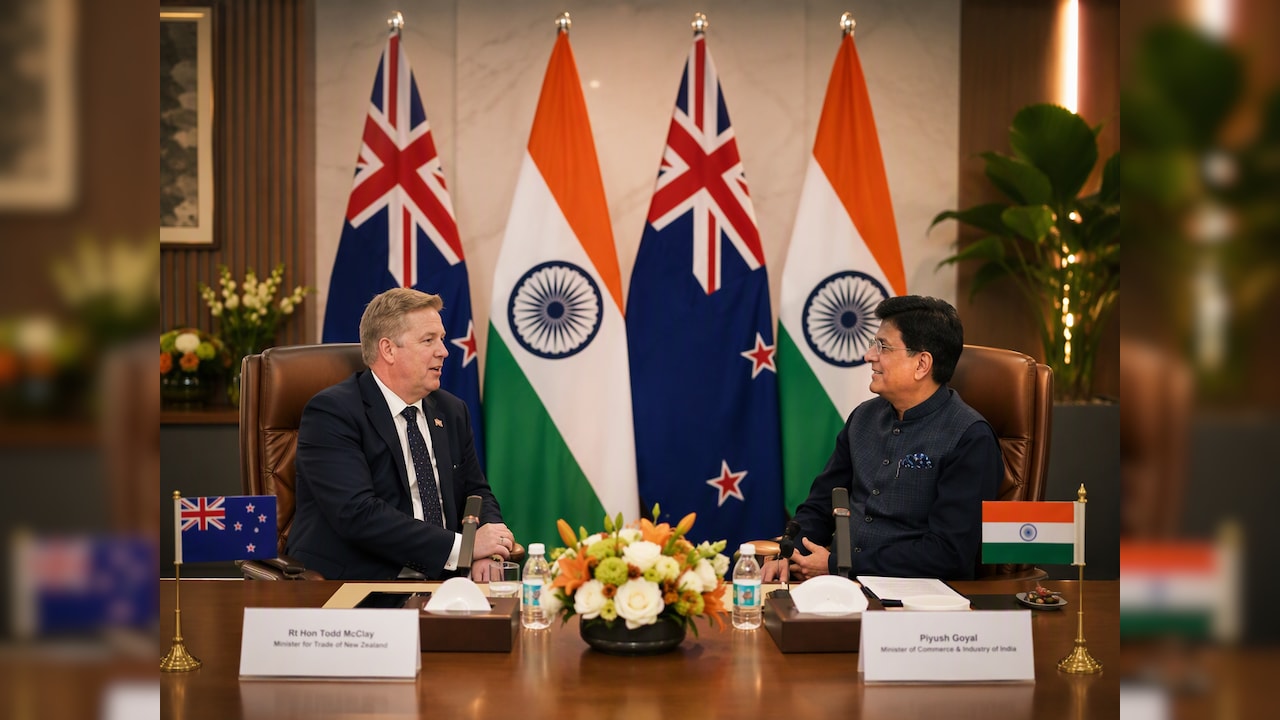
When the India New Zealand Free Trade Agreement entered into force on October 20, 2026, the sector winners were not the headline commodities politicians love to argue about. For India, immediate zero-duty entry across New Zealand tariffs favors labor-heavy and mid-tier manufacturers such as textiles and apparel, leather and footwear, engineering goods, pharmaceuticals, and processed foods. For New Zealand, the real commercial upside sits in forestry and wood products, wool, sheep meat, apples and kiwifruit quotas, and wine, while dairy remains largely walled off on India's exclusion list.
Press releases make trade deals sound like a ribbon-cutting ceremony. Real trade happens in customs ledgers, container yards, and boardroom margin spreadsheets.
Both governments have set a target to double bilateral trade in goods and services to NZ$7 billion by 2030. On paper, that is an ambitious leap from a relatively modest baseline—India's merchandise exports to New Zealand stood at roughly US$711 million in FY 2024–25, alongside US$634 million in services trade in 2024. Yet a headline target rarely tells you who makes money in year one and who runs into a regulatory wall in year three.
Why Headline Tariff Cuts Rarely Tell the Whole Story
Trade negotiators love percentages. They cite how many tariff lines drop to zero on day one or how many billions of dollars in trade are covered.
A tariff cut only helps if your landed price, shipping time, and compliance paperwork beat the rival already sitting on the shelf.
New Zealand's pre-FTA import duties were already low by global standards, averaging roughly 2.2% to 2.36% and capping out around 10% on select goods. Removing a 5% or 10% duty helps narrow price gaps on Indian garments, footwear, auto components, and medical consumables. It does not magically erase ocean freight transit times from Mumbai or Chennai to Auckland, nor does it turn a small island market of just over five million people into a volume juggernaut overnight.
India's tariff schedule tells a more guarded story. New Delhi liberalized roughly 70% of its tariff lines, covering about 95% of New Zealand's current export value to India, while keeping nearly 30% of tariff lines on an exclusion list. That split reveals the core bargain of the pact: give New Zealand broad market access across industrial inputs, horticulture, and select consumer categories, while shielding politically sensitive domestic sectors from sudden import surges.
A tariff concession on paper is only a ticket to compete; rules of origin, sanitary and phytosanitary checks, and domestic distribution decide who actually captures margin.
Even when duties fall to zero or step down over three, five, seven, or ten years, exporters still face Rules of Origin documentation to prove goods genuinely qualify under the agreement. Miss a documentation standard or misclassify a tariff code, and the shipment can get stuck paying standard most-favored-nation rates or sitting at port while clerks sort out paperwork.
Indian Sectors Positioned to Gain Ground
For Indian exporters, the biggest immediate shift is predictability. Entering New Zealand with zero customs duty across all tariff lines removes a cost friction that previously pinched margins on price-sensitive goods.
Textiles, Apparel, and Footwear
Labor-intensive manufacturing is where tariff relief can translate fastest into buyer inquiries. Indian apparel, made-ups, carpets, leather goods, and footwear previously faced duties reaching up to 10% in New Zealand.
Eliminating those duties gives Indian suppliers a cleaner shot at mid-market retail orders and private-label contracts. Still, scale alone does not win New Zealand retail buyers. They care tightly about ethical sourcing audits, consistent sizing, colorfastness, and dependable lead times—areas where smaller factories often stumble even when price is right.
Engineering Goods, Auto Components, and Chemicals
Engineering goods, auto parts, machinery, plastics, and industrial chemicals stand to benefit from duty removal on items that used to carry duties of up to 10% or 5%. For Indian mid-sized engineering firms, New Zealand acts less as a massive end-consumer market and more as a specialized industrial and maintenance market—spanning agriculture machinery, construction gear, transport equipment, and industrial components.
Pharmaceuticals, Medical Consumables, and Processed Foods
New Zealand imports roughly US$1.4 billion in pharmaceuticals annually. With tariffs dropping to zero from levels up to 5%, Indian generics, active pharmaceutical ingredients, medical dressings, polymers, and surgical consumables gain a sharper cost edge—provided they meet New Zealand's strict regulatory and quality standards.
Processed foods and spices also see tariff barriers fall from 5% to zero, covering items like spices, pickles, preserved vegetables, bakery and cereal snacks, beverages, and ready-to-eat products. Indian diaspora demand in Auckland and Wellington already underpins baseline sales, and zero duty helps formal distributors move more volume through mainstream grocery channels.
| Indian Export Cluster | Pre-FTA Duty Context | FTA Shift | Practical Bottleneck |
|---|---|---|---|
| Textiles, Apparel & Footwear | Duties up to 10% | 0% duty on entry into force | Buyer compliance audits and lead-time reliability |
| Engineering & Auto Parts | Duties up to 10% | 0% duty on entry into force | Small total market size; technical spec alignment |
| Pharma & Medical Supplies | Duties up to 5% | 0% duty on entry into force | Regulatory approval and quality documentation |
| Processed Foods & Spices | Duties up to 5% | 0% duty on entry into force | Cold-chain handling, shelf life, and import rules |
New Zealand Sectors Capturing New Access
New Zealand's export story in India has always been a study in contrast. High-income Indian urban consumers want premium food, drink, and lifestyle goods, yet India guards its farmers and domestic producers fiercely.
Forestry, Wood, Wool, and Sheep Meat
Some of New Zealand's sharpest immediate wins sit outside the noisy dairy debate. Over 95% of New Zealand forestry and wood product exports gain duty-free entry into India immediately upon entry into force, with tariffs on almost all existing trade phasing out over seven years. As India builds housing, urban infrastructure, and packaging capacity, engineered timber, sawn wood, and wood pulp have a clear runway.
Wool and sheep meat also see tariffs eliminated immediately from entry into force, subject to classification and origin rules. Fish and seafood tariffs on key lines are scheduled to phase out over seven years, giving exporters time to build cold-chain partnerships rather than rushing frozen inventory into unfamiliar ports.
Horticulture, Mānuka Honey, and Wine
High-value food and beverage categories get tailored rather than blanket treatment. Apples and kiwifruit secure new quota-based access starting above recent trade averages and expanding over time, alongside a 50% out-of-quota tariff cut for kiwifruit. Cherries, avocados, blueberries, and persimmons follow a ten-year tariff elimination schedule.
Mānuka honey tariffs drop by 75% over five years for qualifying products under specific certification and price conditions. Wine duties are scheduled to fall by 66% to 83% over ten years, with a commitment to extend certain improved terms offered to future trade partners. Even after tariff cuts phase in, Indian import duties on alcohol and luxury foods remain steep by Western standards, meaning wine and honey will grow first in upscale hospitality, duty-free, and metro specialty retail rather than mass supermarkets.
The Dairy Carve-Out That Kept the Deal Alive
Any honest look at New Zealand trade must confront dairy. Dairy is the backbone of New Zealand's export economy, and it is a political lightning rod in India's smallholder farming system.
New Delhi kept dairy products—including milk, cream, whey, yogurt, cheese, butter, and caseins—off the tariff concession list. Other sensitive farm and industrial lines, including onions, pulses, sugar, edible oils, spices, precious metals, finished jewelry, aluminum, copper, and arms, also sit on India's exclusion list.
That exclusion frustrated pure free-trade hawks in Wellington. Without it, the agreement likely never crosses the finish line in New Delhi.
Services, Talent Mobility, and the Hidden Friction Points
Merchandise trade gets the charts, yet services and people movement often shape long-term business ties just as deeply. New Zealand extended binding access across 118 services sectors and Most-Favoured-Nation treatment across 139 sectors.
For Indian professionals and students, the agreement pairs commercial access with mobility provisions. These include contractual service supplier and intra-corporate transferee pathways, working holiday arrangements, and post-study work visas of up to three years for STEM bachelor's and master's graduates and up to four years for doctoral graduates, subject to New Zealand immigration rules.
Consider a hypothetical example of how that plays out in practice. Suppose a mid-sized Indian software and engineering firm wins a contract to modernize logistics tools for a New Zealand agribusiness. Sending a project lead or specialist engineer under an intra-corporate or contractual pathway becomes clearer, while a STEM graduate hired locally in New Zealand has a defined window to build work experience. Still, visa caps, licensing boards, and local hiring rules remain real guardrails—an FTA lowers friction, it does not hand out automatic work permits.
On the flip side, New Zealand service providers and investors looking into India still face state-level regulations, licensing hurdles, and local distribution realities. Customs facilitation chapters promise electronic filing, pre-arrival processing, and faster clearance for perishables, which helps, yet port congestion, phytosanitary inspections, and domestic tax rules still govern day-to-day execution.
What Executives Should Do Right Now
A trade agreement does not make money for companies that wait for industry associations to hold webinars. Winners move early on the unglamorous operational details.
Start by pulling the exact HS tariff codes for every product you export or import between the two countries. Do not rely on broad sector headlines—check whether your specific line gets day-one zero duty, quota access, phased staging over three to ten years, or exclusion.
Next, audit your Rules of Origin trail. If an Indian garment uses imported fabric or a New Zealand food processor blends ingredients from third countries, verify that local value-addition and origin rules are met before claiming preferential rates.
Finally, test the commercial math on a pilot shipment rather than reworking an entire supply chain overnight. Pair tariff savings with realistic freight rates, currency swings, and local distribution margins—because in bilateral trade, the company that nails execution on small orders earns the right to scale when the numbers finally compound.