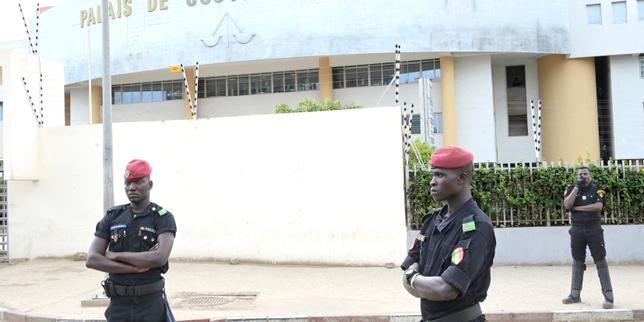
A French citizen has been sitting in a jail cell in Dakar since February 14. Senegalese authorities arrested him under the country's strict laws targeting same-sex conduct, legally categorized as "acts against nature." This isn't an isolated incident. It's a stark reminder of how dangerous the legal landscape remains for the LGBTQ+ community in West Africa.
Many travelers visit Senegal for its vibrant culture, incredible music, and beautiful beaches. They completely miss the legal trapdoor waiting for anyone suspected of violating Article 319 of the Senegalese Penal Code.
If you think foreign citizenship offers a shield against these local laws, you're dead wrong. Senegalese courts don't care about your Western passport when it comes to moral policing. The arrest of this French national proves that the government is tightening its grip, using pre-trial detention as a tool of intimidation.
The Reality of Article 319 and Legal Consequences
Senegal does not explicitly criminalize being homosexual in its text. Instead, the legal system uses a clever workaround. Article 319 of the Penal Code penalizes anyone who commits an "improper or unnatural act with a person of the same sex."
The vagueness is intentional. It gives local police immense power to interpret ordinary behaviors as criminal offenses.
The penalties are brutal. A conviction can land you in prison for up to five years. It also carries heavy fines.
Senegal Penal Code Article 319 Penalties:
- Minimum prison sentence: 1 year
- Maximum prison sentence: 5 years
- Financial penalties: 100,000 to 1,500,000 CFA francs
The law applies to everyone within Senegal's borders. It hits locals and foreign visitors alike. The French national arrested in mid-February found this out the hard way. He was detained in Dakar after an alleged incident that authorities flagged as a violation of public decency laws. Since his arrest, he has faced prolonged pre-trial detention. This is a common tactic in Senegal to keep suspects jailed for months before they ever see a judge for a formal trial.
Human rights organizations like Amnesty International have documented this pattern for years. The legal system moves slowly on purpose. Bail is routinely denied in cases involving "acts against nature" due to the intense social stigma and political pressure surrounding the issue.
Political Pressure and the Rise of Anti LGBTQ Sentiments
To understand why this French citizen is still behind bars, you have to look at the political climate in Dakar. Anti-LGBTQ+ rhetoric isn't just a social issue in Senegal. It's an incredibly potent political weapon.
Politicians across the spectrum regular use the topic to score easy points with a conservative voter base. Senegal is a deeply religious society, with a population that is over 95% Muslim, alongside a deeply traditional Christian minority. Powerful religious leaders, particularly from the influential Sufi brotherhoods, wield massive sway over public policy and public opinion.
During recent electoral cycles, pressure groups like And Samm Djikko Yi (a coalition formed to "defend Islamic values") have actively campaigned for even stricter punishments. They want the maximum prison sentence doubled. They want any ambiguity in the law stripped away so that homosexuality itself is explicitly banned.
When a foreigner is arrested under these laws, it becomes a public spectacle. The local media often sensationalizes these cases to show that the government is actively protecting Senegalese culture from what conservative groups call "Western perversion." For a sitting government, letting a accused foreigner go free looks weak. So, the state digs in its heels.
The Myth of Diplomatic Protection for Foreigners
A common misconception among expatriates and tourists is that their home embassy can simply step in and extract them from a local legal mess. That is a fantasy.
When the French embassy in Dakar was notified of their citizen's arrest in February, their powers were strictly limited. Under international law, an embassy cannot override the judicial sovereignty of the host country. They can't break you out of jail. They can't act as your legal counsel.
Here is what a foreign consulate can actually do if you get arrested in Senegal:
- Provide a list of local, English- or French-speaking lawyers.
- Verify that the detention conditions meet basic humanitarian standards.
- Notify family members back home if the detainee requests it.
- Ensure that local authorities are following their own legal procedures.
They cannot secure an immediate release. They cannot clear your record. In cases involving highly sensitive cultural flashpoints like Article 319, foreign diplomats have to tread very lightly. Pushing too hard publicly backfires. It makes the Senegalese government look like it's bowing to colonial pressures, which only prolongs the detainee's time in prison.
How Local Enforcement Actually Works
Police don't just stumble upon violations of Article 319. Enforcement relies heavily on informants, digital surveillance, and entrapment.
Dating apps are a major risk area. Local police and vigilante groups routinely set up fake profiles on apps like Tinder or Grindr to lure targets to private apartments or hotel rooms. Once the target arrives, they face extortion or immediate arrest.
Blackmail is rampant. Many victims never make it to the police station because they pay off their accusers to avoid public shame and prison time. But when an expat or tourist refuses to pay, or when the police orchestrate the raid directly, the state machine takes over.
Once an accusation is logged, Senegalese authorities frequently search the suspect's phone without a warrant. Messages, photos, and contact lists are used as evidence to build a case for "unnatural acts." The French national arrested on February 14 found himself caught in this exact web of local surveillance and swift state action.
Navigating Risks and Immediate Legal Steps
If you are traveling to or living in Senegal, you need to understand the realities of the ground environment. The local culture values discretion above almost everything else. Public displays of affection are generally frowned upon for everyone, regardless of sexual orientation, but for the LGBTQ+ community, a lack of discretion can be life-altering.
Do not rely on the relative anonymity of digital spaces. Delete dating apps before passing through border control if you harbor concerns about device searches. Be incredibly cautious about inviting acquaintances to your residence or hotel room.
If you or someone you know faces detention under Article 319, you must act fast. Do not waste time arguing about constitutional rights or international treaties with local police officers.
Immediately demand access to consular services. Your embassy needs to know your location and status within the first twenty-four hours. Simultaneously, retain a local criminal defense attorney who has specific experience navigating the Senegalese penal system. A good lawyer will focus on procedural errors made during the arrest or phone search to get the case dismissed before it reaches a formal court hearing, which is often the only realistic path to freedom.