Two massive political earthquakes hit on November 2, 2026. One shook Michigan's U.S. Senate race just hours before voters headed to the polls. The other had Middle Eastern capitals quietly preparing for fresh war right after the American midterm elections.
Most news roundups treat these two stories like unrelated headlines thrown together in a morning newsletter. They aren't. Both events stem from the exact same fault line in modern American politics: the Middle East conflict, U.S. policy toward Israel, and the escalating military confrontation with Iran.
If you want to understand why a sitting Democratic congresswoman crossed party lines to endorse a Republican while Washington warned Gulf Arab nations to prepare for renewed military strikes, you have to look at how domestic political alliances and foreign military strategy collided in late 2026.
The Shocking Michigan Senate Defection Explained
Less than 48 hours before Election Day on November 3, 2026, Democratic Representative Haley Stevens dropped a political bombshell. She publicly endorsed Republican Senate candidate Mike Rogers over her own party's nominee, Abdul El-Sayed.
Party defections happen occasionally in local races. They almost never happen two days before a critical Senate election in a battleground state where control of the chamber hangs in the balance.
Stevens didn't make the announcement from a quiet press release either. She appeared alongside Rogers at a Sunday service at Perfecting Church, a predominantly Black congregation in Detroit, before posting a video endorsement on X. Standing before reporters, she framed her decision around putting country over party and claimed El-Sayed had made it clear she wasn't welcome in his campaign.
Why Stevens Really Turned on Abdul El-Sayed
To understand the split, you have to rewind to August 4, 2026. That's when former Wayne County health director Abdul El-Sayed defeated Stevens in a bruising Democratic primary, winning 48.5% of the vote after state senator Mallory McMorrow exited the race in July.
On paper, Stevens had the establishment backing. Governor Gretchen Whitmer, former Energy Secretary Jennifer Granholm, and several Michigan House colleagues had endorsed her primary bid. Yet El-Sayed built a coalition that narrowly edged her out.
The wound never healed. According to Michigan Democratic Congresswoman Debbie Dingell, who spoke with Stevens multiple times in the days leading up to the endorsement, Stevens had initially insisted she wouldn't back Rogers. Then she reversed course.
The real driver wasn't personal friction over campaign invites. It was foreign policy—specifically, the U.S. approach to Israel and the wider Middle East war.
- Clashing views on Israel: Stevens has long positioned herself as a staunch, unwavering supporter of Israel. El-Sayed, by contrast, sharply criticized Israeli military actions and U.S. policy in the region.
- The Hasan Piker controversy: In her endorsement, Stevens pointed directly to El-Sayed's association with political streamer Hasan Piker, whose August 2026 comments regarding Israel and Jewish people triggered intense backlash. Although El-Sayed moved to distance himself from the remarks, Stevens argued he hadn't done enough to reassure Jewish and Black voters who supported her in the primary.
- Campaign rhetoric: The final stretch of the Michigan race turned unusually ugly. President Donald Trump attacked El-Sayed—a practicing Muslim—at rallies using inflammatory rhetoric, while calling Rogers "apple pie". Critics argued Stevens' last-minute pivot lent credibility to attacks against her party's nominee.
Did the Endorsement Actually Work?
No. Not even close.
Despite the media firestorm and the shockwaves sent through Democratic leadership, Michigan voters went to the polls on November 3 and elected Abdul El-Sayed decisively over Mike Rogers. In a race that shattered state spending records at over $243 million, El-Sayed became the first Muslim American ever elected to the United States Senate.
For Stevens, the gamble carried steep political consequences. Even allies like Debbie Dingell admitted on national television that the endorsement became a massive distraction and damaged trust among fellow Democrats who felt betrayed at the eleventh hour.
Why Gulf States Braced for Renewed Strikes on Iran
While Michigan Democrats were tearing themselves apart over Middle East policy, governments across the Persian Gulf were preparing for the real thing.
In late October 2026, U.S. officials quietly delivered a stark warning to several Gulf Arab nations. Washington told regional partners to brace for a "short, intense military campaign" against Iran once the November 3 midterm elections concluded.
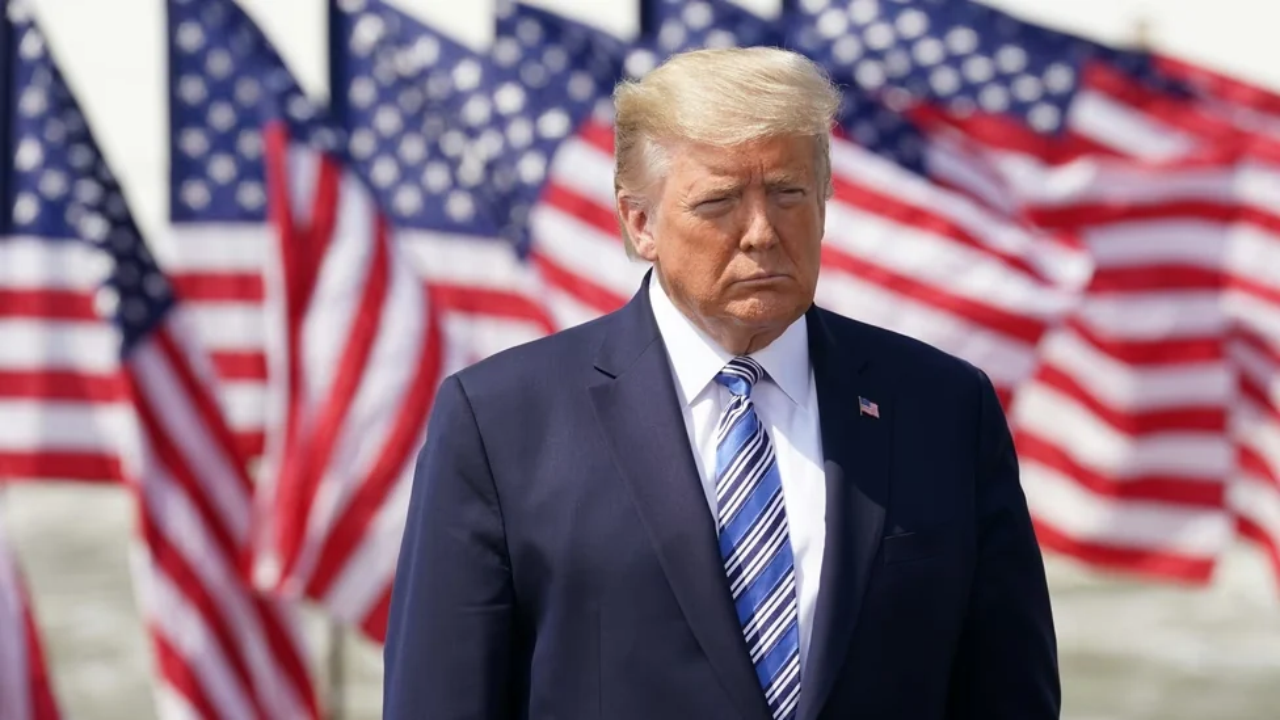
President Trump signaled the timeline himself at a campaign rally in Texas on October 27. Having previously pledged not to launch new strikes before the midterms, he told the crowd, "You'll see Iran in a couple of weeks".
The Context Behind the November 2026 Escalation
The region wasn't starting from peace. Earlier in 2026, the United States and Israel had launched a major military conflict against Iran, followed by a punishing U.S. naval blockade on Iranian ports and tightened economic sanctions designed to choke off oil exports.
By early November, a fragile two-month lull in direct strikes was rapidly breaking down. Military hardware and additional U.S. personnel were moving back into the theater, while Israeli Prime Minister Benjamin Netanyahu continued pressing for fresh offensives against Iranian targets.
Gulf states found themselves trapped in a familiar, dangerous bind:
- Hosting American bases: Countries like Bahrain, Kuwait, and Qatar host formal U.S. military installations, while the United Arab Emirates, Oman, and Saudi Arabia maintain defense access arrangements with Washington. If the U.S. strikes Iran, those bases immediately become retaliation targets.
- Economic vulnerability: Shipping lanes through the Strait of Hormuz carry a massive share of global energy exports. Escalation drives oil prices up—boosting quarterly profits for giants like ExxonMobil, Shell, and Chevron to over $36 billion—while threatening Gulf ports and tankers directly.
- Diplomatic deadlocks: Regional leaders, including officials in the UAE, publicly pushed for a diplomatic breakthrough even as they activated civil defense and military readiness protocols. Tehran, meanwhile, refused to negotiate under a naval blockade, demanding unfrozen foreign assets, an end to port blockades, and lifted sanctions before agreeing to any ceasefire.
What Happened Right After the Midterms
The warnings given to Gulf capitals in late October proved accurate within two weeks of Election Day.
By mid-November 2026, the pause in fighting shattered. Iran launched drone attacks targeting U.S. military facilities in Bahrain—including a radar site at the Al-Rifaa base south of Manama—and widened strikes toward a U.S. air base in Kuwait. Bahrain's Interior Ministry issued emergency shelter-in-place alerts while air defenses intercepted incoming projectiles.
At sea, tensions flared in the Strait of Hormuz, where an ADNOC vessel was hit and Iran's Revolutionary Guards claimed a supertanker struck a mine. The U.S. responded with strikes on Iran's Qeshm Island, while Saudi Arabia, Qatar, Jordan, and Egypt issued joint condemnations of the attacks on Bahrain.
President Trump maintained a dual-track posture through the flare-up. Speaking to Fox News on November 19, he confirmed Washington was still talking to Iranian representatives behind the scenes. He demanded a permanent nuclear and military agreement that would outlast future administrations, warning he would finish the conflict "soon, one way or the other".
How These Two Stories Connect
It's easy to view Michigan's Senate drama and the Gulf's military preparations as separate worlds. Look closer and you see the exact same geopolitical fault line running straight through both.
For decades, bipartisan consensus in Washington kept U.S. Middle East policy relatively predictable. In 2026, that consensus fractured in public view.
In Michigan—home to one of the largest Arab American and Muslim populations in the United States, alongside a deeply engaged Jewish community—the war with Iran and Israel's military operations became the defining wedge issue. Haley Stevens decided her alignment on Israel outweighed party loyalty, driving her to endorse a Republican in the final hours of a Senate race. Voters rejected that calculation and sent Abdul El-Sayed to Washington instead, signaling a major generational and ideological shift inside the Democratic base.
Meanwhile, in the Persian Gulf, leaders watched American domestic politics dictate military timelines. Washington delayed major kinetic action until after November 3 so rising gas prices and foreign entanglement wouldn't sink Republican candidates at the ballot box. Once the votes were counted, the restraint vanished and Gulf states absorbed the immediate fallout.
How to Track What Happens Next
When major political defections and military escalations collide, standard cable news coverage usually misses the underlying signals. Use these three practical benchmarks to separate real geopolitical shifts from campaign noise:
- Watch Strait of Hormuz shipping and insurance rates, not just press releases. Diplomatic statements from Washington and Tehran often contradict each other on the same day. Maritime incident reports, tanker routing changes, and Gulf Cooperation Council security alerts tell you whether the naval blockade is escalating toward full-scale regional war.
- Track Senate Foreign Relations Committee assignments in early 2027. Abdul El-Sayed's decisive victory in Michigan alters the Senate's internal debate over U.S. arms sales, sanctions, and war powers resolutions. Where incoming senators land on key committees will determine how much pushback the White House faces over unauthorized strikes.
- Follow Gulf mediation channels in Oman and Qatar. Whenever direct U.S.-Iran rhetoric turns sharp, backchannel negotiations almost always move through Muscat or Doha. Official readouts from Omani or Qatari foreign ministries remain the earliest reliable indicator of whether a lasting deal or another round of strikes is coming.
Watch Haley Stevens Backs Mike Rogers for US Senate in Michigan for direct footage and context on Stevens' last-minute decision to break with the Democratic nominee ahead of Election Day.