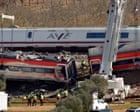
Two Australians are dead following a devastating high-speed rail disaster in Spain, and the aftermath is raising hard questions about how international authorities communicate during mass transit emergencies. When a train derails or collides at speeds pushing 300 kilometers per hour, chaos isn't just a byproduct. It's the immediate reality for emergency crews, diplomats, and families waiting thousands of miles away for a phone call that changes everything.
You've probably seen the breaking news alerts or the brief wire reports confirming the fatalities. Most outlets give you three paragraphs, a stock photo of a Spanish train station, and a boilerplate statement from Canberra. That's not enough. If you're trying to understand the actual circumstances surrounding the two Australians confirmed dead in Spain's high-speed train crash, the timeline of official confirmations, and what this means for rail safety across Europe's busiest corridors, you need the full picture.
The Reality of Spain's High-Speed Rail Network
Spain boasts the longest high-speed rail network in Europe and the second longest in the world, trailing only China. Operated primarily by state-owned Renfe alongside newer private competitors like Iryo and Ouigo, the Alta Velocidad Española (AVE) system moves tens of millions of passengers every year. For Australians backpacking across Europe or taking a sabbatical along the Mediterranean coast, these trains are the default way to travel between Madrid, Barcelona, Seville, and Malaga.
They're fast. They're generally reliable. And because they run on dedicated tracks separated from slower commuter and freight lines, people assume they're practically immune to catastrophic failure.
That assumption breaks down when human error, signaling failures, or sudden track obstructions enter the equation. We saw this brutally demonstrated in the 2013 Santiago de Compostela derailment, where a train entered a curved section of track at nearly double the posted speed limit, killing 79 people. While Spain poured billions into upgrading its European Rail Traffic Management System (ERTMS) infrastructure after that tragedy, high-speed rail still carries inherent kinetic risks. At 250 to 300 km/h, stopping distances stretch across several kilometers. When something goes wrong, nobody has time to react.
Why Foreign Nationals Are Often Caught in the Crossfire
Spain is one of the top European destinations for Australian travelers. According to tourism data from Spain's National Statistics Institute (INE), hundreds of thousands of Australians visit the country annually, heavily favoring rail connections over domestic flights because city-center-to-city-center transit saves hours of airport security hassle.
When a major rail incident occurs on a trunk route, the passenger manifest almost always reads like a United Nations roll call. Tourists don't just ride the trains during peak summer months; they fill carriages year-round. Unlike domestic commuters who carry local identification and have emergency contacts living twenty minutes away, foreign tourists present a massive identification bottleneck for first responders.
How Consular Identification Actually Works After a Crash
People assume that the moment a crash happens, governments immediately know who was on board. That's completely false.
Unlike international flights, where you must submit passport details via Advance Passenger Information Systems before boarding, European high-speed trains rarely enforce strict passport-to-seat matching at the platform. You buy a ticket online, scan a QR code at a turnstile, and walk onto the carriage. Even when operators like Renfe or Iryo require an ID number during booking, typos happen, friends book tickets under a single name, and passengers swap seats constantly once the train leaves the station.
Here's what actually happens behind the scenes when Australians are caught in a foreign rail disaster:
- Local forensic protocols take absolute priority. Spanish judicial police and forensic institutes control the scene. Under Spanish law, no foreign embassy can officially confirm a death until local authorities complete formal identification, which often requires dental records, DNA matching, or fingerprint verification from Canberra.
- DFAT operates on strict verification rules. Australia's Department of Foreign Affairs and Trade won't publicly confirm fatalities based on witness accounts, unverified hospital lists, or missing-person posts on social media. Consular officers in Madrid have to cross-reference missing traveler reports from worried families back home against the fragmented hospital admission logs provided by Spanish regional health authorities.
- Privacy laws slow down public updates. Even after DFAT notifies next of kin, the Australian government withholds names and personal details unless the families explicitly grant permission to release them. That's why early news reports simply state that "two Australians" have died without offering biographical details.
It's an agonizing process. Families in Sydney, Melbourne, or Brisbane often spend 24 to 48 hours refreshing Spanish news sites, calling hospital switchboards with a language barrier, and waiting for consular officials to gain access to restricted triage zones.
What Most News Reports Miss About Rail Crash Investigations
Whenever a high-speed train crash makes international headlines, armchair experts immediately blame either the driver or the track maintenance crew. Real rail investigations don't work like that. In Spain, the Railway Accident Investigation Commission (CIAF) runs parallel inquiries alongside judicial magistrates, and their findings routinely expose systemic issues rather than simple one-off mistakes.
Signaling Gaps and Transition Zones
High-speed lines in Spain use advanced automated braking systems designed to override human error if a train exceeds speed limits or passes a red signal. However, accidents frequently cluster around transition zones—areas where high-speed tracks merge into conventional rail networks near major cities or older stations. In these zones, automatic speed-control systems sometimes hand control back to the driver, creating a window where a split-second distraction or misread signal becomes fatal.
Rolling Stock Crashworthiness
Modern European high-speed trains are built with crumple zones and anti-climbing mechanisms designed to keep carriages upright and prevent them from telescoping into one another during an impact. When fatalities still occur inside these reinforced shells, investigators look closely at lateral forces, secondary impacts with trackside infrastructure, and whether luggage or unrestrained cabin fixtures contributed to trauma.
Emergency Access on Isolated Corridors
High-speed rail lines cut straight across rural Spain to maintain gentle curves capable of supporting 300 km/h speeds. That engineering efficiency creates a nightmare for ambulances and fire brigades. If a train derails ten kilometers from the nearest paved access road, rescue teams have to haul hydraulic cutting gear across rough terrain before they can even reach trapped passengers. Every minute lost in extraction directly impacts survival rates for critically injured travelers.
Common Misconceptions About Travel Insurance and Consular Help
Watching tragedies like this unfold usually prompts travelers to check their policies, and honestly, most people have a completely warped idea of what their government and their insurer will actually do if things go sideways abroad.
First, let's clear up the biggest myth about DFAT. Consular officials are incredible at navigating local bureaucracies, arranging emergency passports, and connecting families with local legal and medical translators. What they don't do is pay for medical evacuations, cover funeral repatriation costs, or fund family members flying over to identify loved ones. That financial burden falls entirely on the traveler's estate or their private travel insurance policy.
Second, standard credit card travel insurance often carries strict exclusions or low sub-limits for accidental death and repatriation compared to comprehensive standalone policies. Repatriating remains from Europe to Australia isn't a simple cargo booking; it requires specialized international funeral directors, embalming certifications compliant with both Spanish health ministries and Australian biosecurity laws, and consular seals. The bill routinely clears $15,000 to $25,000 AUD before anyone even books a flight.
Practical Steps Every Australian Traveler Should Take Before Riding European Rail
You shouldn't stop taking high-speed trains in Spain or anywhere else in Europe. Statistically, rail remains vastly safer per billion passenger-kilometers than renting a car and driving down the Autovía del Mediterráneo. Still, traveling smart means removing the friction that slows down emergency responders when worst-case scenarios happen.
If you're planning a European rail trip or have family currently traveling through Spain, put these four habits into practice immediately:
- Register your itinerary and share live booking references. Don't just tell your family you're "going to Seville this week." Drop the exact train operator, train number, departure time, and carriage number into a shared family chat before you step onto the platform. If an incident happens, DFAT and local police can narrow down your location in minutes instead of days.
- Use accurate passport names on every rail ticket. Avoid nicknames or abbreviated middle names when booking through third-party aggregators like Omio or Trainline. Matching your ticket data directly to your passport biographical page eliminates cross-referencing delays if authorities need to audit a passenger manifest.
- Keep physical emergency contact details in your pocket. Phones smash, batteries die, and locked screens block first responders from checking your contacts unless you've configured Medical ID on iOS or Emergency Information on Android. Slip a laminated card inside your wallet or passport sleeve listing two emergency contacts with international dialing codes (+61), your blood type, known allergies, and your travel insurance policy number with their 24/7 emergency assistance hotline.
- Verify repatriation coverage in your policy wording. Open your Product Disclosure Statement (PDS) and search for "repatriation of remains" and "emergency medical evacuation." Ensure the coverage limit is unlimited or sits well above $500,000 AUD, and verify that your insurer covers travel across all European Union territories without requiring prior notification for domestic train journeys.
High-speed rail connects Europe in ways that felt impossible a generation ago, turning cross-country treks into effortless morning commutes. Yet the deaths of two Australians in Spain serve as a stark reminder that speed magnifies risk, and distance complicates every step of an emergency response. Keep your documentation tight, share your exact transit details with people who care about you, and never assume someone else has your emergency plan figured out.