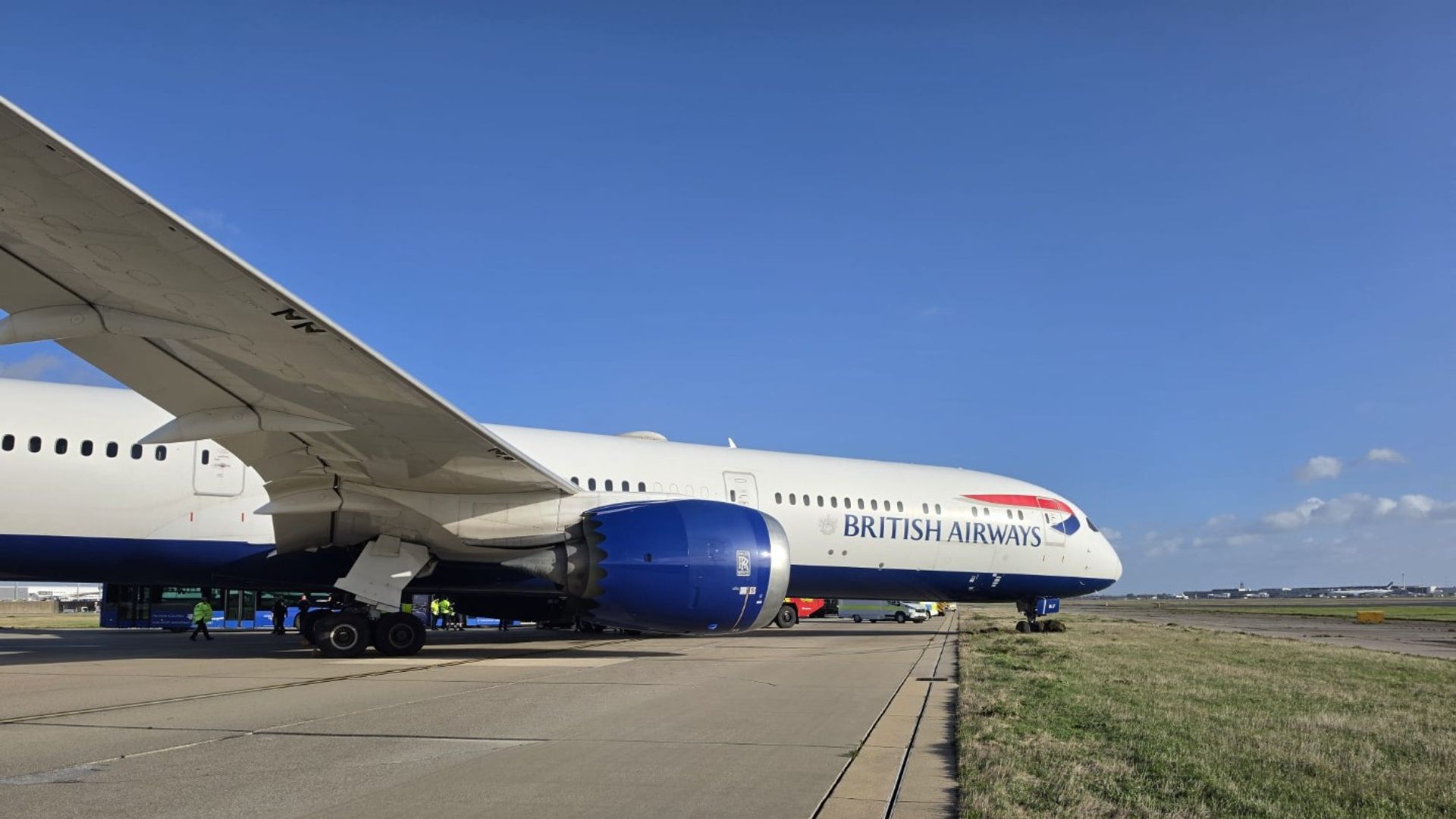
When headlines scream that a British Airways flight veered off a runway before take-off, most people picture a fiery crash or a catastrophic mechanical failure. They're usually wrong. In almost every real-world runway excursion involving a commercial jet on the ground, the aircraft moves at little more than a brisk highway speed—or even a slow taxi—before its wheels slip onto the grass or mud next to the asphalt.
It looks dramatic on social media photos. A massive Boeing or Airbus sitting tilted in the dirt, surrounded by flashing yellow airport fire trucks and inflatable evacuation slides, makes for instant viral panic. Yet behind the scenes, these ground incidents follow a remarkably predictable chain of human factors, weather conditions, and cockpit physics that aviation investigators have studied for decades.
You can't visit a broken or "undefined" news link to get the full picture of why these events keep happening across major European hubs like London Heathrow, Gatwick, or regional airports. To understand what actually goes wrong when a British Airways flight veers off the runway before take-off, you have to look at the mechanics of ground steering, the notorious British weather, and the split-second decisions pilots make when a multi-ton airliner stops responding to rudder inputs.
Why Runway Excursions Happen Before the Wheels Leave the Ground
Aviation safety analysts at the International Air Transport Association (IATA) and the UK Air Accidents Investigation Branch (AAIB) classify any event where an aircraft leaves the paved runway surface as a runway excursion. Notice the wording. It doesn't mean the plane crashed. It simply means the rubber left the concrete.
Roughly 80% of all runway excursions worldwide occur during landing, when an aircraft arrives too fast, touches down too far along the strip, or hits standing water. The remaining 20% happen during the take-off roll or taxi phase. Those pre-flight excursions are often the most confusing to passengers because the plane hasn't even gotten off the ground yet.
So what pulls a 200-ton commercial airliner sideways before rotation speed?
The Physics of Low-Speed Steering
On the ground, an airliner doesn't steer like your car. At slow taxi speeds—usually under 20 knots—pilots use a small handwheel on the side of the cockpit called a tiller. That tiller turns the nose gear at sharp angles to navigate tight terminal corners.
Once the aircraft lines up on the runway and the pilots push the thrust levers forward, the tiller becomes too sensitive. A tiny twitch at 80 knots would snap the nose gear off or flip the fuselage. Instead, pilots transition to foot pedals that control both a small range of nose-wheel steering and the massive vertical rudder on the tail.
Here's the catch. The tail rudder relies on airflow to work. During the first few seconds of a take-off roll, air isn't moving fast enough over the tail to give the rudder aerodynamic bite. During that brief window—between roughly 20 and 60 knots—the aircraft depends almost entirely on tire friction against the runway surface to stay on the centerline.
If one main landing gear hits a patch of ice, slush, or hydraulic fluid while the engines are spooling up to full power, asymmetric thrust takes over. One side grips. The other slides. Before the rudder has enough airflow to counteract the yaw, the nose swings toward the runway edge lights.
Crosswinds and the British Weather Factor
Anyone who has flown through London Heathrow or Edinburgh in autumn or winter knows how quickly surface conditions deteriorate. Strong crosswinds blowing perpendicular to the runway push against the giant vertical tail fin like a sail on a boat.
Pilots counter this by holding aileron input into the wind and applying opposite rudder. If a sudden gust hits right as the aircraft accelerates through standing water—causing hydroplaning—the tires lose lateral grip. Even a slight veer at 70 knots carries the jet off the 45-meter-wide paved strip in less than two seconds.
Rejected Take-Offs Gone Sideways
Sometimes a British Airways flight veers off the runway not because of weather, but because the crew intentionally aborted the take-off.
Every commercial flight calculates a critical decision speed called V1 before leaving the gate. Below V1, if an engine fails, a tire blows, or a cockpit warning light flashes, the crew must stop the plane on the remaining runway. Above V1, they're committed to flying, even with a failed engine.
Imagine a main tire bursting at 110 knots just below V1. The pilots immediately chop the thrust to idle, deploy the speedbrakes, engage maximum reverse thrust, and stand on the toe brakes. Meanwhile, the blown tire on one side creates massive drag, pulling the jet hard toward that wing. If a thrust reverser deploys unevenly or antiskid braking struggles on a wet surface, the aircraft can drift off the asphalt just before coming to a stop.
What Actually Happens Inside the Cabin and Cockpit
Passengers who have lived through a pre-take-off runway veer rarely describe a Hollywood explosion. Most describe a sudden, violent shudder, a loud thump, and an abrupt lurch to one side as the landing gear drops off the concrete lip into soft turf.
Inside the cockpit, training takes over immediately. British Airways flight crews run through rejected take-off and runway excursion drills every six months in full-motion simulators. Their priority list never changes.
- Bring the aircraft to a complete stop. Setting the parking brake is step one, even if the plane is sitting at a crooked angle in the mud.
- Assess fire and structural hazards. The crew checks engine fire warnings, fuel leaks, and cabin intercom reports from the senior cabin crew member.
- Decide whether to evacuate. This is the hardest call a captain makes.
People assume that any time a plane leaves the runway, everyone shoots down the yellow slides. Not true. Emergency evacuations carry a high risk of broken ankles, friction burns, and head injuries. If the engines are shut down, there's no smoke or fire, and the aircraft is stable on level ground, the safest move is often keeping passengers buckled in their seats until airport fire crews bring mobile airstairs to the door.
Slides only come out when staying inside poses a greater danger than jumping ten feet onto wet grass.
How the AAIB Investigates a Runway Veer
Whenever a UK-registered carrier like British Airways experiences a runway excursion, the Air Accidents Investigation Branch steps in immediately. You won't get instant answers from press releases on the day of the incident, and honestly, you shouldn't trust early social media speculation either.
Investigators first secure two critical pieces of hardware from the tail section—the Flight Data Recorder (FDR) and the Cockpit Voice Recorder (CVR). Modern recorders capture thousands of parameters every second, including exact rudder pedal angles, individual brake pressures, engine N1 speeds, wind direction, and lateral G-forces.
They also walk the runway surface with friction-measuring vehicles, inspect tire tread marks on the tarmac, and check whether runway edge lights or drainage grates were struck.
In past AAIB reports involving UK runway excursions, investigators have uncovered surprisingly subtle root causes:
- Contaminated runway friction readings where slush or rubber buildup reduced grip below reported levels.
- Asymmetric reverse thrust deployment where one engine spooled up faster than the other during an abort.
- Inadvertent tiller or rudder input during low-visibility take-offs in heavy fog.
- Nose-wheel steering actuator faults that caused a mechanical pull to one side under heavy acceleration.
The AAIB doesn't assign legal blame. Their sole mandate is preventing the next incident, which is why commercial aviation safety records keep improving despite global air traffic hitting record highs.
Why Airlines Rarely Release Immediate Details
If you're searching for details about a specific British Airways flight veering off the runway before take-off, you'll notice airline statements follow a familiar, tight script. They confirm the flight number, state that the aircraft left the paved surface during take-off or taxi, confirm whether passengers disembarked safely, and note that they are assisting the authorities.
That restraint isn't a cover-up. Under international aviation law (ICAO Annex 13), airlines are legally restricted from releasing investigative findings or speculative causes while the AAIB or local aviation authority conducts its inquiry. Any premature guess by an airline spokesperson could taint witness statements or violate regulatory protocols.
Meanwhile, airport operations teams have their own urgent headache—recovering a disabled jetliner stuck in the mud without snapping its landing gear.
Recovery crews have to defuel the aircraft first to reduce weight, sometimes pumping out tens of thousands of liters of Jet A-1 fuel. Next, they lay down heavy aluminum trackway mats across the grass, inflate giant pneumatic lifting bags under the wings if the gear has sunk, and slowly winch the jet back onto solid concrete. A single runway excursion can shut down a major runway for 12 to 24 hours, rippling delays across hundreds of flights.
What You Should Do as a Passenger If It Happens on Your Flight
Most frequent flyers spend hours worrying about turbulence at 35,000 feet, even though the statistical risk of injury is almost zero when your seatbelt is fastened. The take-off roll and landing flare are the phases where your attention actually matters.
If you're ever sitting on a flight that suddenly swerves off the runway before take-off, three habits make a real difference:
- Keep your shoes on and your belt tight until cruising altitude. If an evacuation order comes over the PA system, trying to sprint across broken runway lights or wet grass in socks slows everyone down and causes injuries.
- Leave your carry-on bag in the overhead bin. Every single AAIB evacuation report highlights passengers grabbing roller bags as the single biggest cause of blocked aisles and slide injuries. Your laptop isn't worth someone else's life.
- Count the rows to your nearest exit before pushback. Thick smoke or a tilted cabin can disorient you in seconds. Knowing whether your exit is three rows forward or five rows back lets you move by touch alone.
How to Verify Live Flight and Incident Updates
When breaking aviation news circulates online, old photos from unrelated incidents years earlier frequently get reposted as live updates. If you're tracking a specific British Airways departure or trying to confirm whether a loved one's flight was involved in a runway incident, skip rumor threads on social media and check primary sources directly.
Start with the official British Airways Flight Status portal using the flight number or route, which updates gate holds, diversions, and cancellations in real time. For verified incident investigations in the United Kingdom, check the UK Air Accidents Investigation Branch reports archive, where official preliminary and final findings are published publicly once verified. If you're currently booked on an affected route, contact British Airways rebooking support immediately through their app rather than queuing at the airport transfer desk—app rebooking pulls from the exact same seat inventory without the two-hour line.