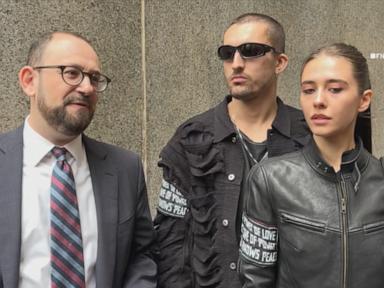
Climbing the outside of New York’s most famous skyscraper looks like a viral adrenaline rush on a phone screen, right up until the handcuffs click shut at the top and a Manhattan prosecutor starts reading off felony charges.
When Empire State Building climbers appear in court, the courtroom reality rarely matches the internet hype. There's no cinematic monologue about human potential or urban freedom. Instead, you get fluorescent lights, tired public defenders, strict bail conditions, and a District Attorney’s office that treats skyscraper stunts as a severe public safety threat rather than harmless performance art.
I’ve covered New York criminal courtrooms and high-profile urban trespass cases for years, and the pattern never really changes. Daredevils show up expecting a slap on the wrist—maybe a fine and a great story for their social feeds. Prosecutors show up ready to make an example out of them so the next guy with a GoPro thinks twice before scaling 1,454 feet of limestone and steel.
Why Empire State Building Climbers Face Such Harsh Charges
Most people assume scaling a building without permission is just simple trespassing. You walk where you aren't supposed to walk, get escorted out, and pay a small fine.
New York law doesn't see it that way.
When someone scales the exterior of the Empire State Building, the NYPD and the Manhattan District Attorney immediately look at the risk posed to everyone below. Fifth Avenue and 34th Street are packed with pedestrians, tourists, and traffic at almost every hour of the day. If a climber drops a camera, a water bottle, or loses their grip entirely, the consequences on the sidewalk are fatal.
Because of that risk, defendants walking into Manhattan Criminal Court usually face a stack of charges that go way beyond basic trespass:
- Reckless Endangerment: Under New York Penal Law, creating a substantial risk of serious physical injury to another person turns a stunt into a criminal offense. Depending on the exact circumstances, prosecutors push for second-degree (a Class A misdemeanor) or even first-degree reckless endangerment (a Class D felony).
- Criminal Trespass: Entering or remaining unlawfully inside or upon a secured structure. When you bypass security barriers, locked roof doors, or restricted observation deck perimeters, simple trespass upgrades fast.
- Disorderly Conduct and Obstruction: Pulling police officers, NYPD Emergency Service Unit (ESU) teams, and FDNY rescue crews away from actual emergencies to talk someone off a ledge triggers charges for obstructing governmental administration.
Honestly, the rescue response is what really infuriates city officials. Every time an unauthorized climber goes up the facade, dozens of first responders have to suit up in harnesses and risk their own lives on narrow ledges to bring the person down safely. Judges remember that when setting bail or reviewing plea deals.
Inside the Manhattan Arraignment Process
If you've never sat through an arraignment at 100 Centre Street in Lower Manhattan, the pace will shock you. It’s loud, fast, and completely devoid of glamour.
After an arrest at the Empire State Building—typically handled by the NYPD’s Midtown South Precinct alongside specialized ESU officers—the climbers are booked, fingerprinted, and held in central booking until a judge is ready to hear the case. That wait alone can stretch anywhere from 12 to 24 hours. By the time the defendants shuffle into the courtroom in rumpled clothes without shoelaces, the adrenaline has completely worn off.
During the brief hearing, three things happen in quick succession.
First, the court clerk reads the docket number and the charges filed by the Assistant District Attorney. Second, the prosecutor outlines the allegations, emphasizing any equipment used, whether building property was damaged, and the scale of the emergency response required. Third, the defense attorney argues for release on recognizance (ROR), usually pointing out that their client has no prior violent criminal record and isn't a flight risk.
New York’s bail reform laws mean that many non-violent misdemeanors and certain lower-level felonies don't result in cash bail anymore. However, judges routinely impose strict supervised release conditions, surrender of passports for international stunt performers, and stay-away orders barring the defendants from coming anywhere near the Empire State Building.
The Real History of Stunts on 34th Street
To understand why building security and prosecutors react so aggressively today, you have to look at the building’s long, weird history with unauthorized ascents and jumps.
The Empire State Building opened in 1931, and people have been trying to conquer it illegally almost since the mortar dried. For decades, the biggest threat wasn't climbers going up—it was BASE jumpers sneaking parachutes onto the 86th-floor observation deck and leaping off into midtown traffic. In 1986, two British thrill-seekers famously parachuted off the tower, with one getting caught immediately and the other escaping in a cab before eventually turning himself in.
Free-solo climbers and rooftoppers changed the game in the 2000s and 2010s.
In 2007, French urban climber Alain Robert—known globally as the "French Spider-Man"—made headlines when he scaled the building’s exterior using only his bare hands and climbing shoes before NYPD officers pulled him through a window near the top. He appeared in Manhattan court facing charges of reckless endangerment, criminal trespass, and disorderly conduct, eventually resolving the case with community service and a stern warning from the bench.
Since then, social media turned dangerous urban climbing into a business model. YouTube views, TikTok clout, and sponsorship deals pushed younger climbers to attempt increasingly reckless ascents across New York landmarks, from the Brooklyn Bridge to One World Trade Center and the Empire State Building.
Building management responded by pouring millions of dollars into physical security upgrades. High-tension anti-climb barriers, motion sensors, infrared cameras, and reinforced access doors now guard the setbacks and ledges. Yet determined climbers still find gaps, forcing prosecutors to rely on courtroom deterrence where physical fences fall short.
What Most People Get Wrong About Skyscraper Trespass Cases
There’s a massive gap between how the public views these court appearances and what actually happens behind the scenes.
Misconception 1 "It’s a victimless crime"
People love to argue that if a climber only risks their own neck, the courts should leave them alone. That argument dies instantly in a Manhattan courtroom. Aside from the pedestrians below and the rescue workers forced onto high ledges, property owners face massive liability issues, business disruptions, and emergency shutdown costs when an observation deck has to be cleared.
Misconception 2 "They’ll just pay a small fine and walk away"
While first-time offenders rarely serve years in state prison for a non-violent climb, walking away unscathed doesn't happen either. A permanent criminal record—even a misdemeanor conviction—wrecks international travel visas, kills background checks for standard jobs, and stays attached to your name forever. Foreign nationals arrested for stunts in New York frequently find themselves barred from re-entering the United States under immigration rules governing criminal inadmissibility.
Misconception 3 "Publicity helps their legal defense"
Some climbers treat their court appearance like a press tour, smiling for news cameras outside the courthouse steps. Defense attorneys hate this. Prosecutors watch the evening news just like everyone else. If a defendant acts like the arrest was a joke or boasts about the stunt on social media while the case is open, any chance of a lenient plea deal—like an Adjournment in Contemplation of Dismissal (ACD)—evaporates on the spot.
How Defense Attorneys Actually Handle These Cases
When a seasoned New York defense lawyer takes on an Empire State Building climber case, their strategy has nothing to do with defending the "art" of climbing. That approach alienates judges immediately.
Instead, the defense focuses entirely on mitigation and lack of malicious intent.
Lawyers work to prove their client didn't carry tools capable of damaging the historic Art Deco facade, didn't injure any security personnel, and cooperated fully the second police made contact. They'll gather character letters, proof of steady employment or schooling, and clean criminal history records to convince the Assistant District Attorney that a criminal conviction is disproportionate to a youthful lapse in judgment.
In many cases, if no one was hurt and no property was broken, the prosecution and defense eventually negotiate a plea down to a non-criminal violation—such as disorderly conduct—paired with mandatory community service, court surcharges, and a strict order of protection keeping the defendant off the property.
Legal Ways to Experience the Empire State Building Heights
If you’re drawn to the sheer vertical scale of New York’s skyline, you don't need to risk a felony record or an appearance before a Manhattan judge to feel that rush.
- Book the 102nd-Floor Observatory: Most tourists stop at the open-air 86th-floor deck, which is iconic on its own. Paying the extra upgrade for the 102nd floor puts you inside a floor-to-ceiling glass enclosure 1,250 feet above the street with zero bars blocking your view.
- Try Legal Urban Climbing Experiences: If it’s the physical height and exposure you crave, check out sanctioned experiences like City Climb at Edge in Hudson Yards, where you’re harnessed into a safety rail and allowed to lean out over the open air more than 1,200 feet up—completely legally and without an NYPD escort waiting at the top.
- Visit Indoor Bouldering Gyms in NYC: Facilities like Movement LIC or Vital Climbing Gym in Brooklyn offer massive vertical walls and technical routes that test real climbing skill without putting pedestrians on 34th Street in danger.
Watching Empire State Building climbers walk into court makes for great local news clips, mostly because the contrast between their vertical bravado and their quiet, humbled courtroom posture is so sharp. The skyline might look inviting from the street, but in New York, the law always has the final word at the top.