Seven words can clear a room faster than a fire alarm.
Say "from the river to the sea" at a dinner table in Tel Aviv, a café in East Jerusalem, or a living room in Chicago, and watch the oxygen vanish. For decades, that phrase has functioned as a political tripwire. To many Israelis and Jews worldwide, those words sound like an erasure—a coded threat signaling the end of their sovereignty and safety. To many Palestinians, the exact same syllables represent a longing for freedom, equality, and a return to ancestral land between the Jordan River and the Mediterranean Sea. Expanding on this theme, you can also read: Firing Top Pentagon Planners Before an Iran Strike Is Actually the Smartest Move in Washington.
Words carry baggage. Sometimes they carry shrapnel.
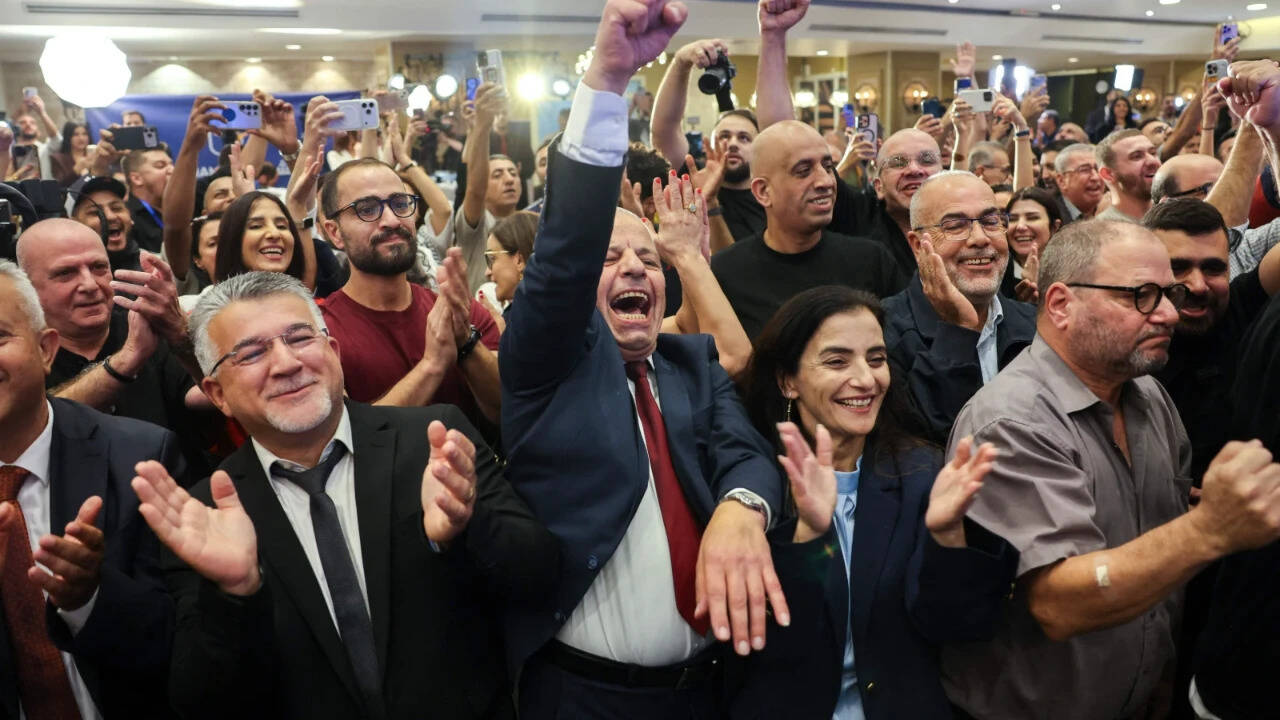
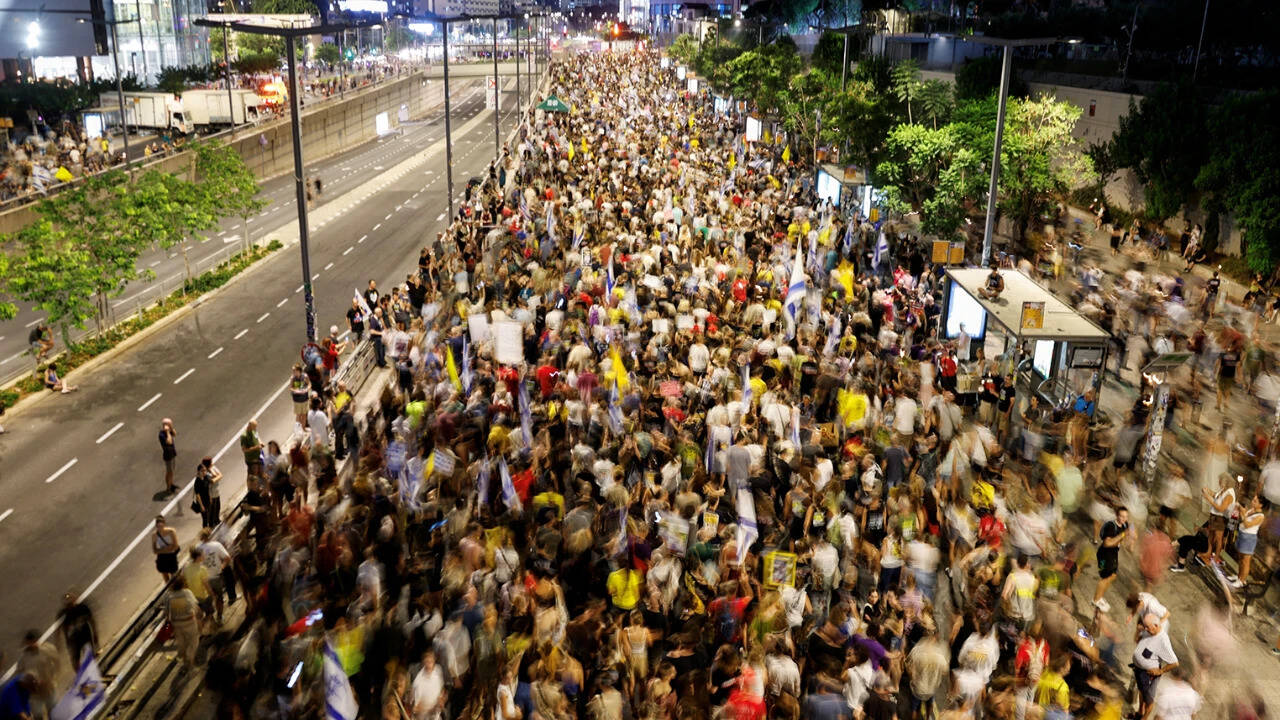
Yet on a humid evening across multiple Israeli cities—from the coastal bustle of Tel Aviv to the mixed neighborhoods of Haifa and the ancient stones of Jerusalem—hundreds of Jewish and Arab citizens stepped into the streets and claimed those exact seven words for a radically different purpose. They held signs demanding a joint Jewish-Arab government. They chanted not for the removal of one people by another, but for a political partnership that acknowledges a stubborn, undeniable reality: neither group is leaving. Experts at BBC News have also weighed in on this trend.
The Architecture of a Stalemate
To understand why a few hundred demonstrators standing at intersections matters, you have to feel the weight of the air in the region right now. Living through protracted conflict alters your nervous system. You learn to scan bus stops. You memorize the quickest route to a concrete stairwell when sirens wail. You begin to view your neighbor not as a person buying tomatoes at the same market, but as a demographic statistic in an existential tug-of-war.
Consider a hypothetical afternoon in Haifa, a port city where Arab and Jewish residents ride the same municipal buses and study in the same university halls. Picture two neighbors—let’s call them Maya, a Jewish software engineer, and Tariq, a Palestinian citizen of Israel working as a nurse. They share a stairwell. They lend each other sugar. Yet when national politics enters the hallway, an invisible wall drops between them. Maya worries that political concessions will compromise her family's physical security. Tariq feels like a permanent second-class guest in the country of his birth, watching budgets and laws favor one side of the street over the other.
This is the daily friction of a zero-sum political culture. For generations, the dominant logic in Israeli politics—and across much of the broader conflict—has operated like a seesaw. If one side goes up, the other must go down. Security for one is framed as subjugation for the other. Dignity for one is treated as a threat to the other.
According to reports covering the demonstrations—led largely by grassroots Jewish-Arab movements such as Standing Together alongside peace activists and civil society groups—the protesters assembled across major hubs to challenge that seesaw directly. Organizers stated that true safety and democracy between the river and the sea cannot exist through military dominance or unilateral control, arguing instead that joint political representation at the highest levels of government is the only viable path forward.
It sounds simple on a placard. In practice, it is terrifying.
What Does a Shared Government Actually Mean?
When protesters call for a Jewish-Arab government, skeptics immediately ask what that looks like beyond a slogan. Is it a binational state? Is it a coalition within the existing Israeli parliamentary system, the Knesset?
In Israeli political history, Arab parties have rarely been invited into governing coalitions. For decades, an unwritten rule dictated that major decisions of war, peace, and national identity required a "Jewish majority," effectively sidelining roughly twenty percent of Israel’s own citizenry—the two million Palestinian citizens of Israel. That unwritten rule cracked briefly in 2021, when the United Arab List (Ra'am) joined a diverse governing coalition, proving that pragmatic cooperation on budgets, infrastructure, and daily life was possible. That coalition collapsed after a year, battered by ideological polarization and relentless political pressure.
The rallies across Israel represent an attempt to revive and expand that fragile experiment. Rather than treating Arab citizens as an external security file or a political taboo, demonstrators are demanding full, structural partnership. In practical terms, activists point to several concrete pillars:
- Equal Coalition Partnership: Integrating Arab leadership into the core decision-making ministries of the Israeli government, rather than keeping them on the permanent opposition benches.
- Resource Parity: Addressing decades-long disparities in municipal funding, housing permits, education, and policing in Arab towns, where violent crime has surged largely unchecked.
- A Diplomatic Horizon: Moving away from permanent management of the conflict toward a negotiated political settlement that guarantees self-determination, security, and civil rights for both Israelis and Palestinians.
Think of a badly built house where the foundation is sinking on one side. You can spend all your money reinforcing the roof on the higher side, installing thicker locks on the upstairs doors, and building higher fences around the yard. None of it stops the house from tilting. Eventually, the structural stress cracks every wall. Joint governance is the unglamorous, difficult work of leveling the foundation.
The Courage of the Middle Ground
It is easy to dismiss a few hundred people in a country of nearly ten million. In an era dominated by viral outrage and maximalist rhetoric, moderation rarely trends. Hardliners on both sides have a vested interest in mocking joint rallies. Right-wing critics in Israel frequently label such demonstrators as naive, treasonous, or detached from security threats. Meanwhile, purist voices within the pro-Palestinian camp sometimes dismiss internal Israeli Jewish-Arab organizing as "normalization"—arguing that partnership within Israeli political institutions legitimizes an unequal status quo rather than dismantling it.
Caught between two fires, these protesters stand in the most exposed territory in politics.
I remember talking to an activist in Jerusalem a few years ago after a similar demonstration had been pelted with insults from passing cars. His hands were shaking slightly as he rolled up a bilingual banner—Hebrew on the top line, Arabic on the bottom. He admitted he didn't have a neat twenty-point blueprint that would solve a century of trauma by Tuesday. He admitted he was scared—scared of rockets, scared of extremist mobs, scared that his own children would inherit the exact same grief.
"We aren't out here because we're optimistic," he told me, wiping sweat from his forehead. "Optimism is cheap. We're out here because the alternative is a graveyard."
That distinction matters. History rarely shifts because everyone suddenly agrees to hold hands. It shifts when enough people realize that their current trajectory leads off a cliff. Look at Northern Ireland in the 1990s, or post-apartheid South Africa. Neither society achieved effortless harmony. Both remained deeply scarred, suspicious, and divided long after their peace accords were signed. What changed was a structural recognition that neither community could defeat, expel, or wish away the other. Power-sharing was not born out of sudden affection; it was born out of mutual exhaustion and survival instinct.
Rewriting the Geography of Fear
Notice what the demonstrators did with language. By taking "from the river to the sea"—a phrase long weaponized as an exclusive claim by competing nationalisms—and pairing it with a demand for a Jewish-Arab government, they attempted a linguistic jailbreak.
Words are like old keys. If you keep jamming a rusted key into the wrong lock, you eventually snap the metal. By reframing that geography not as a battlefield where one side must vanish, but as a shared home requiring shared stewardship, the protesters forced bystanders to confront an uncomfortable truth. From the Jordan River to the Mediterranean Sea, roughly seven million Jews and seven million Palestinians live side by side, intertwined in the same economy, breathing the same air, drinking from the same aquifers.
You cannot build a wall tall enough to separate two peoples whose lives are woven into the same narrow strip of land.
Critics rightly point out the immense obstacles standing in the way of this vision. Trust between Jewish and Arab citizens has suffered severe blows in recent years, strained by war, political incitement, and grief that pulls communities inward into defensive shells. Polling consistently shows high levels of mutual suspicion. Political leaders often find it far easier to harvest votes by stoking fear of the "other" than by asking constituents to share power with them.
Yet the persistence of these rallies tells another story. Even in moments of acute national trauma, a stubborn current of citizens refuses to surrender their agency to despair. They understand that democracy cannot survive if it functions only for part of the population, and security cannot endure if it relies solely on force without political legitimacy.
Late in the evening, after the megaphones are switched off and the street sweepers begin clearing the intersections in Tel Aviv and Haifa, the signs are folded away. A Jewish teacher and an Arab social worker walk together toward the train station, arguing amicably about the next rally, splitting a bottle of water against the lingering heat. Overhead, the streetlights flicker on, illuminating the exact same pavement beneath both of their feet.