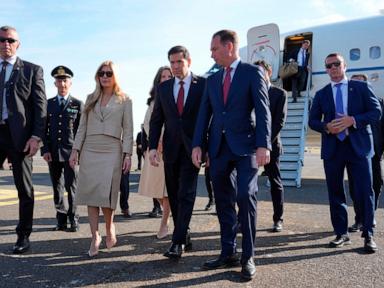
The marble of the Apostolic Palace has a way of swallowing sound. It is a heavy, ancient silence that feels less like the absence of noise and more like the presence of weight. For Marco Rubio, walking through those corridors to meet Pope Leo XIV, every footfall echoed against centuries of dogma, diplomacy, and the messy business of human ego.
This was not a standard diplomatic check-in. It was a salvage mission.
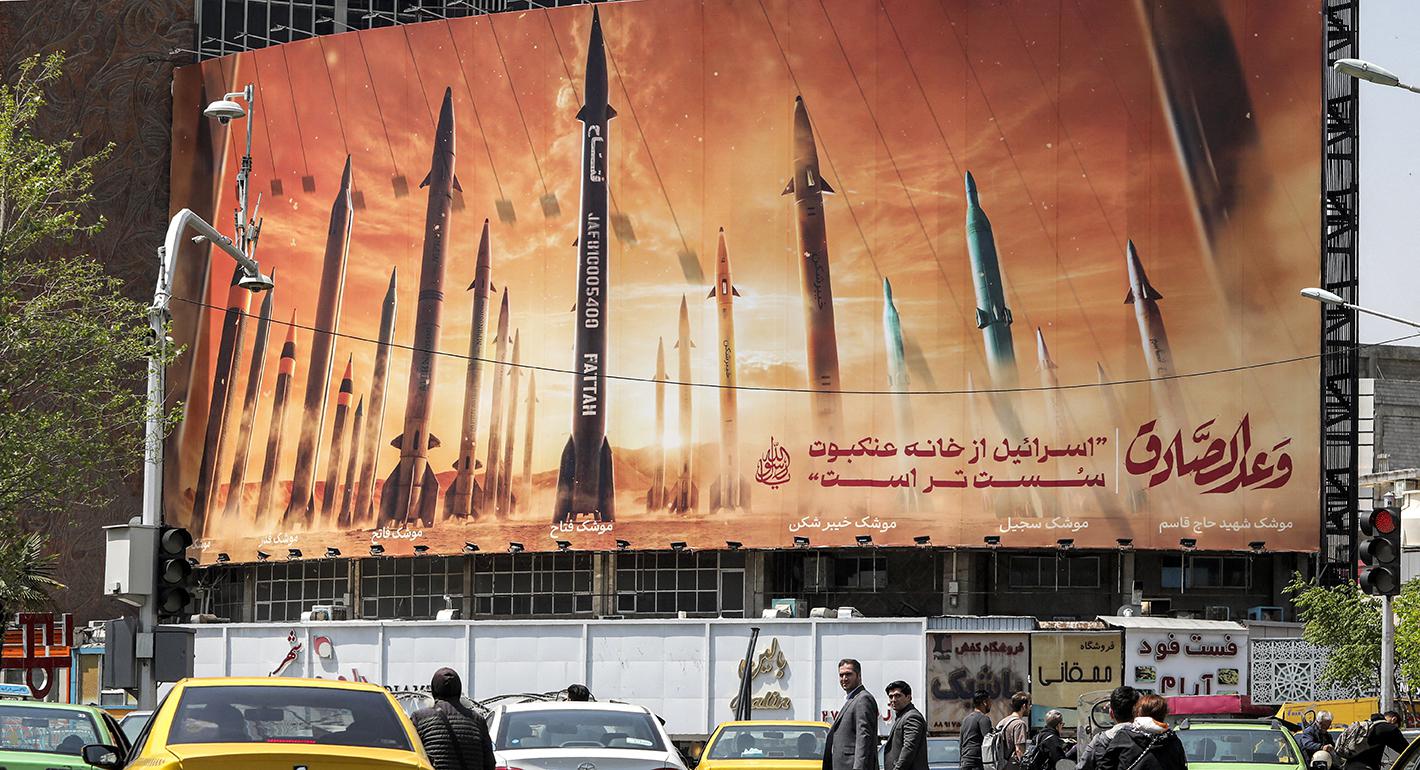
Days earlier, the political atmosphere had been scorched by Donald Trump’s unfiltered critique of the Vatican’s stance on Iran. In the world of high-stakes geopolitics, words are rarely just words; they are kinetic energy. When a former president and current political titan questions the moral or strategic compass of the Holy See, the ripple effect isn't felt in press releases. It is felt in the sudden, icy shift of the air between Washington and Rome. Rubio, a man who has long navigated the intersection of his Catholic faith and his hawkish foreign policy, found himself acting as the human bridge across a widening chasm.
The tension wasn't merely about policy. It was about the friction between two vastly different definitions of peace.
The Iran Problem
To understand why a meeting in a gilded room in Italy matters to a family in Ohio or a merchant in Tehran, you have to look at the invisible lines of influence. The Vatican operates on a timeline of centuries. Their diplomacy is rooted in "Ostpolitik"—a strategy of engagement even with the most difficult regimes, aimed at protecting Christian minorities and keeping a flicker of dialogue alive.
The American political machine operates on a timeline of election cycles and "maximum pressure."
When Trump leveled his criticism, he wasn't just talking about a nuclear deal. He was attacking the very premise of the Pope’s approach. He saw the Vatican’s reluctance to condemn Iran in the harshest possible terms not as diplomacy, but as weakness. To the Holy See, however, the American approach often looks like a reckless arsonist complaining about the quality of the fire extinguishers.
Rubio stepped into this room carrying the burden of these two irreconcilable worldviews. He is a member of the Senate Foreign Relations Committee, yes, but in that moment, he was a translator. He had to explain to a 2,000-year-old institution that American rhetoric, while loud and often abrasive, comes from a place of genuine concern for global security. Simultaneously, he had to bring back to Washington a sense of the Vatican’s nuanced, often frustratingly patient reality.
The Human Toll of Policy
Think about a hypothetical diplomat—let’s call him Thomas—working in a small consulate. When these titans clash, Thomas’s job becomes a nightmare. Visas are stalled. Backchannel communications about humanitarian aid are severed. Religious minorities in Tehran, who rely on the Vatican’s quiet advocacy, suddenly find their protector under fire from their most powerful ally.
This is the hidden cost of a "dry" news story about "easing tensions." It isn't just about whether two men in suits (or one in a cassock) get along. It’s about whether the machinery of peace stays lubricated enough to prevent a total breakdown.
Rubio’s presence was a signal. It was a physical manifestation of the idea that despite the fire and fury of the headlines, the fundamental alliance remains. He wasn't there to apologize for Trump—Marco Rubio doesn't do apologies for his party’s leader—but he was there to provide context. He was the shock absorber.
The Weight of the Ring
The meeting lasted longer than expected. That is usually a sign that the conversation moved past the scripted talking points and into the grit of the matter. They spoke of the Middle East, of the plight of the marginalized, and of the specific mechanics of the Iran situation.
The Pope, known for his focus on "the peripheries," likely pushed back. Leo XIV is not a man who is easily swayed by the geopolitical maneuvering of the West. His concern is the human soul and the physical safety of the poor. Rubio, meanwhile, has a duty to the security of the United States.
The friction between those two responsibilities is where the real story lives. It is a tension that Rubio has inhabited his entire career. He is a man of the Church who believes in the necessity of the sword. He is a senator who prays the Rosary. In the Apostolic Palace, those two halves of his identity were forced to confront one another.
Critics will say the meeting was a photo op. They will argue that one senator cannot undo the damage of a televised broadside. But that view ignores how the world actually works. Power is a currency, but trust is the vault. When the vault is cracked, someone has to go in and start the repair work, brick by agonizing brick.
Beyond the Handshake
As Rubio emerged from the audience, the sun would have been hitting the cobblestones of St. Peter’s Square. The cameras were waiting. The reporters wanted soundbites about "productive dialogues" and "shared values."
But the real outcome of the day wasn't in the press release. It was in the eyes of the Swiss Guard who watched him leave. It was in the quiet sigh of relief from the State Department staffers who realized they wouldn't have to spend the next month cleaning up a total diplomatic collapse.
The stakes were, and remain, incredibly high. Iran is not a theoretical problem. It is a nation at a crossroads, a nuclear-capable mystery that could either integrate into the global community or set the region on fire. The Vatican wants to talk them down. The American hardliners want to shut them down.
Rubio’s job was to make sure that while these two powers disagreed on the "how," they didn't forget the "why."
Peace is a fragile, ugly, and exhausting process. It is rarely found in the grand declarations of presidents. More often, it is found in the quiet rooms where men who disagree deeply decide to keep talking anyway. Rubio walked into that silence and, for a few hours, filled it with the messy, necessary language of compromise.
He left the Vatican not with a signed treaty, but with something arguably more important in a world of 280-character insults: a maintained connection. The bridge held. For today, that was enough.
The silence of the palace returned as the doors closed, but the air felt a little less heavy.