The morning bell at any school carries a universal weight. It is the definitive line between the freedom of the outside world and the structured, predictable rhythm of the day ahead. For decades, that sound meant notebooks sliding out of backpacks, the screech of chairs against linoleum, and the low, collective hum of teenage anxiety focused entirely on algebra tests or social hierarchies. You knew what to expect. Parents kissed their kids goodbye at the drop-off lane, driving away with the comforting assumption that schools are, if nothing else, containment zones of safety.
Then comes the day when the bell rings, but the rhythm breaks.
It starts with an unfamiliar frequency in the hallway noise. Not the usual laughter or the loud thud of a locker door slamming shut, but a sharp, jagged spike of adrenaline. Shouts that carry a different texture. Panic has a specific pitch, and once you hear it vibrate through a school corridor, you never forget it.
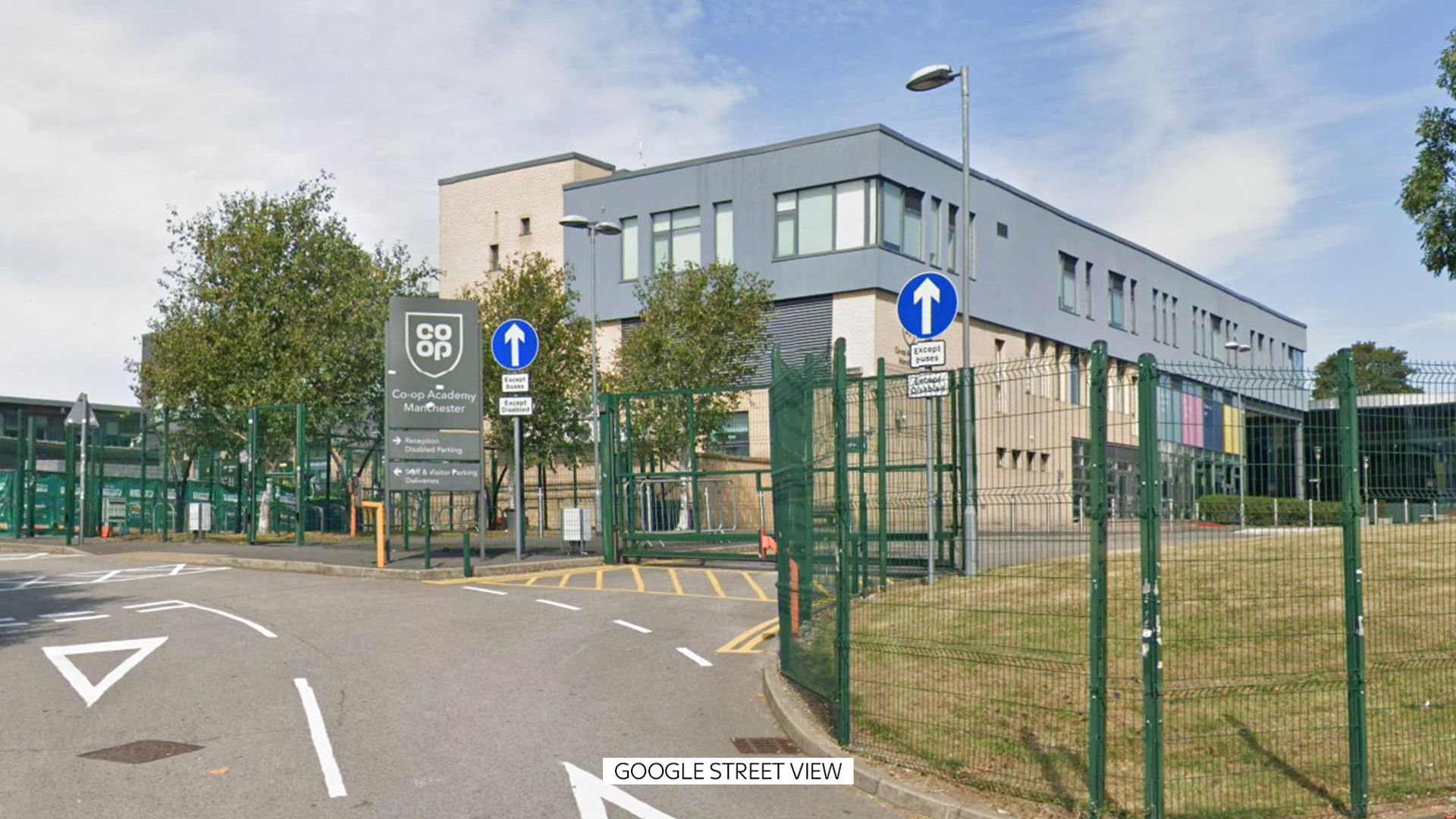
A fourteen-year-old girl stands in the center of that corridor. In her hand is a knife. Within minutes, three people—two teachers and a fellow student—are bleeding. The blue lights of emergency vehicles are already racing toward the gates, casting a cold, strobing glow against the classroom windows.
The dry police reports will later categorize this as an isolated incident, a brief disruption swiftly contained by local authorities. They will list the age of the suspect, the number of casualties, and the precise time the emergency call was logged. But those metrics are just the skeleton of the event. They tell us absolutely nothing about the marrow. They omit the terrifying reality of what happens to a community when the sanctuary of childhood is pierced by a blade, and they ignore the quiet, systemic rot that leads a child to bring a weapon to school in the first place.
The Shattered Mirror of Sanctuary
When violence enters a school, the physical injuries are only the first layer of damage. Paramedics can bandage a laceration. Doctors can suture a wound inflicted by a blade. What they cannot repair is the invisible fracture that occurs in the psyche of every single person who walked those halls that morning.
Think about the teacher who stood between a armed teenager and a classroom full of children. That educator did not sign up for combat. They spent their weekend grading essays, worrying about lesson plans, and wondering how to engage a student who seemed to be slipping away. Suddenly, they are forced to make a split-second decision that will define the rest of their life. The bravery displayed in these moments is monumental, but the cost of that bravery is an enduring trauma that lingers long after the police tape is taken down.
For the students, the consequence is a sudden, brutal loss of innocence. A school corridor is supposed to be a transition space between learning environments, a place to gossip, to laugh, to breathe. When it transforms into a crime scene, the geography of their daily life is permanently altered. Every time they walk past that specific corner, their heart rate will spike. The hum of the fluorescent lights will feel a little more oppressive. The illusion of absolute safety is gone, replaced by a cynical, adult hyper-vigilance.
We look at a fourteen-year-old girl behind bars and we ask how a child reaches that point. It is a terrifying question because the answers are never simple. It is far easier to label someone as a monster, to compartmentalize the violence as an anomaly, than it is to look closely at the environment that produced it.
The Anatomy of an Unseen Crisis
To understand how a regular Tuesday turns into a tragedy, we have to look at the slow build-up that happens in the dark. Nobody wakes up one morning and decides to alter the course of multiple lives on a whim. There is always a prologue.
Consider a hypothetical student—let us call her Maya—to ground the abstract statistics of teenage mental health into a tangible reality. Maya does not speak much in class. She sits near the back, her hoodie pulled up, eyes fixed on her desk. To her teachers, she is just quiet, a relief in a classroom full of loud, demanding personalities. But inside Maya’s world, the silence is deafening.
- She is drowning in an echo chamber of online isolation, where algorithms feed her deepest insecurities.
- The normal pressures of adolescence have been magnified a thousand times by the relentless, non-stop nature of social media.
- Bullying no longer ends at the school gates; it follows her into her bedroom, vibrating in her pocket at 3:00 AM.
- She feels entirely invisible, a ghost walking through her own life.
When a child reaches a state of total emotional insolvency, their internal coping mechanisms collapse. If there are no intervention points—no perceptive adult to notice the subtle shift in posture, no accessible mental health resources, no systemic safety net—the pressure builds. Eventually, that pressure finds an outlet. Sometimes it turns inward in the form of self-harm. Sometimes, catastrophically, it turns outward.
This is not an excuse for violence. The actions taken inside that school were horrific, inexcusable, and demand accountability. But if we limit our response merely to punishment, we are treating the symptom while allowing the infection to spread. We have to be willing to look at the gaps in our system where these children are falling through.
The Failure of the Hardened Shell
In the aftermath of these events, the public discourse almost always follows a predictable, weary script. The immediate reaction is a loud demand to harden our schools. People call for more metal detectors, higher fences, armed guards, and surveillance cameras at every angle. We want to turn our centers of learning into fortresses, believing that enough steel and concrete can keep the danger out.
But this approach suffers from a fundamental logical flaw.
It assumes the danger is always an external force trying to break in. It fails to account for the reality that sometimes, the pain is already inside the building. A metal detector might catch a weapon, but it will never catch the despair that motivated someone to carry it. A security camera can record a tragedy in high definition, but it cannot prevent the emotional decay that preceded the first strike.
When we transform schools into high-security environments, we inadvertently tell our children that the world is an inherently hostile place where they should constantly expect violence. It changes the atmosphere from one of curiosity and growth to one of suspicion and fear. Students are scanned, watched, and monitored, treated as potential suspects rather than young people who are learning how to navigate the world.
The real security work happens long before anyone approaches a school entrance. It happens in the quiet conversations between a counselor and a struggling student. It happens when parents are equipped with the tools to recognize the warning signs of severe emotional distress. It happens when we prioritize human connection over institutional efficiency.
Moving Past the Statistics
It is easy to become desensitized to headlines like this. They flash on our screens, a brief jolt of shock, and then we scroll past, returning to the mundane details of our own lives. We look at the numbers—three injured, one arrested—and we subconsciously file it away as someone else's tragedy, an event happening in a distant town to people we will never meet.
But every single one of those numbers represents a family whose world was completely upended.
Think of the parents who received the emergency text notification while sitting at their desks at work. The sudden, suffocating terror of not knowing if their child was safe. The frantic drive to the school, hands shaking on the steering wheel, passing the screaming sirens of arriving ambulances. That is a trauma that does not leave a person. It changes how they look at their children, how they sleep at night, how they view the future.
We cannot afford to treat these incidents as the inevitable cost of modern life. They are a profound warning sign that something is deeply fractured in the way we are raising, supporting, and protecting the next generation. The red ink on the classroom floor is a call to action that goes far beyond school security policies or criminal justice debates.
It demands that we look at each other with greater empathy. It requires us to build communities where young people feel seen, heard, and valued before they reach a breaking point. We have to create a society where a fourteen-year-old child sees a future worth living for, rather than a path that ends in a flash of violence and a lifetime of regret.
The blue lights eventually fade. The sirens grow distant. The reporters pack up their cameras and move on to the next breaking story. But in the quiet aftermath, the school community is left to pick up the pieces of a shattered reality, facing the long, slow, and painful process of trying to remember how to feel safe again.