The wool was never quite as warm as the propaganda promised.
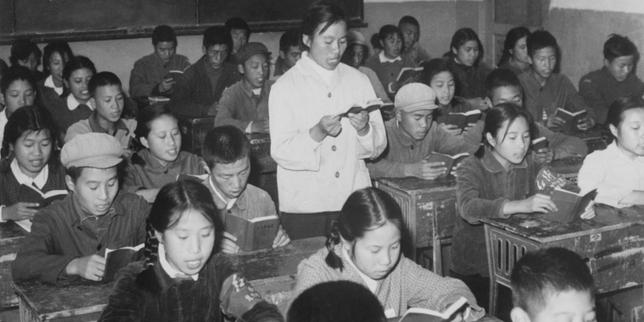
It was a brilliant crimson, the color of a rising sun that refused to set, knotted tightly around teenage necks during a decade that swallowed a generation whole. In the alleyways of Beijing and the windswept plains of Heilongjiang, millions of teenagers tied those scarves with trembling, fanatical pride. They were the Red Guards. They were the stormtroopers of Mao Zedong’s Cultural Revolution, armed with little red books and an absolute, terrifying certainty about who built the future and who deserved to be crushed beneath it.
Decades later, the crimson has faded. The wool has frayed into moth-eaten threads kept hidden at the bottom of cedar chests, pulled out only when memory demands an accounting.
Walk into a quiet courtyard in the older districts of Beijing today, past the cages of singing thrushes and the old men bent over wooden Go boards, and you will find them. They are frail now. Their steps are measured. Their eyes carry the heavy, unblinking stare of people who spent their youth tearing down temples only to realize, too late, that they were standing inside the cathedral.
History usually writes about dictatorships in broad, thunderous strokes. It tallies the millions displaced, the schools shuttered, the ancient art smashed into dust. But history rarely pauses to look at the machinery from the inside. It rarely asks what happens to the boy who held the hammer when the fever finally breaks.
To understand the tragedy of the Red Guards is to understand the seductive architecture of absolute certainty.
In the summer of 1966, the world flipped on its axis. The Chairman declared that bourgeois elements had infiltrated the party, society, and the very minds of the populace. For a teenager sitting in a cramped, soot-stained courtyard house, suffocating under the weight of traditional Confucian hierarchies where obedience was oxygen, the call was intoxicating. Suddenly, the hierarchy was inverted. The youth were anointed as the supreme judges. Teachers, intellectuals, parents—anyone who possessed a book, a foreign trinket, or a subtle refinement of thought—became targets.
Chen stood in his school courtyard in the scorching August of that first summer, his heart hammering against his ribs like a trapped bird. He was fifteen. When the older students pointed at the school principal, shouting accusations of capitalist sympathies, Chen was the first to pick up a wooden stave.
(Note: While Chen is a composite figure drawn from dozens of documented historical testimonies collected by historians like Esherick and Dikötter, his psychological trajectory mirrors the exact documentation of surviving Red Guards.)
"We believed we were creating paradise," Chen says now, his voice a dry rasp, his fingers tracing the rim of a porcelain teacup. "We thought we were pure. If someone cried, we thought they were just putting on a bourgeois act. We had no empathy because empathy was labeled a weakness of the class enemy."
The violence escalated from rhetorical purity to physical destruction with terrifying speed. Homes were ransacked. Libraries were burned. The Four Olds—old customs, old culture, old habits, and old ideas—were hunted down with systematic brutality. Neighbors turned on neighbors. Children denounced parents. And through it all, the state machinery hummed in quiet, terrifying approval, handing out train tickets and armbands to teenagers who suddenly held the power of life and death over people twice their age.
Then came the reckoning, though it did not arrive with a dramatic trial. It arrived in the belly of a cattle train.
By 1968, the chaos threatened to tear the Communist Party itself apart. Mao issued a new directive: the Up to the Mountains and Down to the Villages movement. The urban youth who had acted as the shock troops of the revolution were suddenly ordered out of the cities. They were exiled to the harshest, most remote corners of the countryside—inner Mongolia, the freezing northern frontiers, the barren mountains of Shaanxi—to be "re-educated" by the peasants.
The train doors slammed shut. The red armbands were packed away.
In the mud-brick huts of rural China, the romantic illusion of the revolution evaporated in the freezing rain. There were no bourgeois enemies to fight here. There were only endless rows of dirt, blistered hands, aching backs, and empty stomachs. The peasants they were sent to enlighten looked at these pale, urban teenagers with quiet pity. These kids did not know how to harvest grain. They did not know how to survive.
"We went there as masters of the universe," recalls Zhang, another survivor who spent seven grueling years planting rice in the damp south. "We came back as ghosts. My spine is still warped from carrying baskets of nightsoil up the mountain. And the worst part? We did it to ourselves. We begged for the tickets that sent us there."
The scars of that era are not merely physical. They are carved deeply into the collective psychology of modern China, manifesting as a profound, agonizing silence. For decades, the subject was taboo. You did not talk about the Cultural Revolution at the dinner table. You did not ask your grandfather why his hands shook when he spoke of the Red Guards. The official party line papered over the decade as a period of "severe error," a collective madness best swept under the rug of national economic miraculousness.
Yet, silence is not forgetting.
In recent years, a fragile, painful wave of reckoning has begun to ripple through the elderly population. It does not come from the government. It comes from individual consciences awakening in the twilight of life.
Former Red Guards have started publishing memoirs on underground blogs and niche literary journals. Some have tracked down the very teachers they humiliated fifty years ago to whisper two words that are almost revolutionary in their simplicity: Dui buqi. I am sorry.
In 2013, a retired middle-school teacher in Jinan named Lou Yaqun published an open letter apologizing to the educators she had beaten and tormented during the Cultural Revolution. She wrote of the crushing weight of her memory, of how the faces of her victims haunted her nights. Her confession went viral, sending shockwaves through a society unaccustomed to public contrition from the architects of its past.
For every Lou Yaqun, however, there are a thousand Chens who remain locked behind walls of stubborn self-justification. To admit that you were a monster at sixteen requires a terrifying dissolution of the ego. It means admitting that the defining ideology of your youth—the very thing that gave your life meaning, purpose, and camaraderie—was a lie. It is easier to cling to the wreckage, to mutter about the good intentions, to claim that mistakes were made by others while the core dream remained pure.
Consider the human cost of ideological intoxication. It is a recurring pattern across centuries and continents. Whenever a society convinces its young that complexity is evil and that purity can be achieved through the total annihilation of the dissenting voice, the machinery of cruelty starts running on its own momentum. The young do not need to be forced; they volunteer. They trade the difficult, messy work of critical thinking for the intoxicating warmth of belonging to an absolute crusade.
The tragedy of the old guards sitting in the Beijing courtyards is not just that they ruined millions of lives. It is that their own lives were stolen from them just as surely as the lives of those they persecuted. They were robbed of their education, of their youth, of their capacity for doubt, and ultimately, of their innocence. They were thrown into the gears of a political machine that used their adolescent fanaticism as fuel, then discarded them into the mud when the engine needed to change direction.
As the sun dips below the gray tiled roofs of the old alleyways, the shadows stretch long across the pavement. A breeze rustles the caged thrushes, and the old men fold up their Go boards, gathering their pieces with slow, deliberate care.
They are the last generation that remembers the absolute roar of the red sun. Soon, they will be gone, taking their secrets, their rationalizations, and their whispered apologies with them into the earth. The red scarves are rotting away in dark corners, waiting for the dust to finish the job they started.
Listen closely to the quiet left behind. It is not peaceful. It is waiting for an answer that will never come.