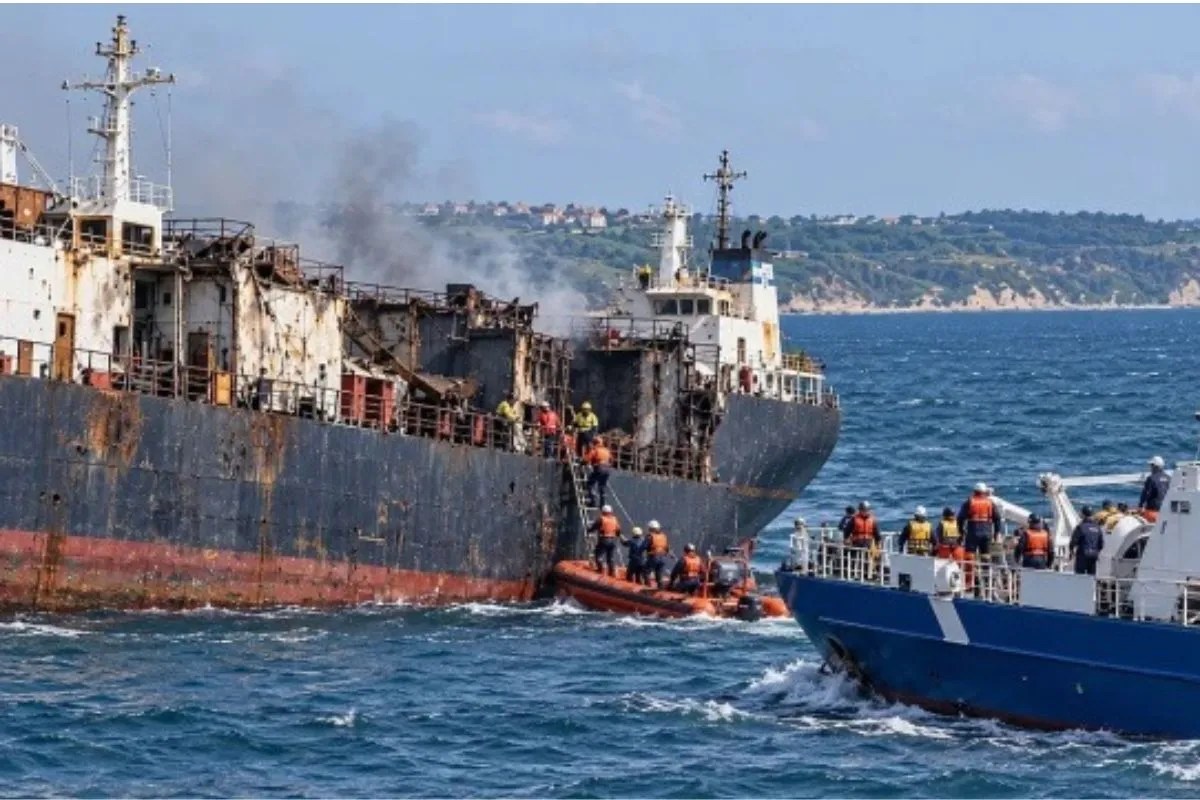
Decades of conventional military doctrine assumed that trade lanes through the Bab el-Mandeb strait would remain an unassailable artery of global commerce. That assumption shattered the moment Houthi forces in Yemen shifted their tactical posture from regional skirmishing to strategic maritime interdiction. When ballistic missiles and drone swarms began targeting commercial tankers traversing the Red Sea, the vulnerability of global energy corridors became starkly apparent. This campaign was never merely about solidarity with besieged populations in Gaza. It represented a calculated escalation designed to weaponize geography, paralyze maritime insurance markets, and force major powers to recalculate the cost of securing crude oil and liquefied natural gas shipments.
To understand the mechanics of this disruption, one must examine the sheer geometry of maritime transit. Approximately twelve percent of global trade and a significant share of refined petroleum products pass through the narrow channel separating the Horn of Africa from the Arabian Peninsula. When underwriters jacked up war risk premiums by thousands of percent overnight, shipping lines faced an immediate financial crisis. Navigating the Cape of Good Hope added thousands of nautical miles and weeks of transit time to voyages connecting Persian Gulf producers to European refineries. Delays compounded port congestion, burned excess bunker fuel, and scrambled supply chains that were still recovering from pandemic-era trauma.
The ripple effects struck the Saudi Arabian economy from a different vector. While the Kingdom possesses vast pipeline infrastructure capable of bypassing certain maritime bottlenecks by moving crude from eastern fields to western Red Sea terminals, the constant threat of drone incursions placed critical energy assets on permanent high alert. Riyadh found itself walking a diplomatic tightrope. Normalization talks with regional adversaries slowed to a crawl, and security planners realized that traditional missile defense batteries, while effective against conventional threats, exact a punishing economic toll when expended against low-cost unmanned aerial vehicles. The math of asymmetric warfare favors the attacker. Firing a multi-million-dollar interceptor missile at a rudimentary drone costing a fraction of that amount is a war of attrition that heavily favors groups operating on decentralized, low-overhead logistics.
Western naval coalitions launched retaliatory airstrikes and defensive patrols under Operation Prosperity Guardian, yet these actions failed to establish absolute deterrence. Bombing fixed launch sites and radar installations degraded Houthi operational capabilities temporarily, but it did not halt the launches. The decentralization of guerrilla movements means that retaliatory air campaigns often produce diminishing returns. Meanwhile, major shipping conglomerates concluded that the risk profile was simply too high. Maersk, Hapag-Lloyd, and other shipping giants diverted their fleets indefinitely around the African continent, institutionalizing higher freight costs that eventually trickled down to consumer goods in supermarkets and fuel pumps worldwide.
This unfolding standoff exposed the fragility of a just-in-time global economy dependent on a few geographic choke points. Energy traders watched futures markets gyrate wildly with every flare-up in the region, proving that regional conflicts can instantly inject a geopolitical risk premium into global commodities. Insurance executives quietly drafted clauses that could exclude entire zones from coverage if tensions escalated further. The strategy deployed off the coast of Yemen demonstrated that non-state actors armed with affordable asymmetric technology can effectively check the naval supremacy of superpower-backed coalitions, altering the balance of power in Middle Eastern trade routes for the foreseeable future.