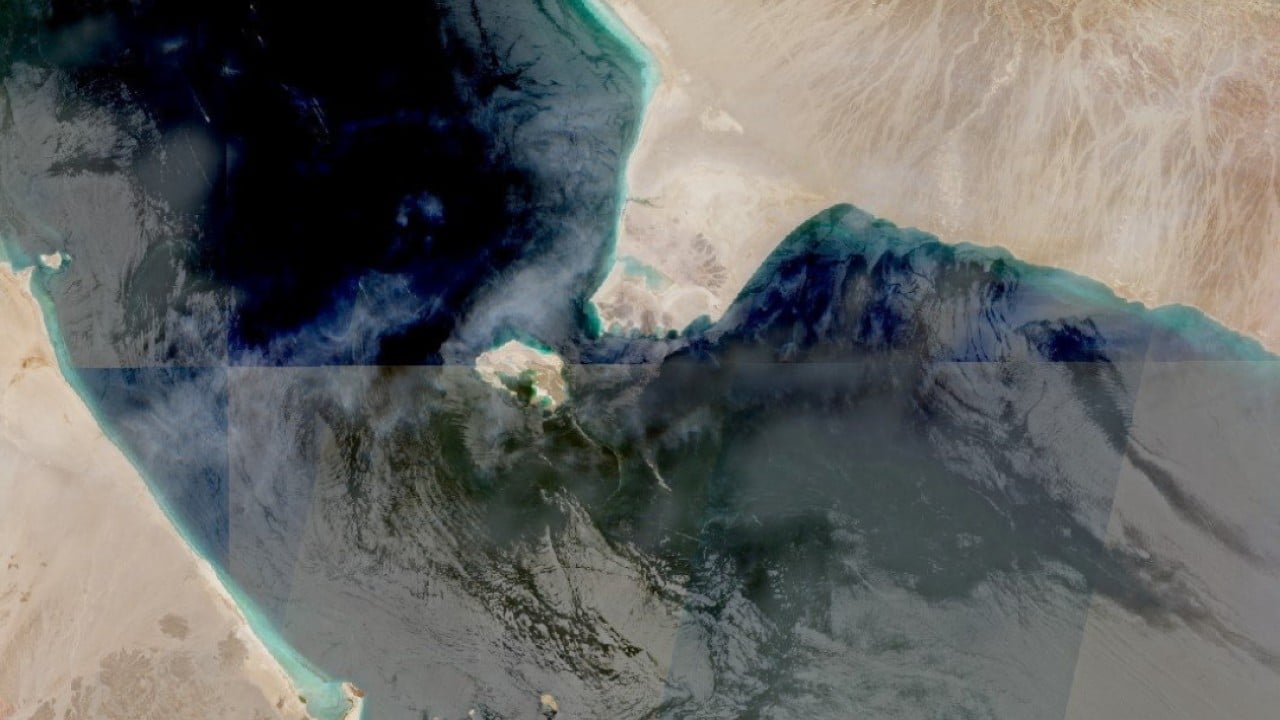
The Illusion of Flag Neutrality in Bab-el-Mandeb
Mainstream reporting treats a Chinese tanker clearing the Bab-el-Mandeb strait like a triumph of diplomatic pragmatism. Analysts point to flag state neutrality, print a victory lap for Beijing's geopolitical posturing, and move on.
They are looking at the wrong variable.
A single vessel passing through a contested choke point under implicit non-aggression guarantees is not a sign of operational recovery. It is a sign of market fragmentation. When maritime transit depends on non-state actors checking vessel ownership records against live intelligence feeds, the concept of open ocean transit has already collapsed.
Global shipping built its entire economic architecture on a simple premise: international waters are a public good protected by naval power. Replacing that universal guarantee with a patchwork of country-by-specific-country exemptions creates friction, raises costs, and leaves supply chains fundamentally broken.
Insurance Markets Ignore Diplomatic Handshakes
The narrative suggests that neutral flagging offers a cheat code for commercial fleets. If you fly the right flag or demonstrate Chinese ownership, you get a free pass while everyone else pays millions extra to navigate around the Cape of Good Hope.
That is not how marine underwriting works.
Insurance syndicates in London and Singapore do not evaluate risk based on diplomatic press releases. They evaluate risk based on kinetic reality. Missile guidance systems fail. Intelligence targets get misidentified. Shrapnel does not check corporate registration filings before puncturing a double hull.
- War Risk Premiums: Even for exempted vessels, war risk premiums remain elevated far above historical baselines.
- Reinsurance Drag: Primary insurers cannot offload risk cleanly when operating in active targeted zones, forcing higher retained risk across entire fleets.
- Transshipment Friction: Cargo bound for Western markets does not become immune to risk simply because it spent three weeks on a vessel flagged in a neutral jurisdiction.
I have watched maritime logistics desks attempt to play flag-swapping games to shave three days off a voyage. The administrative overhead, legal exposure, and secondary insurance surcharges routinely destroy whatever marginal savings were calculated on paper.
The Mathematical Math Fallacy of Rerouting
Western media presents the choice as binary: risk the Red Sea or take the long way around Africa. They treat the Cape of Good Hope rerouting as an unmitigated disaster for global commerce.
It is expensive, but the panic is misdirected.
The extra ten to fourteen days added to a Asia-Europe transit route do not represent an unprecedented collapse of trade. They represent an adjustment back to a historical baseline that supply chains operated under for decades. What actually breaks logistics networks is unpredictability, not duration.
Standard Red Sea Route:   18 - 22 Days (High Variance / Extreme Volatility)
Cape of Good Hope Route:  30 - 34 Days (Low Variance / Predictable Schedule)
A predictable 32-day voyage allows automotive plants to lock in production schedules. A 20-day voyage with a 15% probability of a missile strike or an emergency diversion forces companies to maintain massive buffer stock anyway. Predictable slowness beats volatile speed every single time.
Selective Exemption Crumbles Global Maritime Law
UNCLOS (United Nations Convention on the Law of the Sea) was not designed for selective freedom of navigation. When international transit corridors become conditional on political affiliation, the underlying framework of global trade unravels.
If access to critical waterways requires geopolitical alignment:
- Maritime Power Shift: Ocean-going transit becomes a localized privilege granted by coastal power brokers rather than an international right.
- Fleet Bifurcation: The global merchant fleet splits into high-risk Western vessels and discounted, safe-passage vessels, distorting charter rates across all asset classes.
- Secondary Targeting: As non-exempt vessels clear out, the remaining "safe" vessels face higher statistical odds of accidental targeting simply due to proximity in narrow channels.
Treating selective passage as a success story ignores the structural destruction of open sea access.
Stop Reading the Headline and Look at the Charter Rates
The idea that Chinese or Russian shipping interests are reaping a massive permanent windfall from Red Sea access is a surface-level take. High-risk transit corridors destroy fleet liquidity regardless of who owns the vessel. Crews demand hazard pay, bunkering costs fluctuate wildly near active combat areas, and asset values degrade under stress.
Stop assuming a single successful transit means the system is adapting. The system is splitting apart.