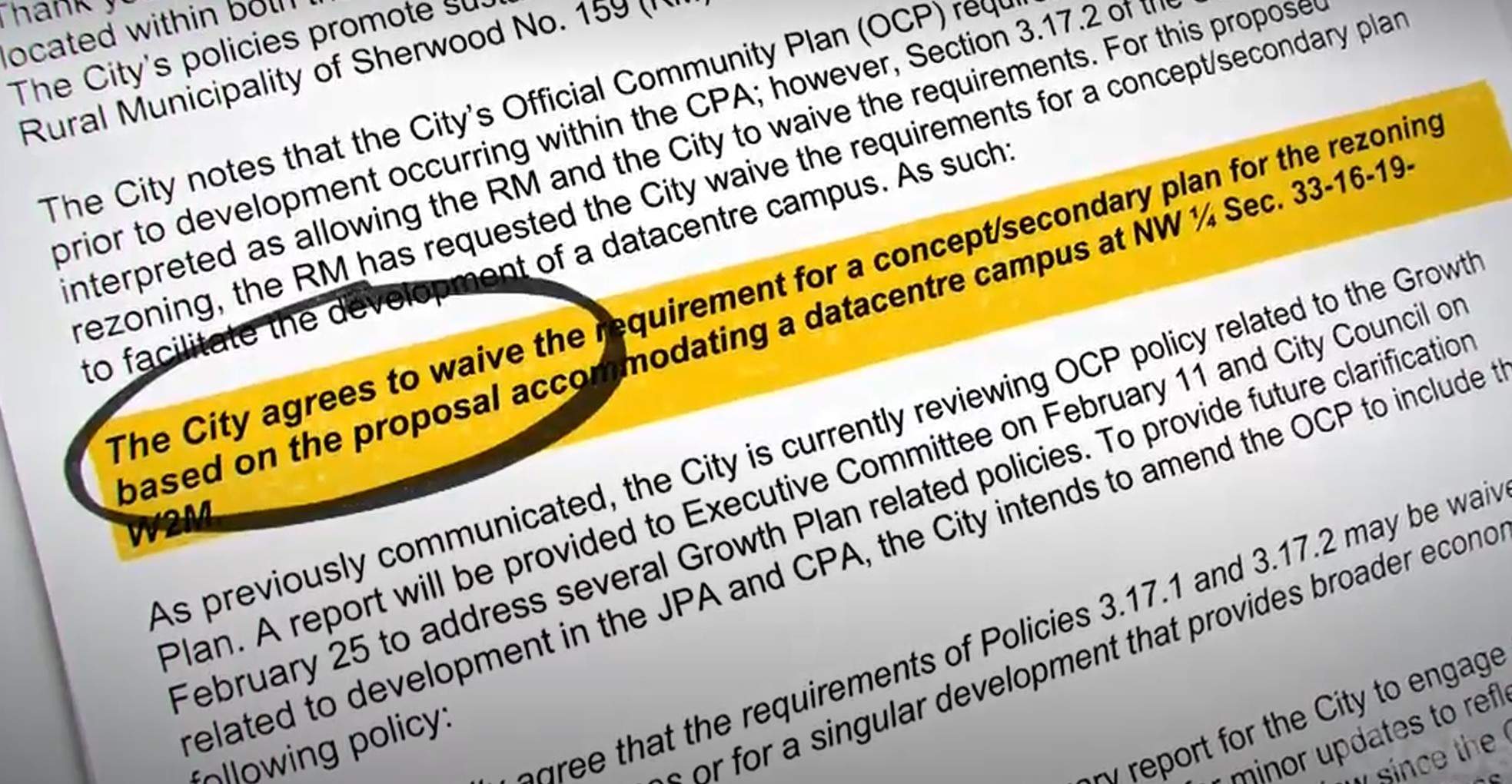
Frost coats the chain-link fence outside a municipal building in Regina at seven in the morning, stiff and white against the flat prairie horizon. Inside, fluorescent lights hum over stacks of council binders and environmental assessments that read like legal weather forecasts. Somewhere in those pages sits a question that sounds small until you follow it into a winter utility bill or a family's water tap: is an artificial intelligence data centre in Regina a stroke of civic foresight, or an expensive detour dressed up as progress?
I have spent years watching small and mid-sized cities chase big infrastructure dreams, the kind that arrive in glossy slide decks promising tax windfalls and high-skill jobs while quietly asking taxpayers to carry the risk. Sometimes the bet pays off. A transit line opens, a clinic anchors a neighborhood, a factory stays rooted for thirty years. Other times, a town builds a cathedral to tomorrow and discovers tomorrow needs water, megawatts, and patience it never budgeted.
Right now, Regina stands right on that fault line. Debates over data centre proposals, municipal feasibility reports, and energy demand in Saskatchewan carry a weight that spreadsheet columns rarely capture. When a city studies an AI data centre, it isn't just pricing concrete, fiber optic cable, and server racks. It is deciding what kind of future it believes it deserves—and what it is willing to trade for it.
To make sense of the stakes without getting lost in technobabble, I am going to use a hypothetical scenario centered on a fictional Regina household, alongside a metaphor comparing municipal infrastructure to a winter coat. Both are tools to trace real-world trade-offs. They are not substitutes for verified facts, and I will keep the boundary clear.
The Quiet Math Behind Every Prompt
Typing a question into an AI tool feels weightless. A cursor blinks, a paragraph appears, and the screen goes dark when you lock your phone. Nothing smells like diesel. Nothing rattles the floorboards.
Out in the physical world, though, every training run and high-density inference cluster is a furnace wearing a glass faceplate. Modern AI servers pack thousands of specialized chips—GPUs and custom accelerators—into tight racks that run hot enough to demand serious cooling and steady, high-voltage power. Unlike older web servers that mostly stored files and served pages, AI compute pushes electricity draw into territory that forces utilities to look closely at substation capacity, transmission lines, and peak load management.
Saskatchewan adds its own distinct texture to that equation. The province's electrical grid has long relied on a mix of fossil fuels, hydro imports, wind, and growing solar and grid-scale storage projects managed through SaskPower, alongside ongoing policy conversations around emissions, affordability, and reliability during deep prairie cold snaps. When winter temperatures plunge below minus twenty-five degrees Celsius, heating homes and keeping hospitals and water treatment plants running are not abstract priorities. They are survival math.
So when a city report weighs whether an AI data centre makes sense for Regina, the central tension isn't "AI good" or "AI bad." It is load versus capacity. It is whether new industrial demand strengthens the grid by smoothing out off-peak hours and attracting investment, or strains a system already juggling decarbonization targets and rate pressures.
A Winter Morning in a Hypothetical Regina Kitchen
Picture a hypothetical scenario in a modest two-story home in Cathedral or Harbour Landing. Call the homeowner Nadia, a structural drafter who works hybrid hours, and her partner, Tariq, who manages inventory for a regional agricultural supplier. Their two kids are still in elementary school.
Nadia doesn't care about transformer harmonics until the monthly bill creeps up three months in a row. Tariq doesn't think about data center siting until a local contractor mentions that land near the highway is being eyed for massive industrial power hookups. Over burnt toast and lukewarm coffee, their conversation turns practical: Are we paying for someone else's server farm? Will this bring real work to Regina, or just a handful of specialized technicians flown in from elsewhere?
That is the human core of every data centre report. Residents rarely oppose growth in the abstract. They push back when growth feels opaque, one-sided, or disconnected from daily life.
If a data centre arrives with heavy tax incentives, special power rates, and modest local hiring once construction wraps, neighbors start doing kitchen-table math. Why should ordinary ratepayers shoulder grid upgrades or water strain if the bulk of the economic value flows out of province to distant cloud operators or corporate shareholders?
Doubt.
It is healthy. In fact, skepticism is the most practical civic instinct a city has when shiny technology meets finite local resources.
Worthy Bet or Costly Illusion?
Let's be honest: nobody has a crystal ball for AI infrastructure over the next fifteen years. Hardware generations turn over fast. Chips get faster and more power-efficient per operation, even as total demand climbs because people use AI for more tasks every month. A facility that looks like a crown jewel today can age awkwardly if power costs rise, cooling water becomes contentious, or hyperscalers consolidate around giant hubs elsewhere.
Yet dismissing the idea out of hand carries its own blind spot. Regina has spent decades navigating boom-and-bust cycles tied to agriculture, energy, and public administration. Diversification isn't a buzzword on the prairies; it is how you keep young graduates from packing moving vans for Toronto, Calgary, or Vancouver every autumn.
Think of municipal infrastructure like a heavy winter coat—a metaphor for how cities prepare for extremes. If you buy a coat that is too thin, January punishes you every time you step outside. If you buy a coat so bulky you can't lift your arms, you can't do any work while wearing it. A city report on an AI data centre is really asking whether this particular coat fits Regina's climate, budget, and stride.
Consider what happens next when a council puts that report under a microscope:
- Power and emissions: Does the project have a clear pathway to reliable electricity without pushing household rates higher or locking in unwanted emissions?
- Water and heat: How is the facility cooled—closed-loop liquid systems, air cooling, or evaporative towers—and how does that affect municipal water supply and winter/summer operations?
- Local return: Are there binding commitments for local apprenticeships, property tax contributions, and spillover benefits for Regina businesses rather than vague promises?
- Noise and land use: Is it sited far enough from homes to avoid low-frequency hum from chillers and backup generators, while respecting agricultural and industrial zoning?
Notice how none of those questions require taking a side before looking at the receipts. They are simply the price of adult governance.
What the Competitors Miss When They Flatten the Story
Standard coverage of municipal reports tends to treat the whole issue like a coin flip: either a city embraces AI and joins the future, or it hesitates and falls behind. That framing is lazy, and worse, it makes citizens feel like spectators at their own civic table.
Real life is messier. A data centre can be a smart industrial tenant under strict conditions and a terrible deal under loose ones. A project might bring millions in construction spending over eighteen months, then employ only a few dozen full-time staff afterward. Or it might anchor a broader regional tech and clean-energy ecosystem if paired with smart grid agreements and genuine workforce training.
When I look at Regina's situation, what strikes me most isn't the technology itself. It is the test of public trust. People have seen enough big announcements fizzle—or cost more than advertised—that they rightly want proof before applause. If city leaders lay out the numbers plainly, admit where uncertainty remains, and negotiate hard for ratepayers, the debate becomes constructive. If the process feels rushed or veiled behind non-disclosure agreements, suspicion fills every quiet space.
Where the Prairie Wind Carries the Stakes
Night falls early in late November on the plains, turning the sky a deep, bruised indigo before four-thirty. Streetlights blink on along Albert Street, casting amber pools across dry grass and salted pavement.
Out beyond the city limits, cold air settles flat over open fields where wind turbines turn slow, steady arcs and power lines hum quietly overhead. Inside warm living rooms, kids do homework on tablets, parents check bank balances, and councilors weigh reports that could shape budgets for a decade. Whether a data centre belongs in that picture isn't a riddle solved by hype or fear. It is a test of discipline—deciding whether Regina will bend to someone else's rush, or set its own terms in the cold.