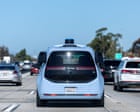
Autonomous vehicle deployment in California operates under a bifurcated regulatory architecture that separates surface-street testing from high-speed freeway operations, creating a structural ceiling on unit economics and commercial scalability. While headline narratives frame highway restrictions as a sudden punitive ban against operators like Waymo, the underlying reality is a calculated administrative gating mechanism split between two distinct state agencies: the California Department of Motor Vehicles (DMV) and the California Public Utilities Commission (CPUC). Understanding this operational divide requires examining the physics of high-velocity edge cases, the legal mechanics of Operational Design Domains (ODDs), and the capital-allocation penalties imposed when an autonomous fleet is confined to low-speed urban grids.
The Dual-Agency Gating Mechanism
In California, deploying a commercial robotaxi service is not governed by a single operating license. Instead, operators must clear two sequential regulatory hurdles with overlapping safety mandates and divergent enforcement levers.
- The California DMV (Vehicle Code and ODD Certification): The DMV regulates the physical safety of the autonomous driving system (ADS) and issues permits for testing and deployment. Every permit is strictly bound to an approved Operational Design Domain—a precise matrix defining geographical boundaries, road types, speed limits, weather conditions, and time of day. If an operator’s baseline deployment permit only covers surface streets up to 35 or 45 miles per hour, operating on a 65-mph interstate without a specific ODD expansion amendment is legally prohibited. What popular media characterizes as a "ban" is frequently an administrative hold or a denied application for an ODD expansion into highway corridors.
- The California Public Utilities Commission (Commercial Passenger Transport): Once the DMV certifies the vehicle’s technical capability, the CPUC regulates the commercial passenger service—specifically, the authority to charge fares under the Passenger Charter-Party Carriers' Act. The CPUC evaluates consumer protection, accessibility, municipal impact, and emergency response protocols. Even if the DMV grants technical clearance for highway testing with a safety driver, the CPUC can restrict driverless commercial fare collection on those exact same routes if municipal stakeholders—such as county transportation authorities or city fire departments—file formal protests citing unresolved incident-response friction.
This dual-agency structure introduces an asymmetric risk profile for operators. Technical validation by the DMV does not guarantee commercial monetization through the CPUC. When regulatory friction stalls highway approval, the restriction acts as a hard cap on route optimization, forcing autonomous vehicles to rely exclusively on arterial roads.
The Physics and Compute Economics of High-Velocity Edge Cases
Restricting autonomous fleets to surface streets is rooted in the non-linear scaling of kinetic energy and sensor latency at highway speeds. Moving an autonomous stack from a 30-mph urban grid to a 65-mph multi-lane freeway alters the mathematical parameters of perception, prediction, and control.
- Kinetic Energy and Stopping Distance: Kinetic energy scales with the square of velocity ($E_k = \frac{1}{2}mv^2$). Doubling vehicle speed from 32 mph to 64 mph quadruples the kinetic energy that the braking system must dissipate. Consequently, minimum stopping distances expand dramatically, requiring the perception stack to detect, classify, and track low-profile road debris—such as shredded tire treads, fallen ladders, or stalled vehicles—at ranges exceeding 250 to 300 meters.
- Sensor Range and Resolution Decay: Long-range LiDAR and high-resolution radar arrays experience angular resolution decay over distance. At 250 meters, a hazardous object occupies only a fraction of the point cloud or pixel array that it would at 50 meters on a city street. Distinguishing between a harmless metallic wrapper blowing across the lane and a solid steel structural hazard requires multi-modal sensor fusion with near-zero false-negative tolerance. A false negative at 65 mph results in a high-energy collision; a false positive triggers a phantom braking event, which on a congested freeway induces severe rear-end collision risks from human-driven traffic tailgating behind the autonomous vehicle.
- The Minimum Risk Maneuver (MRM) Problem: On a 25-mph city street, if an autonomous system encounters an unresolvable sensor degradation or software fault, executing a Minimum Risk Maneuver—pulling over to the curb and coming to a stop—is a low-energy, relatively safe fallback. On an eight-lane California freeway like I-280 or US-101, executing an MRM is exceptionally hazardous. High-speed traffic, narrow or non-existent shoulders, concrete jersey barriers, and complex merge zones mean that stopping in a live lane or attempting a multi-lane cross-traffic pull-over introduces catastrophic failure modes. Regulators scrutinize highway ODD applications specifically on the reliability of these fallback trajectories when human remote assistance cannot intervene within millisecond latencies.
Operational Friction and Municipal Veto Points
Beyond the engineering constraints of high-speed autonomy, highway restrictions reflect unresolved operational friction between autonomous fleet operators and public infrastructure managers. During earlier phases of urban deployment in San Francisco, documented incidents involving autonomous vehicles blocking emergency response lanes, crossing active fire hoses, or stalling in clusters during cellular network outages created institutional skepticism among first responders.
When an incident occurs on a surface street, local police or fire personnel can reroute traffic around a single block. When a stalled autonomous vehicle blocks a high-occupancy freeway lane or an airport connector ramp, the resulting congestion cascades across regional transit corridors within minutes. Highway patrol officers and state department of transportation (Caltrans) crews require deterministic, physical override protocols—such as standardized mechanical tow-release mechanisms, instant remote immobilization overrides, and dedicated high-priority dispatch lines—before endorsing uncrewed freeway operations. Until operators demonstrate near-zero stall rates and instantaneous physical recovery capabilities, state regulators treat freeway access as a systemic infrastructure liability rather than a routine software update.
Unit Economics Under Surface-Street Containment
For a commercial robotaxi operator, highway exclusion is not merely a technical inconvenience; it is a direct tax on asset utilization, gross margin, and total addressable market (TAM). Urban mobility economics depend on trip length, average speed, and deadhead mileage—the unpaid miles driven between dropping off one passenger and picking up the next.
- Trip Duration and Revenue Velocity: A 12-mile trip connecting downtown San Francisco to San Francisco International Airport (SFO) takes roughly 18 to 22 minutes via US-101. Forced onto surface streets like El Camino Real, that identical origin-destination pair takes 45 to 60 minutes. Because ride-hail pricing is anchored to competitive market rates set by human-driven networks (Uber and Lyft) that freely use highways, an autonomous operator cannot charge double the fare for taking twice as long. Asset utilization drops by more than 50 percent per trip, slashing revenue per vehicle-hour.
- Exclusion from High-Margin Airport Corridors: Airport runs represent the single most profitable segment in commercial ride-hailing due to higher average ticket prices, predictable demand surges, and lower customer acquisition costs. Without highway authorization, autonomous fleets are effectively locked out of the SFO-to-San Francisco and San Jose corridor economics, relegating them to short-haul, lower-margin intra-city hops.
- Fleet Deadheading and Rebalancing Inefficiency: Dynamic fleet management requires moving empty vehicles from low-demand residential zones to high-demand commercial hubs ahead of peak commute windows. Highways serve as the high-throughput arteries for fleet rebalancing. Confining deadhead transit to congested city streets increases battery drain per mile, accelerates tire and brake wear, and reduces the number of peak-hour rides each vehicle can capture.
Strategic Pathways to Clear the Regulatory Bottleneck
Operators facing highway restrictions cannot rely solely on accumulating millions of surface-street miles; urban mileage does not statistically validate highway edge cases. Clearing the California regulatory bottleneck requires a targeted, four-part operational and regulatory strategy.
- Decouple Testing Permits from Commercial Fare Permits: Operators must treat DMV technical validation and CPUC commercial monetization as separate workstreams. The immediate tactical move is securing DMV authorization for rider-only highway operations limited strictly to non-commercial employee transport and empty fleet rebalancing. Accumulating empirical disengagement and Minimum Risk Maneuver data during off-peak deadhead highway runs builds an auditable safety case without triggering CPUC consumer-protection protests.
- Implement Hardware-Verified Shoulder Pull-Over Redundancies: To satisfy Caltrans and highway patrol concerns regarding stalled vehicles, engineering teams must demonstrate dedicated, secondary fallback stacks capable of executing multi-lane shoulder pull-overs even if the primary compute cluster experiences a fatal kernel panic. Publishing third-party audited safety cases detailing these deterministic fallback behaviors directly addresses the core technical objection of state regulators.
- Establish Geofenced Highway-Speed Corridors with Dynamic Weather Throttling: Rather than requesting blanket statewide freeway approval, operators should petition for narrow, point-to-point highway ODDs—specifically dedicated airport connector routes—paired with strict, automated operational constraints. Committing to automatic highway ODD suspension during rain, dense fog, or active Caltrans construction zones lowers the perceived risk profile for regulators and isolates initial commercial exposure to dry, high-visibility daylight and night conditions.
- Institutionalize First-Responder Telemetry Integration: Operators must build direct API integrations with state highway patrol dispatch centers and municipal traffic management systems. Providing real-time vehicle telemetry, remote-operator voice bridges, and standardized physical override training to highway patrol divisions neutralizes institutional opposition before formal CPUC public comment periods begin.