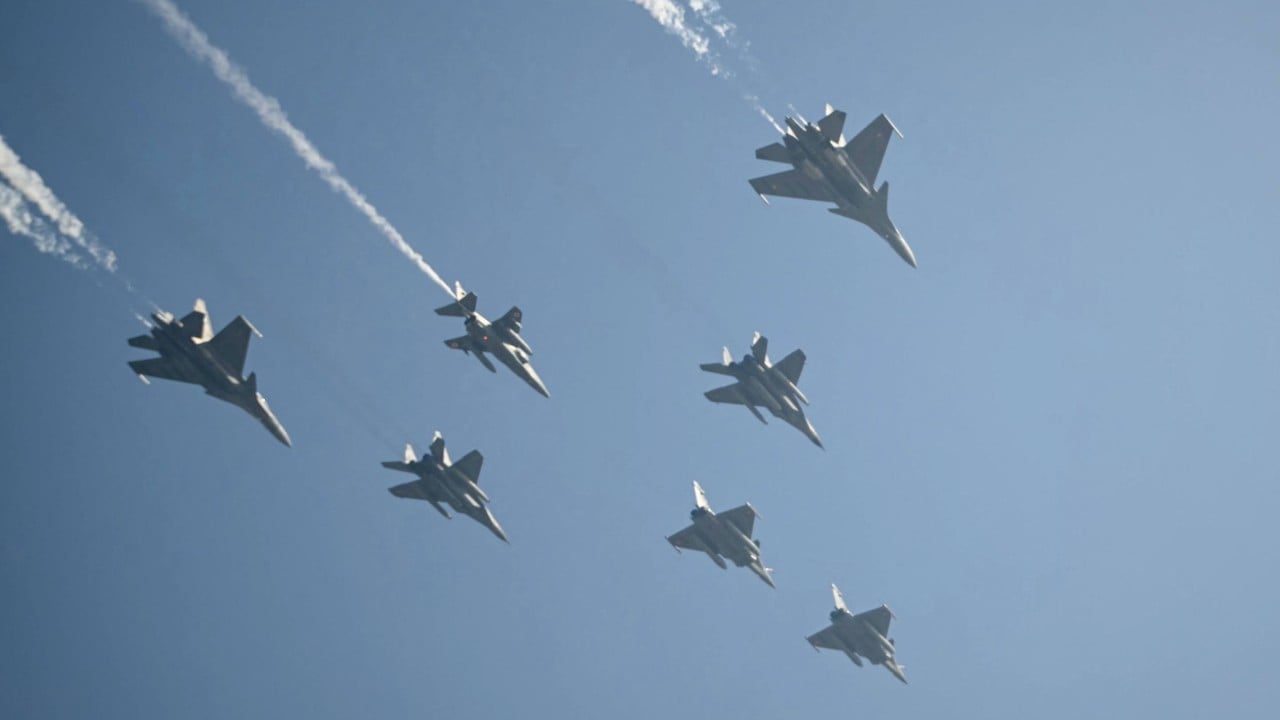
Building a high-thrust fighter jet engine is one of the hardest engineering feats on earth. For decades, India’s military aviation dreams hit a hard wall at the propulsion stage, forcing the country to rely heavily on foreign suppliers. That status quo took a sharp turn when Reliance Industries and British engineering titan Rolls-Royce announced a strategic intent to co-develop a sovereign combat engine for India’s Advanced Medium Combat Aircraft (AMCA) program.
If you've followed Indian defense manufacturing for long, you know that missing propulsion technology has historically grounded or delayed homegrown jet projects. This new partnership aims to change that by building an indigenous aero-engine ecosystem from scratch. If you found value in this post, you might want to check out: this related article.
The Real Struggle Behind India’s AMCA Ambitions
India wants a fifth-generation stealth fighter, the AMCA, but designing the airframe is only half the battle. Powering it requires an advanced powerplant capable of supercruise performance and extreme thermal management.
While initial AMCA prototypes rely on imported American GE F414 engines under a substantial INR 15,000-crore program, relying on foreign hardware creates strategic vulnerabilities. Export restrictions, maintenance bottlenecks, and bureaucratic delays can stall an entire air fleet. True strategic autonomy means owning the intellectual property and the manufacturing capability right at home. For another angle on this story, check out the latest update from Reuters Business.
What the Reliance and Rolls-Royce Partnership Actually Means
The proposed collaboration goes beyond a basic supply contract. Under the announced framework, Reliance and Rolls-Royce plan to explore the creation of a dedicated Aerospace Gas Turbine Complex in India.
This proposed facility would manage the entire engine lifecycle:
- Design and engineering
- Development and prototyping
- Manufacturing and component testing
- Full-scale production
- Long-term through-life support and maintenance
By pairing Rolls-Royce's century-long propulsion heritage with Reliance's massive industrial scale, financial backing, and execution bandwidth, the venture attempts to solve the execution gaps that usually plague state-led defense projects. Anant Ambani, executive director at Reliance Industries, noted that creating sovereign capability in critical technologies is non-negotiable for national security. Meanwhile, Rolls-Royce CEO Tufan Erginbilgiç framed the move as a major milestone for building a robust domestic aerospace base.
Breaking Up the French Monopoly
This partnership doesn't happen in a vacuum. It directly shakes up the existing competitive field. French manufacturer Safran has already been heavily positioned in discussions to co-develop next-generation fighter engines alongside India's Gas Turbine Research Establishment (GTRE).
By bringing a private sector heavyweight like Reliance into the mix alongside Rolls-Royce, the playing field opens up. Competition forces better technology transfers, faster timelines, and sharper cost controls. It signals that India's defense sector is finally welcoming heavy private industrial participation in high-end military hardware, moving past the traditional public-sector monopoly.
What Needs to Happen Next
Announcing an intent to partner is the easy part. Turning that intent into a flying, combat-ready engine requires overcoming massive hurdles.
The companies still need to iron out exact equity structures, funding commitments, and strict technology transfer agreements. Furthermore, matching the metallurgical expertise required for single-crystal turbine blades—a specialty where only a handful of global firms excel—will demand immense patience and capital investment.
If they pull it off, India won't just build a fighter jet for its own skies. It will transform into a global exporter of advanced propulsion systems. Watch the timeline on that gas turbine complex closely; it will tell you whether this ambition turns into operational reality or remains just another headline.