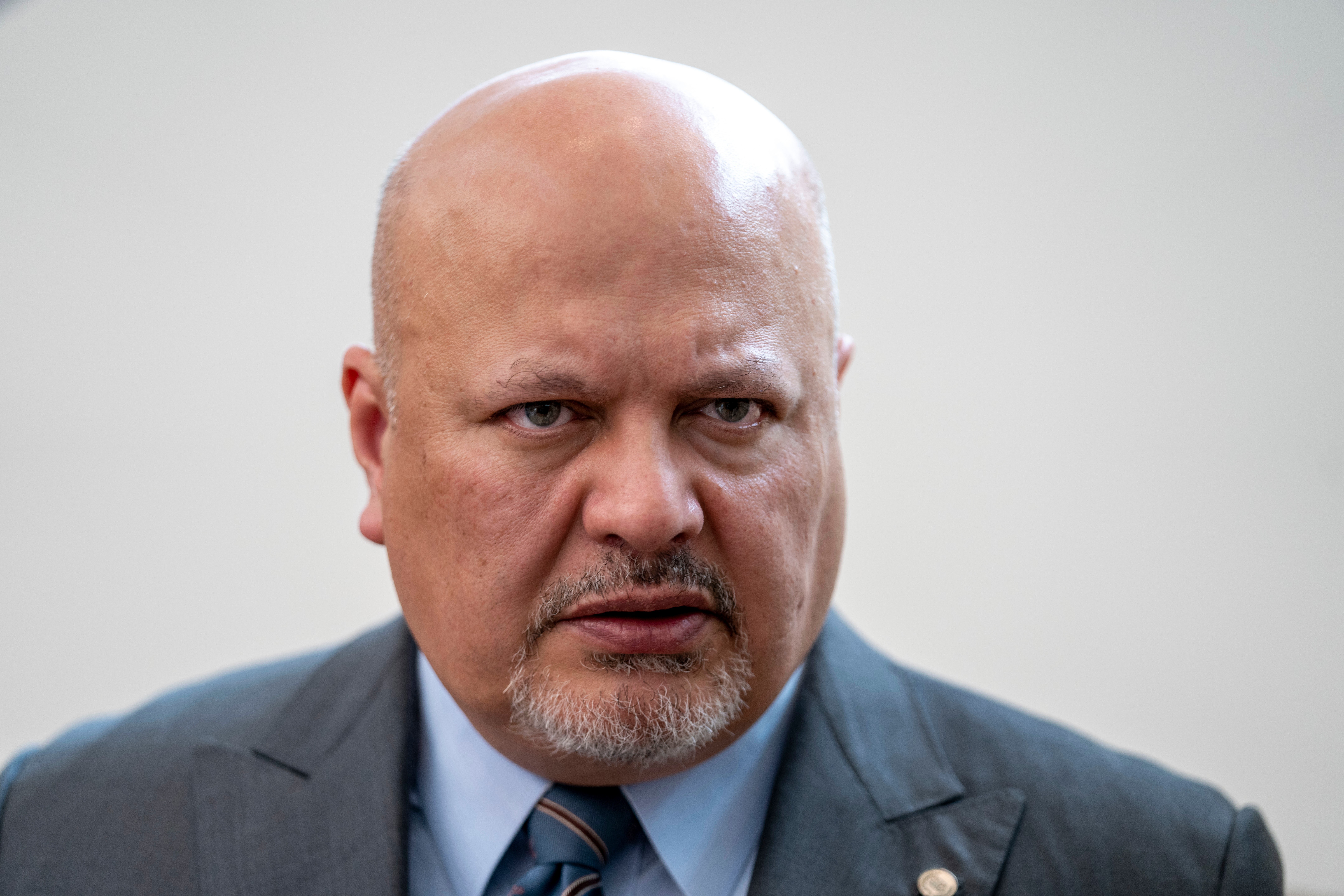
The lazy consensus across global headlines treats the International Criminal Court as a functioning judicial body temporarily derailed by political drama. That premise is garbage. The pushback against Chief Prosecutor Karim Khan is not an aberration. It is the predictable collapse of a system built to punish the weak while granting immunity to the powerful.
Focusing on personnel changes misses the architecture of failure. Swapping prosecutors changes nothing when the foundational machinery is structurally compromised by state sovereignty and selective enforcement.
The Myth of Neutral Jurisprudence
For decades, the narrative surrounding the Hague relied on a comfortable fiction. International law exists above politics. Prosecutors are impartial arbiters. Warrants are issued based purely on evidence, not geography or geopolitical convenience.
Anyone paying attention to actual international relations knows this is fantasy.
When warrants or investigations target minor players or states outside major security umbrellas, the court receives praise for defending human rights. The moment an inquiry brushes against nuclear-armed veto-wielding states or their core allies, the apparatus fractures. Member states panic. Budgets face pressure. Cooperation stalls.
The drama surrounding Karim Khan is not about one man. It is about a recurring panic attack within an institution that realized, too late, that its mandate actually required consistency.
Sovereignty as a Get Out of Jail Free Card
Let us look at the legal mechanics. The Rome Statute created a court dependent entirely on state cooperation for arrests, evidence gathering, and enforcement.
Think about how absurd that is.
Imagine a municipal police department where suspects must voluntarily hand over the handcuffs and drive themselves to the station. That is the International Criminal Court. Without a standing police force, the prosecutor relies on the very governments they are investigating to enforce warrants.
When member states threaten leadership changes or withhold funding over politically inconvenient arrest warrants, they are merely exploiting design flaws written into the founding treaty from day one. The system was never designed to hold major superpowers accountable. It was designed to manage impunity at the margins.
Dismantling the People Also Ask Fallacy
If you look up queries related to this tribunal, you will find variants of a recurring question: Can the International Criminal Court enforce its own arrest warrants?
The honest answer is no.
People ask this expecting a technical workaround, a secret mechanism prosecutors possess to bypass uncooperative capitals. There is no workaround. If a state refuses to execute a warrant, the court can issue strongly worded statements, refer the matter to the UN Security Council—where friendly vetoes block action instantly—and shrug.
Pretending otherwise misleads the public. When critics focus entirely on who sits in the prosecutor's chair, they distract from the structural reality that no prosecutor can succeed without an independent enforcement mechanism.
The Alternative Nobody Wants to Discuss
If international justice is going to move past theatrical accountability, we have to stop pretending that hybrid tribunals and ICC expansions are working solutions. They are administrative band-aids on a gushing wound.
True accountability requires universal jurisdiction applied without double standards, or it requires abandoning the pretense of global courts entirely in favor of regional accountability mechanisms that share actual security interests.
Right now, member states want the moral branding of supporting international law without paying the geopolitical price of enforcing it against friends.
Karim Khan's tenure exposed the tension between institutional survival and actual enforcement. Removing a prosecutor does not resolve that tension. It merely silences the person who pushed the system past its comfort zone.
The court can either accept its role as a regional tribunal for the unprotected, or it can rewrite its charter to strip superpowers of their structural vetoes.
Until then, every vote, every investigation, and every leadership crisis is just political theater masquerading as justice.