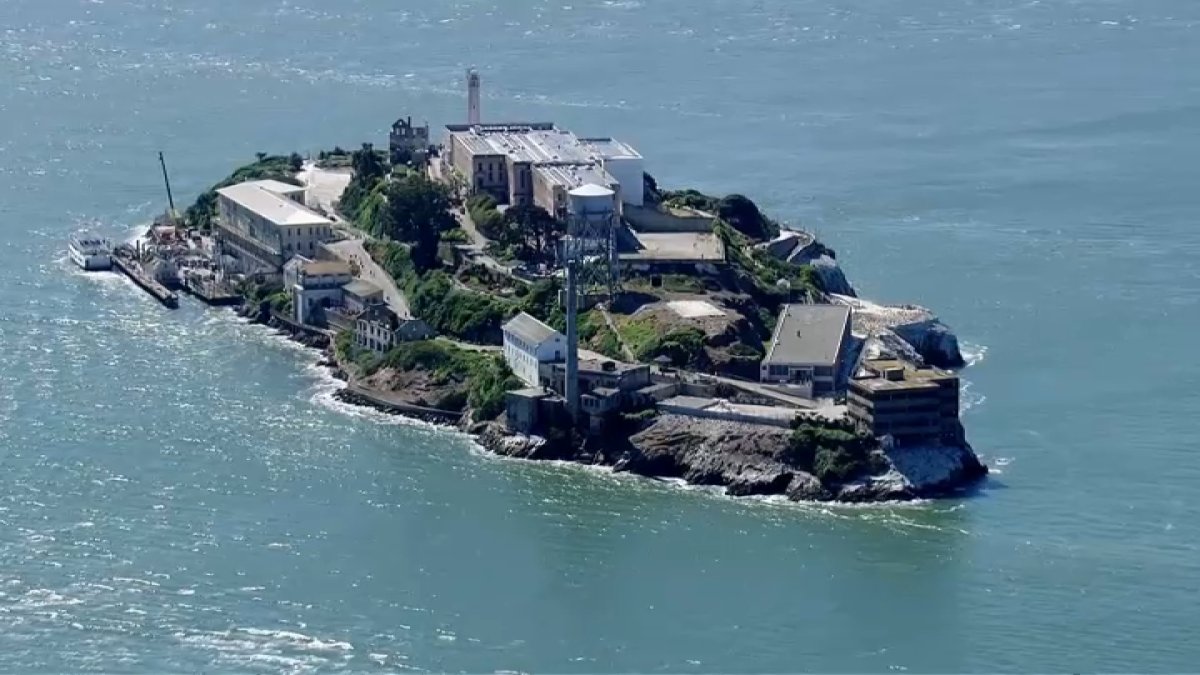
Donald Trump wants to put the "Rock" back in the federal prison business. Tucked away in his 2027 budget proposal released this Friday, April 3, 2026, is a specific request for $152 million to kick-start the reopening of Alcatraz. It's a move that feels less like a modern correctional strategy and more like a high-budget reboot of a classic Hollywood franchise.
The plan is to transform the crumbling island landmark into a "state-of-the-art secure prison facility." If you think this sounds like a logistical nightmare, you're right. I've looked at the numbers, and the $152 million is just a down payment on a project that defies fiscal logic.
The Massive Price Tag for a Symbol
Let’s be real. Reopening Alcatraz isn't about bed space. The federal prison population has actually been on a downward trend for years. We have a massive, high-tech Supermax in Florence, Colorado—the "Alcatraz of the Rockies"—that does the job of housing "ruthless and violent offenders" perfectly well without the salt-spray erosion.
So, why spend $152 million on year one? Trump’s own words give it away. He’s called it a "symbol of Law, Order, and JUSTICE." This is about the optics. He wants a fortress in the middle of a blue-city bay to serve as a constant reminder of federal power.
But symbols are expensive. Back in 1963, Attorney General Robert F. Kennedy closed the place because it was a money pit. At the time, it cost three times more to house an inmate on the island than at any other federal prison. Everything—every drop of fresh water, every loaf of bread, every kilowatt of power—has to be ferried over. In 2026, those logistics haven't gotten cheaper; they've gotten more complex.
A Logistical Black Hole in the Bay
If you’ve ever taken the ferry to Alcatraz as a tourist, you know the island is basically a giant pile of decaying concrete and rusted rebar. The National Park Service has already been spending tens of millions just to keep the Hospital Wing from collapsing on visitors.
Converting a 90-year-old ruin into a modern "state-of-the-art" facility means more than just a fresh coat of paint. You’re looking at:
- Total Seismic Retrofitting: San Francisco is earthquake country. Making that old cell house "secure" by 2026 standards requires massive structural overhaul.
- Desalination and Power: Unless the Bureau of Prisons wants to pay for water delivery for the next 50 years, they’ll need independent utility infrastructure.
- Staffing Nightmares: There’s already a chronic shortage of correctional officers nationwide. Convincing guards to commute by boat to a high-cost area like San Francisco is a tough sell, even with the proposed $1.7 billion boost for BOP pay.
Experts like Charles Weisselberg from UC Berkeley have called the plan "unrealistic." Honestly, it’s hard to disagree. You aren't just building a prison; you're building a self-sustaining city on a rock that nature is actively trying to reclaim.
Killing the Golden Goose of Tourism
We can't ignore the economic hit to San Francisco. Alcatraz is a cash cow for the National Park Service and the local tourism industry, drawing over 1.2 million visitors annually.
Turning the island back into a high-security zone means:
- Slashing jobs for park rangers and tour operators.
- Decimating the revenue that helps fund other national parks.
- Removing one of the most iconic "bucket list" items for international travelers.
Local leaders like Scott Wiener have been vocal about this. It’s a "dumb idea" that replaces a profitable historical site with a tax-draining fortress. If the goal is to save money or improve the justice system, this ain't it.
What Happens Next
Don't expect the cell doors to slam shut just yet. This $152 million request is part of a broader budget battle. Democrats in the Senate, led by Chuck Schumer, have already labeled the 2027 budget "morally bankrupt" and "bleak."
For this to happen, Congress has to actually approve the spending. With the U.S. currently facing massive deficits and a $1.5 trillion defense request, a vanity project in the San Francisco Bay is going to be the first thing on the chopping block during negotiations.
If you’re a taxpayer, the move here is to watch the House Appropriations Committee. That’s where this "symbolic" $152 million will either get a green light or, more likely, get buried under the weight of its own impracticality. The reality is that we already have the most secure prisons in the world. We don't need to rebuild a relic to prove it.
Keep an eye on the Bureau of Prisons' upcoming feasibility reports. If they're honest about the "first-year costs," that $152 million will look like a drop in the bucket compared to the billions it would take to actually finish the job.


