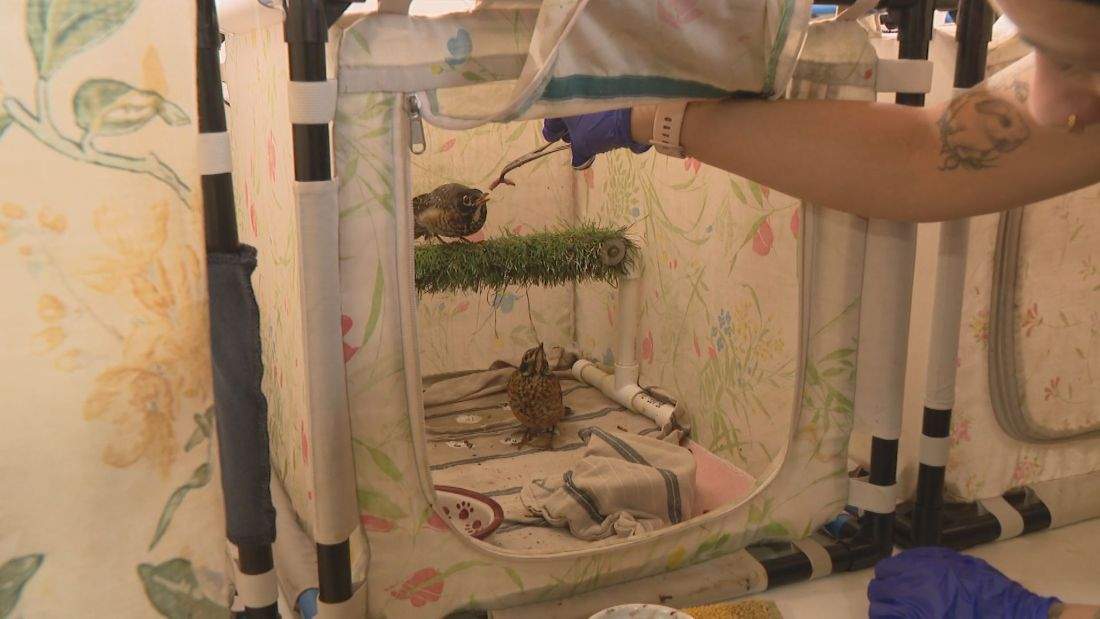
Everybody loves a comeback story. A local wildlife rehabilitation centre loses its provincial licence, volunteers rally, public pressure mounts, and suddenly the headlines celebrate that the doors might soon swing back open.
It feels good. It makes for clean, heartwarming local news. And it completely misses the point.
The public reaction to the Saskatoon wildlife rehab licence suspension—and its potential reinstatement—exposes a massive blind spot in how we think about urban wildlife conservation. When a facility loses its permit to operate, the immediate impulse is to treat regulatory oversight as bureaucratic red tape standing in the way of compassion. People see injured owls, orphaned squirrels, and hit-by-car foxes, and they assume any open door is a good door.
That assumption is dangerous. In wildlife medicine, good intentions without strict clinical infrastructure do not save animals. They prolong suffering, spread infectious disease, and create ecological liabilities.
The Compassion Trap in Wildlife Rehabilitation
Wildlife rehabilitation is not pet rescue. Yet the public—and far too many grassroots boards—treat them as interchangeable.
When you rescue a stray dog, the goal is socialization, comfort, and finding a couch for that animal to sleep on for the next twelve years. When you admit a wild red-tailed hawk or a juvenile porcupine, human contact is poison. Every second an animal spends in a sub-optimal enclosure, hearing human voices or smelling domestic pets, reduces its odds of surviving post-release.
Provincial permits exist for one reason: to enforce the minimum biological, veterinary, and biosecurity standards required to turn an injured wild animal back into a functioning member of an ecosystem. When a provincial environment ministry revokes a licence, it is rarely over a misplaced paperclip. It happens because protocols broke down. Quarantine lines crossed. Record-keeping vanished. Veterinary oversight evaporated.
Celebrating the imminent return of a revoked licence without demanding radical structural transparency is like cheering for a restaurant to reopen the day after a health code shutdown without checking if they fixed the walk-in cooler.
The Illusion of "No Kill" Conservation
Here is the truth that rarely makes it into local fundraising appeals: euthanasia is the single most important tool in ethical wildlife rehabilitation.
Read that again.
In professional wildlife medicine—guided by standards from organizations like the National Wildlife Rehabilitators Association (NWRA) and the International Wildlife Rehabilitation Council (IWRC)—a facility's success is not measured by how many animals it keeps alive in cages. It is measured by how many animals it releases back into the wild with a genuine shot at reproducing and thriving.
A songbird with a shattered wing that heals crooked cannot migrate. A raptor with permanent vision loss in one eye cannot hunt efficiently enough to survive a Saskatchewan winter. Keeping these animals alive in backroom crates because volunteers cannot bear to make the call is not mercy. It is hoarding disguised as rescue.
Facilities that operate on shoestring budgets, powered entirely by emotional donors and exhausted volunteers, face immense pressure to "save them all." Donors do not write cheques to fund humane euthanasia drugs. They write cheques for cute baby raccoon photos. That financial incentive warps clinical judgment, pushing under-resourced centres to hold onto unreleasable animals long past the ethical threshold.
Why Provincial Permits Get Pulled in the First Place
Let us look at the mechanics of how a wildlife rehab centre ends up in regulatory crosshairs. Having observed dozens of facilities across North America hit this exact wall, the pattern is almost always identical.
- Intake Volume Exceeds Capacity: Spring hits. Baby bird season explodes. A centre built to house 40 animals safely suddenly has 180 crammed into spare bathrooms, garages, and stacked plastic bins.
- Biosecurity Collapses: Overcrowding destroys quarantine protocols. One case of avian paramyxovirus, canine distemper, or raccoon roundworm (Baylisascaris procyonis) sweeps through the facility because staff lack the time and isolation rooms to sanitize properly between feedings.
- Veterinary Oversight Becomes Nominal: A local vet signs off on the initial permit application out of goodwill, but they have a full-time small-animal clinic to run. They are not doing daily rounds. Lay volunteers end up diagnosing fractures, calculating antibiotic dosages, and performing triage without a medical degree.
- Burnout Erases Documentation: Provincial ministries require strict intake, treatment, and disposition logs. These logs track disease vectors, monitor species population hits, and account for controlled substances. When a three-person team is working 16-hour days feeding baby robins every twenty minutes, paperwork is the first thing to die.
When regulators step in and pull the plug, they are stepping into a clinical crisis that has usually been brewing for months.
The Real Cost of Sub-Standard Care
Imagine a scenario where a well-meaning volunteer group takes in a brood of orphaned ducklings alongside an injured adult gull. Without strict species-specific isolation and air filtration, asymptomatic pathogens carried by the gull transfer to the ducklings. Two weeks later, those ducklings are released into a local wetland in Saskatoon. They look healthy. Everybody takes photos for social media. Within ten days, a localized outbreak wipes out dozens of wild waterfowl in the watershed.
This is not hypothetical. Disease transmission from poorly managed rehab facilities into wild populations is a documented ecological threat. Wildlife agencies restrict permits precisely because an unregulated rehab centre can accidentally become a biological weapon aimed at the very ecosystem it wants to protect.
What People Actually Need to Ask About Wildlife Rehab
If you care about injured wildlife in Saskatchewan—or anywhere else—stop asking when the doors will reopen. Start asking harder questions.
"Who is the full-time veterinarian of record, and how many hours a week are they on-site?"
A signature on a piece of paper does not set a broken femur. If a facility cannot afford dedicated veterinary hours or direct clinical supervision, it should not be accepting complex trauma cases. Triage requires medical training, not just a warm heart.
"What is the facility's release-to-intake ratio, and how do they define success?"
Ask for the numbers. In North American wildlife rehabilitation, an average release rate hovers between 40% and 55% of all intakes. If a centre claims an 80% or 90% survival rate, they are either lying, cherry-picking easy cases, or warehousing permanently disabled animals in cages instead of euthanizing them. Conversely, if their release rate is under 20%, they are acting as an expensive waiting room for death because animals are arriving too late or receiving inadequate acute care.
"Where does the money actually go?"
Most municipal and provincial governments provide zero direct operational funding to wildlife rehab centres. That is a massive systemic failure. Governments issue the permits, enforce the rules, and rely on these centres to handle thousands of public calls every year—yet they leave the facilities to beg for donations on social media to pay for heat, formula, and X-ray film.
When a centre fails, the province shares the blame for offloading a public ecological service onto unpaid amateurs without funding the infrastructure.
The Structural Fix Nobody Wants to Pay For
If Saskatoon wants a wildlife rehabilitation centre that never loses its licence again, it cannot rely on the old model. The era of the scrappy, volunteer-run backyard rehab operation is dead. Modern wildlife medicine demands modern institutional standards.
First, intake must be ruthlessly capped. A facility that accepts every single animal brought to its door is guaranteed to fail. Professional centres establish hard capacity limits per species and per enclosure type. When the avian ICU is full, the doors close to new bird intakes until beds open up. Saying "no" at the front desk is the only way to ensure the animals already inside survive.
Second, triage needs to happen before transport. Most animals brought to rehab centres by well-meaning citizens were never actually orphaned or injured. Fledgling birds on the ground are learning to fly while their parents watch from ten feet away. Fawns left alone in tall grass are waiting for a doe that only returns twice a day to avoid drawing predators to her scent. Over 30% of spring intakes at urban centres are healthy animals kidnapped by panicked humans. A mandatory phone-and-photo triage hotline stops healthy animals from ever entering a cage.
Third, municipalities must treat wildlife response as essential infrastructure. Cities spend millions managing urban pests, maintaining parks, and running domestic animal control. Funding a dedicated, professionally staffed wildlife medical triage unit—even a modest one—costs a fraction of a single municipal infrastructure project.
The Downside of Professionalizing Wildlife Care
Raising the bar has a brutal consequence: fewer animals get accepted.
If you enforce strict clinical standards, mandatory veterinary oversight, hard intake caps, and zero-tolerance biosecurity, many injured animals found by the public will be turned away or immediately euthanized at local vet clinics rather than kept alive for weeks in a volunteer's spare bedroom.
That reality makes people uncomfortable. It strips away the romantic narrative of rescue. It forces the public to confront the harsh math of nature, where most wild juveniles do not survive their first year anyway.
But conservation is not about managing human emotions. It is about maintaining healthy, disease-free wild populations.
Reinstating a licence is just ink on paper. Unless the underlying funding, medical oversight, and intake discipline change completely, we are simply resetting the clock on the exact same failure. Stop cheering for open doors and start demanding clinical competence.