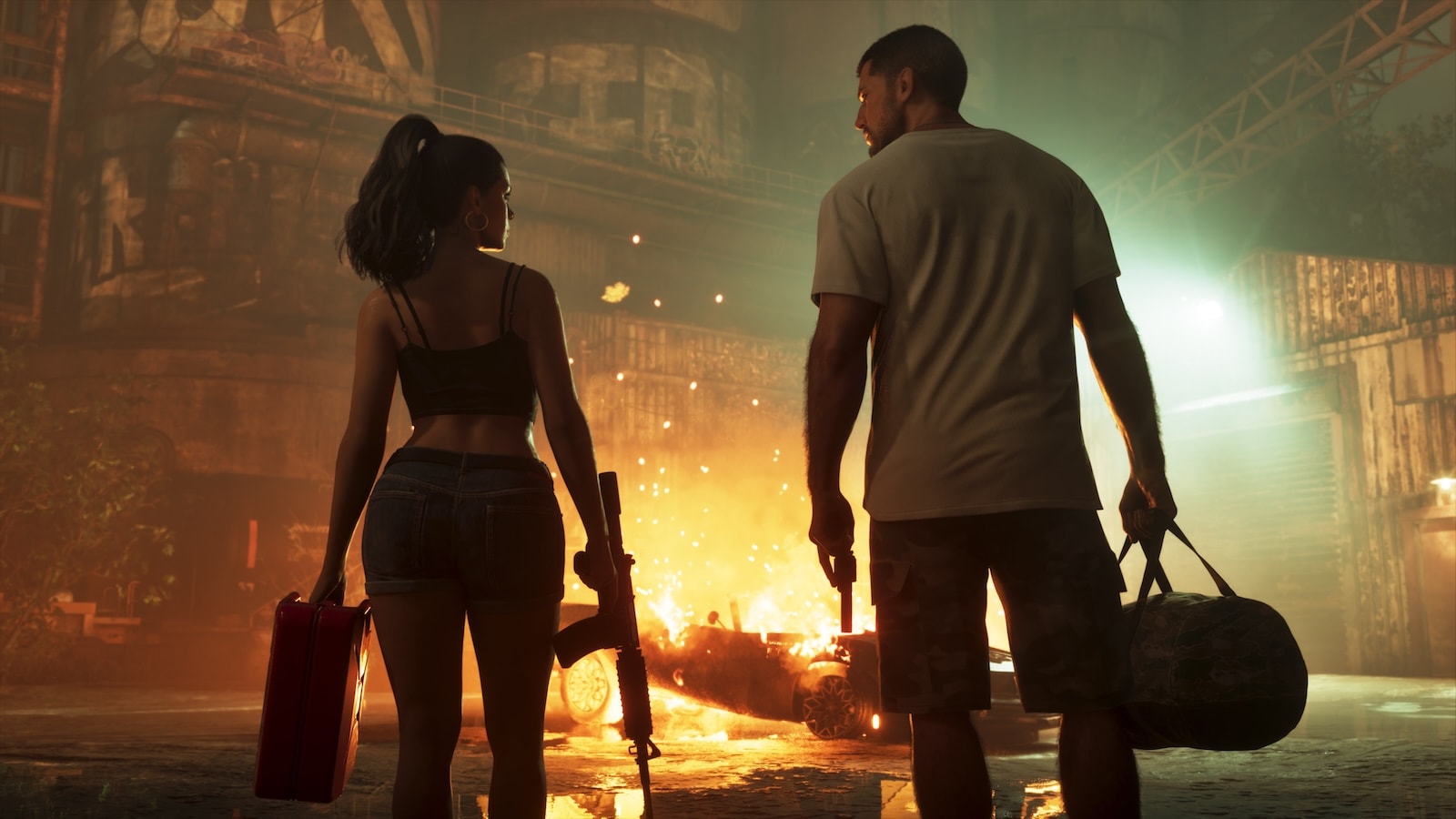
Capcom just walked away from the Golden Joystick Awards with a heavy haul of trophies for Resident Evil Requiem, and the gaming press is treating it like a coronation. Read any mainstream coverage right now and you will see the exact same victory lap. They will tell you that this sweep proves survival horror has conquered the mainstream. They will argue that fan-voted awards represent the purest metric of artistic quality. They will claim Capcom has cracked the code on modern horror perfection.
They are completely wrong.
A popular vote sweep for a massive, AAA horror sequel is not a triumph for the genre. It is a warning sign that the sharpest edges of survival horror are being sanded down to fit the widest possible audience. When a horror game becomes palatable enough to win a global popularity contest, it stops doing the one thing horror is supposed to do—alienate, discomfort, and terrify the player.
The Illusion of the Fan-Voted Sweep
Let’s look at the mechanics of what just happened. Unlike The Game Awards or the D.I.C.E. Awards, where industry juries and critics weigh in alongside public ballots, the Golden Joystick Awards rely heavily on sheer public voting volume.
That distinction matters.
Public voting does not measure artistic risk, mechanical innovation, or genre purity. It measures install base, marketing reach, and brand familiarity. Resident Evil is a thirty-year-old juggernaut with a built-in audience of tens of millions of players. Putting Resident Evil Requiem against smaller, genuinely experimental horror titles in a public poll is like pitting a Marvel blockbuster against an A24 psychological thriller at the box office and declaring the superhero movie the superior piece of cinema because it sold more tickets.
I have spent over a decade watching publishers misread this exact signal. Years ago, executives looked at the massive sales and audience acclaim of action-heavy sequels like Resident Evil 5 and Dead Space 3 and concluded that players wanted bombastic, cooperative shooters instead of claustrophobic dread. They poured tens of millions of dollars into chasing that broad appeal. Within three years, both franchises nearly died on the vine.
Capcom eventually saved itself by pivoting back to the gritty, first-person intimacy of Resident Evil 7 in 2017. That game did not win every popularity contest on the planet, and it alienated plenty of casual action fans. Yet it saved the franchise because it prioritized terror over mass appeal.
What the Mainstream Coverage Completely Missed
The lazy consensus surrounding Resident Evil Requiem frames its Golden Joystick dominance as proof that horror has "grown up" and finally earned mainstream respect. That narrative fundamentally misunderstands the economics and psychology of fear.
True survival horror relies on friction. It requires clunky inventory management, scarce ammunition, disorienting camera angles or lighting, and deliberate vulnerability. When a player feels powerless, anxiety spikes.
Mass-market awards, however, reward smoothness. Players vote for games that feel responsive, empowering, and consistently entertaining across a twenty-hour runtime. To sweep a public award show, a game cannot afford to frustrate the average consumer. It has to smooth out the friction. It has to give the player enough resources, enough checkpoints, and enough cinematic spectacle to keep the dopamine flowing.
By celebrating Requiem for sweeping a popularity poll, critics are applauding the very compromises that dilute the genre. Look at the design DNA of modern AAA horror:
- Dynamic Difficulty Adjustment (DDA): The game silently monitors your accuracy and remaining ammo, spawning extra bullets in crates when you miss too often. You never actually run out of resources; you just experience the theater of scarcity.
- Telegraphed Tension: Audio cues and lighting shifts explicitly warn you before an encounter begins, removing the genuine paranoia of an unscripted ambush.
- Power-Curve Escalation: By the final third of the campaign, the carefully cultivated dread evaporates into a high-budget shooting gallery so the player gets a triumphant, crowd-pleasing climax.
These mechanics are brilliant for retention metrics and post-launch player satisfaction surveys. They are terrible for genuine horror.
Dismantling the Common Questions Around the Sweep
If you search for coverage on this win, you will see the same predictable questions popping up across forums and search engines. Every single one of them is framed around a flawed premise.
Does sweeping the Golden Joysticks make Resident Evil Requiem the best horror game of the year?
No. It makes it the most widely played and broadly liked horror-adjacent blockbuster of the year. Calling the winner of a public poll the "best" in a niche genre is a category error. Horror is supposed to be divisive. Think of classics like Silent Hill 2 or Pathologic—games that deliberately induce misery, confusion, or revulsion. Neither of those games would ever sweep a mainstream popularity vote, yet their impact on game design dwarfs almost every crowd-pleaser that ever took home a trophy.
Does this win prove that single-player horror is more profitable than live-service games?
This is the most dangerous myth circulating in executive boardrooms right now. Publishers see a single-player game sweep an awards show and assume the single-player market is bulletproof. It isn't. Resident Evil succeeds because Capcom has spent decades building an unmatched proprietary engine (the RE Engine) and a disciplined development pipeline that keeps budgets under control while recycling assets intelligently across releases. A studio without Capcom's institutional infrastructure trying to replicate Requiem's production values for a single-player horror game will likely bankrupt itself before launch.
Will this force other studios to copy Capcom’s formula?
Yes, and that is the real tragedy here. Whenever a game sweeps an awards cycle, risk-averse publishers immediately mandate that their internal studios chase the exact same template. We saw it after The Last of Us popularized the sad-dad cinematic walk-and-talk. We saw it after Dark Souls turned every third-person action game into a stamina-management simulator. Now, every mid-sized studio pitching a horror game will be told by their financiers to make it "more like Requiem"—bigger, louder, more accessible, and far less scary.
The Counter-Intuitive Truth About Genre Survival
To be completely fair to Capcom, their strategy makes total sense from a corporate shareholder perspective. You do not maintain a multi-billion-dollar market cap by catering exclusively to purists who want to spend forty minutes staring at a locked door with two handgun bullets and a green herb. Capcom's job is to maximize return on investment, and Resident Evil Requiem is a masterclass in commercial execution.
The danger lies in mistaking commercial execution for creative health.
In his seminal writings on horror design, Frictional Games co-founder Thomas Grip—the mind behind Amnesia: The Dark Descent and SOMA—repeatedly emphasized that fear dies the moment the player understands the underlying system. Once you figure out the monster's patrol loop, or realize the game will always hand you enough ammo to survive the next boss fight, the illusion shatters. You stop being a victim in a nightmare and start being a consumer playing a video game.
Mainstream audiences want to understand the system. They want mastery. They want to feel smart, capable, and victorious by the time the credits roll.
That creates an irreconcilable tension at the heart of AAA horror. The bigger the budget gets, the more copies the game must sell to break even. The more copies it must sell, the more accessible and empowering it has to be. And the more empowering it becomes, the less it actually functions as horror.
What Players and Developers Need to Do Instead
If you care about the future of interactive horror, stop using mainstream awards shows as your barometer for what is worth playing or making.
- For Players: Follow the Friction. When looking for your next horror experience, ignore the games winning "Ultimate Game of the Year" or "Best Audio" at massive public ceremonies. Look at the Steam user reviews for titles hovering around a 75% to 82% positive rating—the ones where half the negative reviews complain that the game is "too unfair," "too dark," "too confusing," or "punishingly slow." That friction you see people complaining about in the reviews? That is where the actual horror lives.
- For Developers: Reject the Blockbuster Arms Race. Stop trying to out-Capcom Capcom. You cannot beat them at photorealistic face scans, orchestral scores, or explosive third-act set pieces. Your competitive advantage as an independent or AA studio is your ability to make the player genuinely uncomfortable without needing approval from a marketing committee. Build systems that break standard UX conventions. Take away the map. Make saving costly. Let the player fail irreversibly.
- For Critics: Separate Craft from Comfort. Stop praising horror games simply because they "control like a dream" or "never waste the player's time." Wasting the player's time—forcing them to backtrack through a darkened hallway while second-guessing every shadow—is the entire point of the genre. Evaluate horror on how effectively it unsettles the player, not on how smoothly it delivers a thrill ride.
Resident Evil Requiem earned its trophies through sheer polish, brand loyalty, and undeniable production craft. Capcom built a machine that millions of people loved playing.
Just stop calling it a victory for horror. When everybody loves the monster, the monster isn't scary anymore.