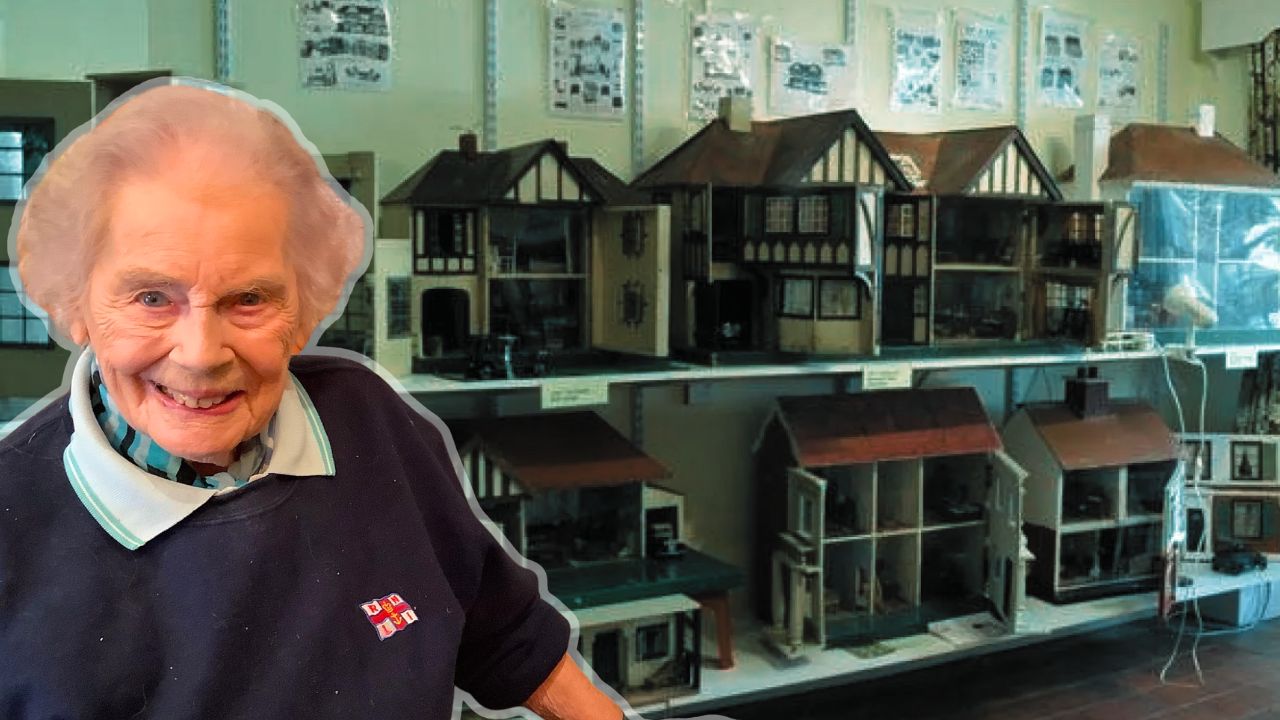
Most people toss their childhood belongings into a cardboard box and shove it into the back of a garage. It’s out of sight, out of mind. Then, years later, you realize you've thrown away the most authentic connection you had to your own history. Val Ripley didn't make that mistake. At 101 years old, she’s still running a museum dedicated to the dolls' houses that defined her early years. She proves that a "toy" is never just a toy if you treat it with enough respect.
The Power of Keeping Your Past
When Val received her first dolls' house as a Christmas gift in 1932, she didn't know it would become the centerpiece of her life’s work. She was eight. Most kids outgrow those interests by age twelve. She didn't. Even when World War II forced her family to pack their belongings into crates and move them into storage, she kept the flame alive.
Those crates sat in an attic for decades. They were almost forgotten. Many people would’ve cleared the house and sent those "old, dusty" items to a charity shop or the dump. Val and her sister Pam were different. After their mother passed away in 1977, they didn't just clear out junk. They rediscovered their own childhood. That moment changed their path, leading them to eventually open the Ty Twt Dolls House and Toy Museum in Newport, Pembrokeshire.
Why Miniature History Matters
People often dismiss dolls' houses as frivolous or strictly for children. That’s a massive oversight. Val correctly identifies them as a document of social history. Think about it. You can learn a lot about how people lived, what they valued, and how they organized their homes by looking at the details in these tiny recreations.
The collection at her museum features houses dating back as far as 1840. You see the shift from expensive, handcrafted displays owned by the wealthy to the mass-produced, sturdy toys that emerged after the Industrial Revolution. It’s a physical timeline of the middle-class home. When I talk to collectors, they often mention the "authenticity" of these pieces. It’s not just about the craftsmanship. It’s about the fact that children actually used these items. They played, they imagined, and they lived in those miniature spaces.
Beyond the Nostalgia
Val’s work isn't just about preserving old wood and plastic. She’s actively involved in the hobby. Even today, she is looking for new pieces to add. She’s not just a curator; she’s an enthusiast. If she sees something she doesn't have, she buys it. That level of dedication is rare. It’s what separates a hoard from a collection.
She also brings a sharp eye to how modern toys have changed. She notices, for instance, how modern dolls' houses are often dominated by pink and plastic. The difference between those and the meticulously detailed, functional miniatures of the past is striking. She uses her museum to show school groups and visitors that there is a depth to play that we’ve somewhat lost in our rush for convenience.
How You Can Start Your Own Collection
You don’t need to be 101 to start valuing the items from your youth. If you have boxes of old belongings in your attic, don’t just dump them. Here is how you can treat your past with some actual strategy:
- Sort, don't discard: Spend a weekend pulling out those old boxes. Be ruthless about the junk, but keep the items that tell a story about who you were.
- Identify the social markers: Look for items that show how people lived in your era. Maybe it's a specific type of kitchen tool, a style of clothing, or a hobby set. These are the things that hold long-term value.
- Find your niche: Collectors thrive when they specialize. You don’t need to keep everything. Pick a theme—like the evolution of a specific technology or a type of childhood game—and focus your energy there.
- Share the story: A collection is dead if it lives in a dark box. Whether you create a display in your home or look into local history groups, the real value comes from the narrative you build around your items.
Val Ripley’s life is a reminder that we don't have to leave our past behind. Sometimes, the most significant things we own are the ones we got when we were eight years old. Start looking at your old belongings not as clutter, but as the raw material for a story that only you can tell. Take the time to archive your own life. It’s worth more than you think.