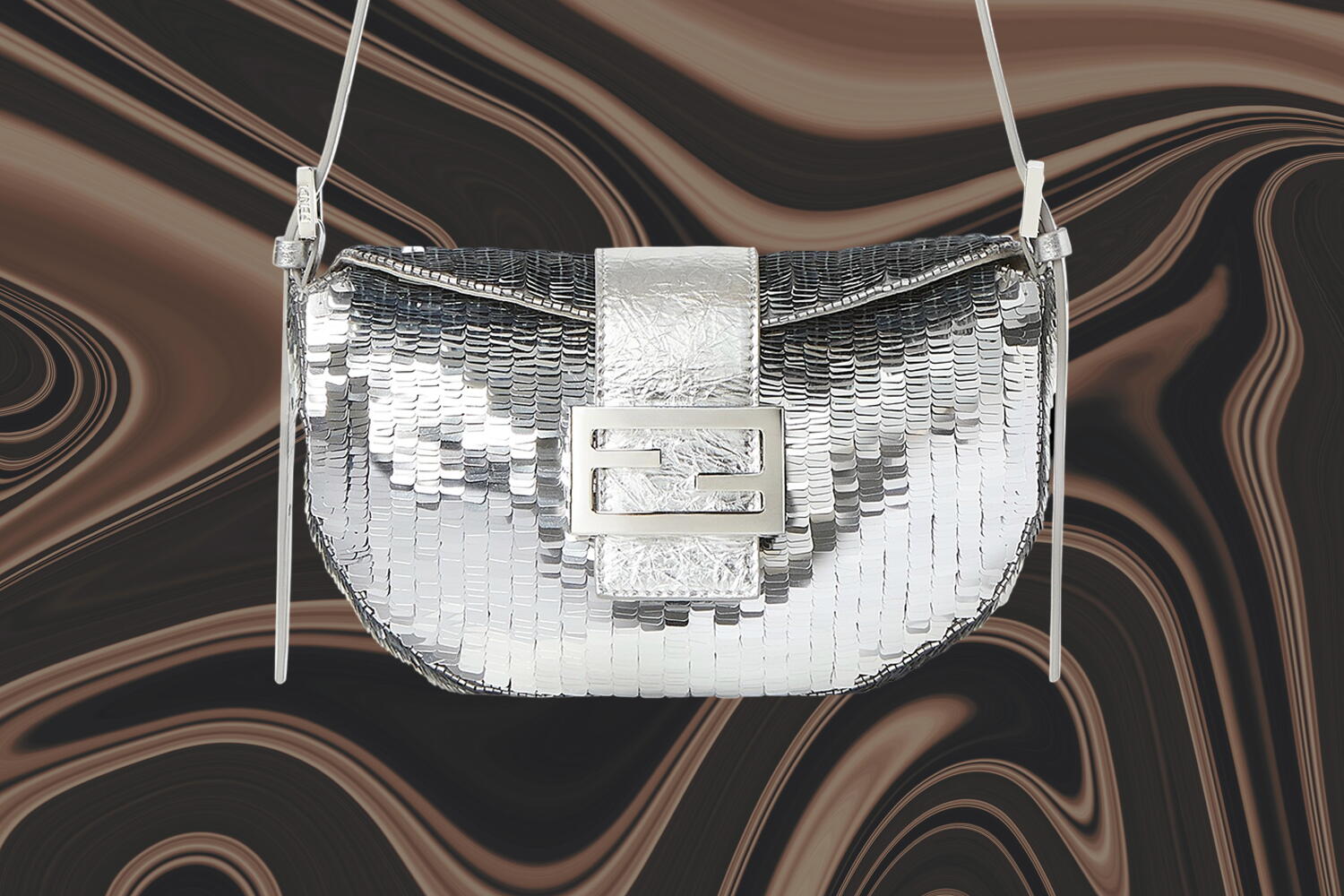
Nostalgia is a trap. We walk into luxury boutiques expecting a time machine, hoping a piece of stitched calfskin will somehow transport us back to a simpler, sharper version of ourselves, only to walk out carrying an expensive museum piece that feels stiff against our ribs.
Wait.
Think about the last time you bought something purely because you missed the era it came from. For years, the fashion industry has fed us an endless buffet of warmed-over archives, banking on the Pavlovian response of millennials and Gen Z shoppers scrolling through grainy paparazzi photos from 1999. They pull a silhouette from a dusty vault, slap a modern price tag on it, and call it heritage. Usually, it feels hollow. It feels stale.
Which brings us to a rainy Tuesday in Rome, and a crescent-shaped piece of leather that refuses to behave like a relic.
When word got out that the Fendi Croissant bag was returning under the creative direction of Maria Grazia Chiuri, the collective groan from seasoned fashion editors was almost audible across the Atlantic. Another Y2K revival? Another hollow cash-grab banking on the ghost of Carrie Bradshaw? It seemed like the safest, most predictable play in the luxury playbook.
Except Chiuri did not come back to Rome to bake yesterday’s bread.
The Weight of Coming Home
To understand why this specific bag matters right now, you have to understand the woman holding the shears. Maria Grazia Chiuri’s career reads like a masterclass in institutional navigation, yet her deepest roots are buried right inside Fendi’s Roman ateliers. Before she made feminist slogan tees a global phenomenon at Dior, before she co-helmed Valentino with Pierpaolo Piccioli and redefined modern romanticism, she was part of the Fendi accessories team in the late 1980s and 1990s. She was there in the room when the Baguette changed the economics of fashion forever.
Returning to Fendi as creative director is not a victory lap for Chiuri; it is a high-wire act without a net. Luxury conglomerates are currently facing a brutal reckoning. Shoppers are exhausted by astronomical price hikes that outpace quality, bored by logo-mania, and deeply skeptical of brands that treat them like walking billboards. When a designer steps into a heritage house today, the invisible stakes are existential: prove that craft still justifies the cost, or watch your customer walk away to quiet, unbranded alternatives.
Let us construct a hypothetical shopper to see how this plays out in the real world. Call her Elena. Elena is thirty-eight, works in architecture in Milan, and has spent the last five years carrying rigid, boxy tote bags that bruise her hip on the morning train. She remembers the original Fendi Croissant from the turn of the millennium—that soft, slouchy hobo silhouette launched right around the peak of the Baguette craze—as something her older cousin wore to clubs. To Elena, a Y2K reissue sounds juvenile. She does not want to dress like a twenty-year-old from 2001. She wants something that survives a twelve-hour day without screaming for attention.
If Fendi had simply re-released the exact 1999 Croissant bag, Elena would have walked right past the window.
Anatomy of an Anti-It Bag
The original Croissant was a creature of its time: petite, tucked aggressively high under the armpit, designed primarily to hold a flip phone, a tube of Lancôme Juicy Tubes, and a pack of cigarettes. It was charming, yes, but fundamentally precious. It required you to adjust your posture to accommodate it.
Chiuri’s genius lies in recognizing that modern women refuse to contort themselves for their accessories anymore.
Look closely at what she has done to the silhouette. Instead of freezing the archive in amber, she treated the original pattern like a rough draft. The new iteration understands gravity. Where older shoulder bags fought against the body with stiffened interlinings and rigid hardware, this version collapses softly against the ribcage, molding itself to the curve of a wool coat or a crisp poplin shirt. It behaves less like an armored status symbol and more like a favorite leather jacket you have broken in over a decade.
The leather itself tells a different story. In my own years handling luxury goods—from vintage market finds in Florence to pristine showroom samples in Paris—I have learned a simple truth: brands hide cheap leather behind heavy embossing and blindingly shiny hardware. True quality requires nowhere to hide. The skins used in this revival have a tactile, almost buttery resilience that invites your hand to rest on them. The stitching is deliberate, honoring the Selleria traditions that built Fendi’s reputation long before double-F logos conquered hip-hop videos and red carpets.
Consider the metaphor of a sourdough starter. A lazy baker throws dry yeast into bleached flour and rushes the rise, yielding a loaf that looks decent in the window but tastes like cardboard an hour later. A master baker tends a living culture, feeding it, letting it ferment slowly until the structure becomes complex, airy, and deeply satisfying. Chiuri is treating the Fendi archive like a living culture. She kept the recognizable crescent curve—the DNA—but allowed it to ferment in the realities of 2026.
Why We Rejected the Trophy Bag
To grasp why this subtle shift feels so urgent, we have to look at the behavioral whiplash consumers have experienced over the last decade.
During the boom years of the late 2010s and early 2020s, handbags became speculative assets. People bought bags not because they loved the drape of the suede or the intelligence of the interior pockets, but because secondary market data told them the value would appreciate by twelve percent by next Tuesday. Fashion became finance. And when fashion becomes finance, design calcifies. Brands stop taking risks because collectors want predictable, recognizable trophies.
Then the fever broke.
Consumers woke up and realized they were paying four thousand euros for bags that could barely fit a pair of sunglasses, engineered purely to photograph well from three feet away on Instagram. Trust eroded. I remember standing in a flagship store in Paris two winters ago, watching a woman inspect a wildly popular mini-bag, turn it over in her hands, and quietly hand it back to the sales associate with a look of mild betrayal. The clasp felt hollow. The strap was unlined. The magic trick had failed, and she could see the wires.
This is the exact skepticism Chiuri is confronting. She knows that modern buyers are forensic investigators. They check the edge paint. They test the weight of the zipper. They ask whether the strap will dig into their collarbone when they are carrying a laptop, a water bottle, and the emotional baggage of a Tuesday afternoon.
By stripping away the theatrical nostalgia of the Croissant and grounding it in functional sensuality, she is offering an olive branch to disillusioned shoppers. The bag does not demand that you perform wealth; it quietly supports your movement through the world.
The Roman Pragmatism of Maria Grazia Chiuri
There is a specific Roman sensibility at work here that often gets lost when outsiders analyze Italian fashion. Milan is about industrial precision and bourgeois polish. Paris is about intellectualized glamour and theatricality. Rome is about pragmatism wrapped in sensual decadence. Rome is a city of uneven cobblestones, sudden rainstorms, and ancient marble ruins sitting casually next to a corner espresso bar. You cannot survive Rome in fragile shoes or fussy handbags.
Chiuri is Roman to her marrow. Throughout her career, even when critics accused her of playing it too safe or leaning too heavily into commercial wearability, she remained stubbornly committed to one question: How does a woman actually live inside this?
When she reimagined the Croissant, she brought that Roman street-level intelligence directly to the cutting table. Look at the proportions. The handle drop is calibrated so it actually clears the shoulder of a heavy winter blazer without bunching the fabric under your arm. The interior is not a black hole; it is structured just enough to keep your keys from scratching your phone screen, yet pliable enough to expand when you inevitably shove a paperback book inside at the last minute.
Even the hardware restraint speaks volumes. Rather than slapping a massive, gilded clasp across the front to announce the brand from across a crowded restaurant, the branding is integrated into the architecture of the bag. You recognize it by its line—that unmistakable, sweeping crescent—before you ever spot a monogram.
What the Critics Miss About "Safe" Design
Whenever a powerhouse designer reintroduces an archival piece without covering it in neon spikes or turning it into a viral sight-gag, a certain corner of the internet inevitably calls it boring. We have been conditioned by algorithmic feeds to mistake novelty for creativity. If a bag does not look like a pigeon, a trash bag, or a miniature toaster, does it even deserve a headline?
That mindset is precisely how luxury houses nearly destroyed themselves.
Viral gimmicks have the shelf life of warm milk. They generate a million impressions on Tuesday and look embarrassing by Friday. Real design—the kind that sustains a hundred-year-old Roman house and keeps hundreds of master artisans employed in Tuscan workshops—is quiet, iterative, and deeply human. It solves problems you did not realize were annoying you until the friction suddenly disappears.
Think back to Elena, our hypothetical architect in Milan. When she finally steps into the boutique and slings this new Croissant over her shoulder, she does not feel like she is wearing a costume from her cousin’s 2001 clubbing days. She feels relief. The bag tucks neatly under her arm as she navigates a crowded metro platform. The leather warms against her coat. When she sets it down on a café table, it collapses gracefully like a sleeping cat rather than toppling over and spilling its contents onto the terrazzo floor.
That is not stale design. That is empathy rendered in calfskin.
The Quiet Rebellion
We are living through a noisy, anxious era where everything—from our phones to our clothes—seems engineered to extract attention from us. Against that backdrop, choosing an object that simply works, that honors its past without being trapped by it, feels surprisingly radical.
Maria Grazia Chiuri did not resurrect the Fendi Croissant to make you nostalgic for a simpler time that never really existed. She brought it back because the bones of the design were always right, and she finally had the authority, the craft, and the hard-won wisdom to finish the thought.
Walk down Via Condotti on a crisp autumn evening, past the glowing windows and the clatter of footsteps on wet stone, and watch the women heading home from work. Look at the ones moving effortlessly through the crowd, their hands free, a soft crescent of dark leather tucked cleanly beneath their arms, looking neither backward at the past nor anxiously ahead at the next trend—just entirely, unmistakably present.


