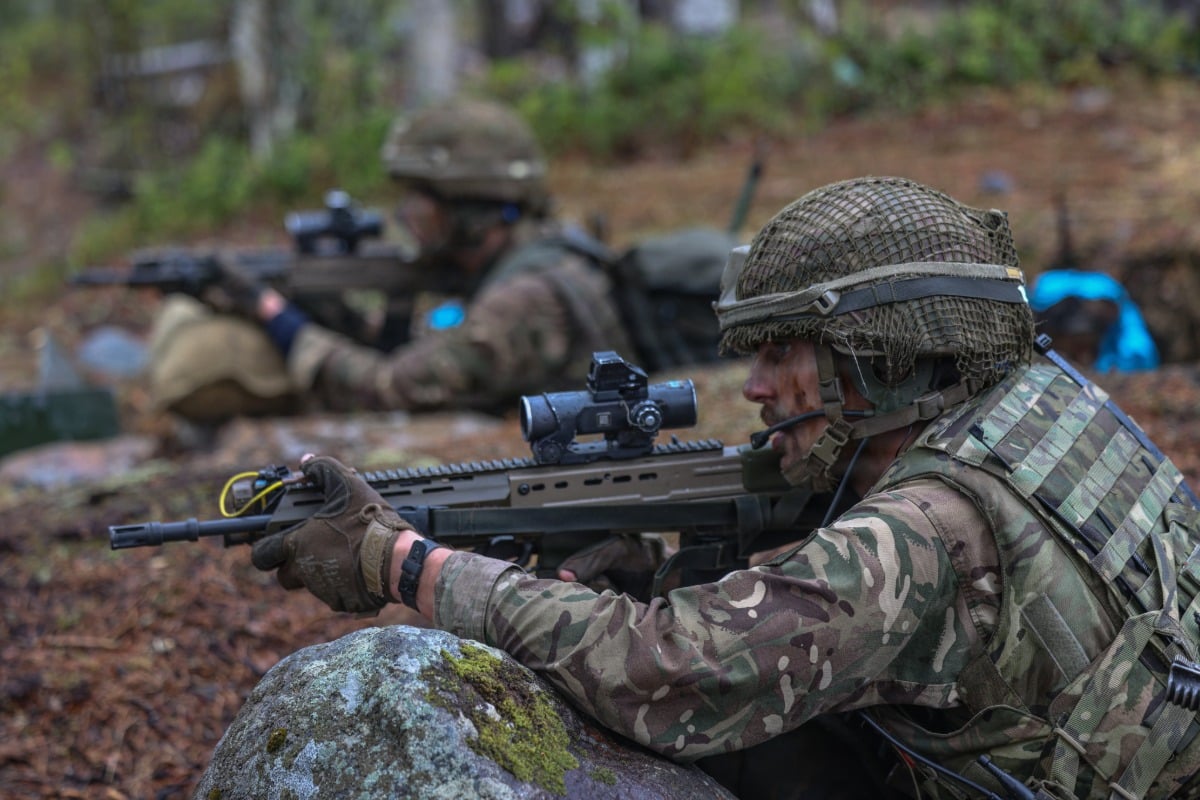
The traditional image of army training involves running through mud, firing blank rounds, and shouting to simulate artillery impact. Those days are officially numbers. Modern combat requires something vastly different, especially with the clear lessons bleeding out of eastern Europe regarding drone warfare, electronic jamming, and rapid technological shifts.
The UK Ministry of Defence just dropped a massive confirmation of this reality, locking in a 15-year, £2 billion mega-contract for the Army Collective Training System. While Raytheon UK is technically steering the ship as the prime contractor for the Omnia Training consortium, German defense giant Rheinmetall just walked away with the lion's share of the actual implementation. Rheinmetall's specific cut of the deal is valued at just under €1 billion—roughly $1.14 billion.
This isn't just another boring procurement headline. It's a fundamental restructuring of how a major Western military prepares 60,000 soldiers a year for real war.
The Battle of the Primes and the AI Pivot
If you follow defense technology, you know there's been a massive push by venture-backed startups trying to convince governments that simple software can replace traditional defense infrastructure. This contract completely subverts that narrative. The Ministry of Defence chose the Omnia consortium—which features established industry stalwarts like Rheinmetall, Raytheon, Capita, Cervus, and Skyral—over competitors like Elbit Systems UK.
Why does this matter? Because the military values scale and deep integration over flashiness.
The program relies heavily on what the industry calls live, virtual, and constructive simulation systems. Basically, they are building a massive "Combat Laboratory". It mixes real-world physical training infrastructure with heavy-duty data analytics and virtual threats. It allows troops to fight against AI-driven adversaries that replicate modern battlefield chaos, like signal loss and autonomous drone swarms, without the massive financial and safety liabilities of burning through real equipment every weekend.
Why Rheinmetall Got the Billion Dollar Slice
You might wonder why a German manufacturer is dominating a British military overhaul. The reality is that Rheinmetall has spent the last decade quietly turning the UK into one of its absolute core European hubs. Through its joint venture Rheinmetall BAE Systems Land, it's already deeply embedded in upgrading the UK's heavy armor platforms.
For this specific contract, Rheinmetall Electronics UK takes the role of the Land Collective Training Partner. They aren't just selling software licenses. Their job covers:
- Building and managing the actual physical training infrastructure across UK sites.
- Handling complex system configuration to ensure virtual training mirrors real hardware.
- Managing the heavy logistics and supply chain required to keep these simulation hubs alive for 15 years.
This massive footprint means they are scaling up operations in the UK significantly. The implementation begins in summer 2026, triggering a localized hiring boom. Highly skilled engineering and tech jobs are heading straight to Rheinmetall’s main offices on the Isle of Wight and its Southampton hub, alongside strategic expansions in Bristol and Warminster.
The Reality Behind the Hype
Let's look past the slick PR announcements. Defense procurement is notoriously brutal, and being selected isn't always a smooth ride. This particular deal faced immense scrutiny, political maneuvering, and lengthy competitive trials lasting over two years before the ink dried.
Armies across the globe are panicking because their legacy training models are completely outdated. You can't prepare a platoon for modern conflict if they don't know how to operate when their GPS is jammed or when an enemy drone tracks their every move from two miles up. The Omnia contract is a direct response to this vulnerability.
If you are an investor, defense contractor, or software developer looking to break into the military market, the takeaway here is obvious. Do not try to bypass the defense primes. The UK Ministry of Defence, much like the US Pentagon, prefers placing the ultimate financial and operational risk on massive entities like Raytheon and Rheinmetall. If you have a great tech stack or an innovative AI tracking tool, your best route to a government paycheck is partnering with the giants holding the keys to the physical training grounds. Focus your business development on integrating with consortium structures rather than chasing isolated, low-value government software pilots.