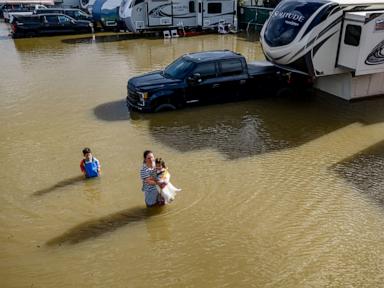
Human-driven climate change is actively forcing the ocean over our seawalls. Decades of greenhouse gas emissions have raised global temperatures, causing thermal expansion of seawater and melting glaciers. This thermal expansion and glacial runoff directly drive global sea-level rise, which significantly increases the frequency of extreme coastal flooding worldwide. What used to be a once-a-century tidal anomaly has transformed into a routine operational hazard for coastal cities.
For thirty years, the conversation around rising seas focused on distant horizons. Scientists warned about what might happen in 2100. Politicians kicked the policy can down the road, treating the issue as a problem for the next generation. That buffer period has expired. The data shows that the baseline ocean height has risen enough to fundamentally alter the behavior of high tides and storm surges. If you liked this post, you might want to look at: this related article.
The Mechanics of the New Normal
To understand why minor storms now cause catastrophic damage, one must look at the shifting baseline of the ocean. High-tide flooding, often called sunny-day flooding, occurs without a storm in sight. It happens simply because the daily peak tide now exceeds the height of local infrastructure.
When a storm does hit, the consequences are multiplied. Consider a standard coastal defense system built to withstand a three-meter storm surge based on historical data. If the baseline sea level has risen by twenty centimeters due to human activity, that same storm now pushes a 3.2-meter surge inland. The defense system fails. For another angle on this development, check out the latest coverage from NBC News.
This is not a linear problem. Small increases in sea level yield exponential increases in flood frequency. A minor shift in the average ocean height pushes the tail end of the probability curve into dangerous territory. Areas that once experienced flooding twice a year now face inundation twenty or thirty times annually. The infrastructure was never engineered to dry out and re-flood that often.
Engineering Failures and the Saltwater Problem
Civil infrastructure is built on the assumption of stability. Engineers use historical weather data to calculate the lifespan of bridges, roads, drainage systems, and power grids. When human-driven sea-level rise alters those historical baselines, the engineering formulas break down.
Drainage systems rely on gravity. Rainwater collects in street-level grates, flows through underground pipes, and empties into the ocean. For this system to work, the discharge pipes must sit above the sea line. As the ocean rises, these pipes submerge. During a heavy rainstorm coincident with a high tide, the water has nowhere to go. Instead of draining the streets, the pipes act as conduits, pushing seawater up from the drains and flooding urban centers from the inside out.
Furthermore, seawater is highly corrosive. The prolonged presence of saltwater accelerates the degradation of reinforced concrete and corrodes underground electrical infrastructure. The foundations of coastal buildings absorb this saltwater through capillary action, a process that rusts internal rebar and weakens the structural integrity of the concrete over time.
The Financial Shockwaves
The economic toll of this shift extends far beyond immediate disaster cleanup bills. The financial sector is beginning to price in the risk of frequent tidal flooding, triggering a quiet crisis in coastal real estate and municipal finance.
Property insurance markets provide an early warning. Insurance companies rely on precise actuarial models to determine risk and set premiums. As the frequency of extreme coastal flooding climbs, insurers raise rates or pull out of vulnerable markets entirely. Without property insurance, banks will not issue mortgages. This reality threatens to freeze real estate markets in exposed coastal zones, devaluing trillions of dollars in private property.
Municipalities face a double bind. They must spend vast sums on adaptation measures, such as installing industrial pumps, elevating roads, and constructing seawalls. At the same time, their tax bases are threatened by declining property values. If a city cannot protect its streets from routine flooding, businesses relocate, residents move away, and the tax revenue needed to fund defenses evaporates.
The Limits of Hard Infrastructure
The traditional response to rising water is to build a wall. While gray infrastructure, like concrete seawalls and surge barriers, offers immediate protection, it carries significant downsides and long-term limitations.
Seawalls are rigid. They protect a specific line on a map but often deflect wave energy to adjacent, unprotected areas, worsening erosion for neighbors. They are also incredibly expensive to build and maintain. As the ocean continues to rise, these walls must be built higher and thicker, a process that cannot continue indefinitely due to engineering and financial constraints.
Many coastal managers are turning toward nature-based solutions to complement traditional engineering. Restoring mangroves, salt marshes, and oyster reefs creates natural buffers that absorb wave energy and slow storm surges.
Unlike concrete, these ecosystems can dynamically adapt to rising sea levels by trapping sediment and growing vertically over time. However, these systems require space. In heavily urbanized coastal zones, the land required to restore these natural habitats has already been paved over, leaving city planners with fewer options.
Global Disparities in Adaptation
The ability to adapt to human-driven sea-level rise is dictated by wealth. Wealthy nations can afford to deploy advanced engineering solutions to protect high-value assets.
Low-income nations and small island states face an existential threat with few financial resources to counter it. In places like Bangladesh or the low-lying atolls of the Pacific, even a minor increase in flood frequency displaces communities, destroys agricultural land through soil salinization, and contaminates freshwater aquifers. For these regions, adaptation is not a matter of elevating roads; it is a question of survival.
This imbalance creates an emerging class of climate refugees. When land becomes permanently uninhabitable or agricultural yields collapse due to saltwater intrusion, populations are forced to migrate inland. This movement places immense pressure on interior cities and crosses geopolitical borders, creating complex legal and humanitarian challenges that global frameworks are currently ill-equipped to handle.
The Myth of the Quick Fix
There is a temptation to look for a single technological solution to coastal flooding. Proposals for massive geoengineering projects, such as blocking channels or installing continental-scale gates, frequently capture headlines. These concepts ignore the sheer scale of the global ocean system.
The reality is that coastal adaptation requires an ongoing, localized mix of strategies tailored to the specific geology and economy of each region. It involves making difficult, unpopular decisions about where to build, where to fortify, and where to step back.
Managed retreat, the strategic relocation of people and infrastructure away from vulnerable coastlines, is the most controversial option. It is politically difficult to tell homeowners or businesses that the land they occupy will eventually be abandoned to the sea. Yet, as the frequency of extreme flooding outpaces the financial viability of engineering defenses, retreating from the most exposed areas becomes inevitable.
The data gathered by climate scientists underscores that the ocean responds slowly to changes in atmospheric temperature. Even if global greenhouse gas emissions dropped to zero tomorrow, the heat already trapped in the climate system would continue to melt ice sheets and drive thermal expansion for centuries. The sea-level rise we are experiencing now is locked in. The frequency of extreme coastal flooding will continue to escalate, transforming the global coastline and forcing a fundamental reorganization of how and where humanity lives near the water.