Mud pulls at the rubber boots. It is a heavy, suctioning pull, thick with the scent of decaying peat, iron, and centuries of accumulated organic history. Stand in an abandoned cranberry bog in Massachusetts, and you are standing inside a ghost town built entirely of water.
For generations, human hands reshaped these coastal wetlands into tidy, geometric grids. Earthen dikes were piled high, straight ditches were slashed through the muck, and wooden control gates were dropped into place to flood the earth every autumn. The goal was simple: harvest the bright red fruit that bobbed on the surface, packing crates for markets across the country.
Yet water has a stubborn memory. When you straighten a river, you steal its breath. When you trap it behind earthen walls, you turn a living, dynamic vein of the earth into a stagnant bathtub.
And something in the water noticed.
Deep beneath the surface of these historic watersheds moves one of New England’s most remarkable and fragile residents: the sea-run brook trout, locally known as the salter. These are not ordinary trout. While most brook trout live out their entire lives within the sheltered confines of a single freshwater stream, salters possess a restless migratory instinct. They navigate downstream into the brackish estuaries and coastal salt marshes, riding the tides to feed in rich marine waters before returning upstream to spawn in the cold, bubbling springs of their birth.
They are living survivors of a colder, wilder Pleistocene epoch. But over the last century, their ancient highways were systematically blocked, warmed, and broken.
The cranberry bogs that powered local economies also choked the trout out of existence. A working bog is designed to hold water on flat surfaces under the summer sun, causing water temperatures to skyrocket. Trout are cold-water creatures; push them into water exceeding twenty degrees Celsius, and their metabolism fails. Furthermore, the wooden dams and sharp drops built to manage bog water levels created vertical waterfalls that no fish could jump upstream. The salters were stranded. The migration routes that had endured for ten thousand years snapped in a single blink of industrial history.
Then came a radical shift in perspective. Conservationists, ecologists, and state agencies in Massachusetts realized that the best way to heal the coastal ecosystem was not to build another engineered marvel, but to surrender.
They decided to give the bogs back to the river.
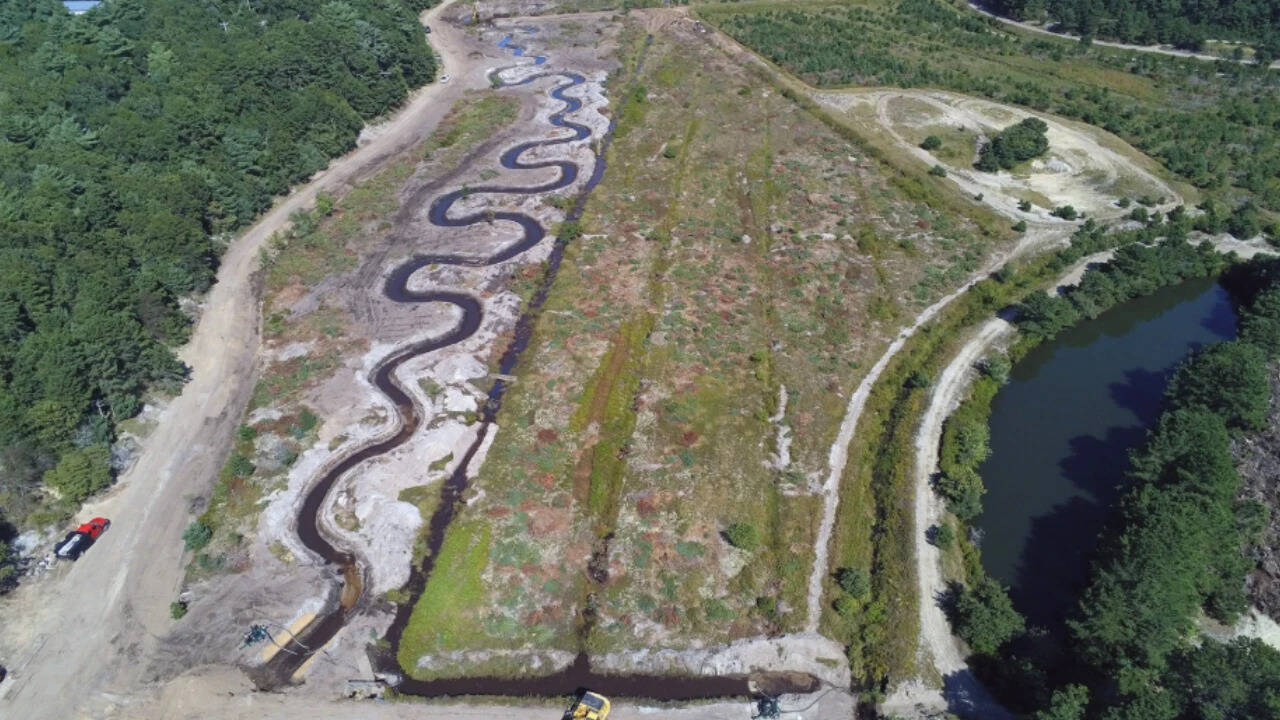
Restoring a cranberry bog is an act of industrial un-building. Heavy excavators roll onto the mud flats, not to construct concrete foundations, but to tear them down. Workers dismantle earthen dikes, rip out rotting wooden flumes, and fill in the rigid, straight-line drainage ditches that human laborers dug by hand a century ago.
Consider what happens next. Without artificial channels holding it back, the river breathes out. It spills across the flat basin, slowing down, dropping its sediment, and finding its original, serpentine curves. It carves out deep pools beneath overhanging roots and scours the gravel beds clean.
The transformation is physical and immediate. When a stream re-meanders through a restored wetland, it reconnects with underground groundwater aquifers. Cold water wells up from the earth, plunging summer temperatures down by vital degrees. The shallow, sun-baked puddles vanish, replaced by shaded, swift-flowing channels rich in dissolved oxygen.
Ecologists standing on the banks watch for the first signs of return. It starts with macroinvertebrates—stoneflies and caddisflies reappearing in gravel that has not felt a strong current in generations. Then come the alewife and blueback herring, flashing silver as they nose their way up from the ocean into newly opened spawning grounds.
And finally, the salters arrive.
There is a quiet, breathless moment when a fisheries biologist pulls a net and finds a brook trout marked with the unmistakable iridescent blue halos and worm-like vermiculations along its back. It is a fish that was born in the salt air of the estuary, navigated past the ghosts of old agricultural machinery, and swam upstream into a channel that did not exist five years ago.
This is what environmental restoration looks like when it succeeds. It is messy, expensive, and requires years of patience while machinery gives way to willow seeds and sedge grasses. You cannot rush a wetland. You can only remove the barriers and step out of the way.
Out on the cape, the wind whips across the dark, recovering peat. The straight lines carved by human ambition are blurring under a green tide of ferns and rushes. The water moves faster now, cool and clear, cutting a new path through the mud, rushing toward a sea that is waiting to welcome it home.