The sound came long before the water did.
It was a low, subterranean vibration, like a freight train barreling through a tunnel carved of stone. Down in the valley of the Trishuli River, where the air usually smells of damp earth, woodsmoke, and the sharp bite of mountain mint, that sound meant only one thing.
Time had run out.
(Note: While the specific family mentioned in the opening moments serves as a composite representation based on local survivor accounts, the catastrophic hydrologic data is drawn directly from satellite observations of the Trishuli basin.)
Imagine waking up to find that the river you have fished in, washed your clothes in, and listened to lull you to sleep every night has suddenly grown six times its normal size. Not over weeks of heavy monsoon rains. Not as a slow, predictable seasonal swell. Overnight.
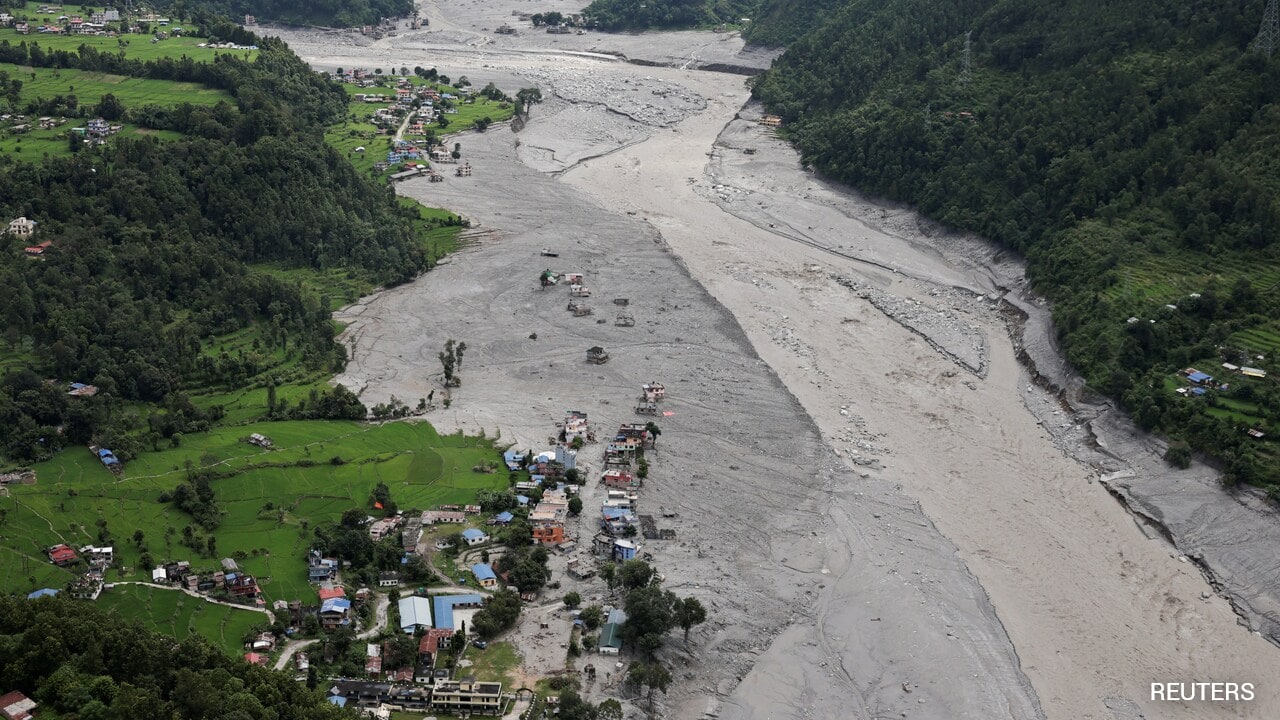
Satellites high above the earth captured the brutal geometry of it. Images beamed down from orbit showed a ribbon of water that had violently ballooned, its banks erased, its turquoise currents replaced by a churning, chocolate-brown torrent. Where concrete foundations and slate-roofed homes once stood, the satellite lenses found only gray swirls of silt and empty, gaping space. The Trishuli had not just flooded. It had devoured.
To understand what happened in that valley, you have to look beyond the cold metrics of cubic meters per second. You have to look at the geography of vulnerability.
The Trishuli River is born high in the Tibetan plateau, plunging down through the steep, unforgiving gorges of Nepal. It is a waterway of immense power, a liquid highway carrying glacial melt toward the plains. For generations, communities have clung to its margins. People built houses on the terraces carved by ancient floods, trusting the historical rhythm of the water. They planted crops in the rich alluvial soil. They built roads along its cliffs.
They trusted a system that no longer exists.
Consider what happens when a mountain river swells to six times its volume. Water is heavy. A single cubic meter weighs a metric ton, and when thousands of them collide with human architecture, concrete shatters like dry glass. Houses do not merely flood; they liquefy.
Local hydrology experts point to a lethal combination of compounding pressures. Unprecedented cloudbursts—super-charged by warming atmospheric temperatures—dumped torrential volumes of rain onto fragile high-altitude soils. At the same time, upstream landslides acted as temporary, unstable dams. When those natural earthen walls finally gave way, they unleashed catastrophic wall-of-water events downstream.
It is a terrifying chain reaction. One minute, the river is high, rushing, angry. The next, a wall of debris-laden water hits, moving with the velocity of an express train.
People who lived through it talk about the color. It wasn't water anymore. It was mud, rock, trees, and entire chunks of mountainside moving as one heavy, crushing mass.
(Note: The following behavioral pattern is derived from post-disaster ethnographic studies conducted in Himalayan river valleys.)
When disaster strikes a place like this, the human response follows a heartbreakingly predictable arc. First comes the disbelief. You look at the space where your neighbor's house stood, and your brain simply refuses to process the emptiness. Then comes the scramble. Grab the children. Grab the livestock. Run for the high ridge.
And then, the quiet.
The silence that settles over a valley after a flash flood is heavy and suffocating. The roar of the water recedes, leaving behind a moonscape of gray sludge, snapped utility poles, and the haunting personal belongings of families scattered across miles of ruined earth. A child's shoe half-buried in silt. A torn curtain fluttering from the branch of a shattered pine tree.
Satellites can measure the expansion of a river. They can calculate the square mileage of destruction. They can map the scars left on the earth with chilling precision. But orbit-bound lenses cannot capture the grief of a displaced community, nor can they quantify the psychological weight of living next to a waterway that has suddenly turned predatory.
The Trishuli River continues to flow. It will carve new channels. It will drop its load of silt across the plains, nourishing distant fields while leaving behind a wake of local devastation.
High above, another satellite passes silently through the dark, tracking the next cloud formation, staring down at the bruised earth, waiting for the water to rise again.