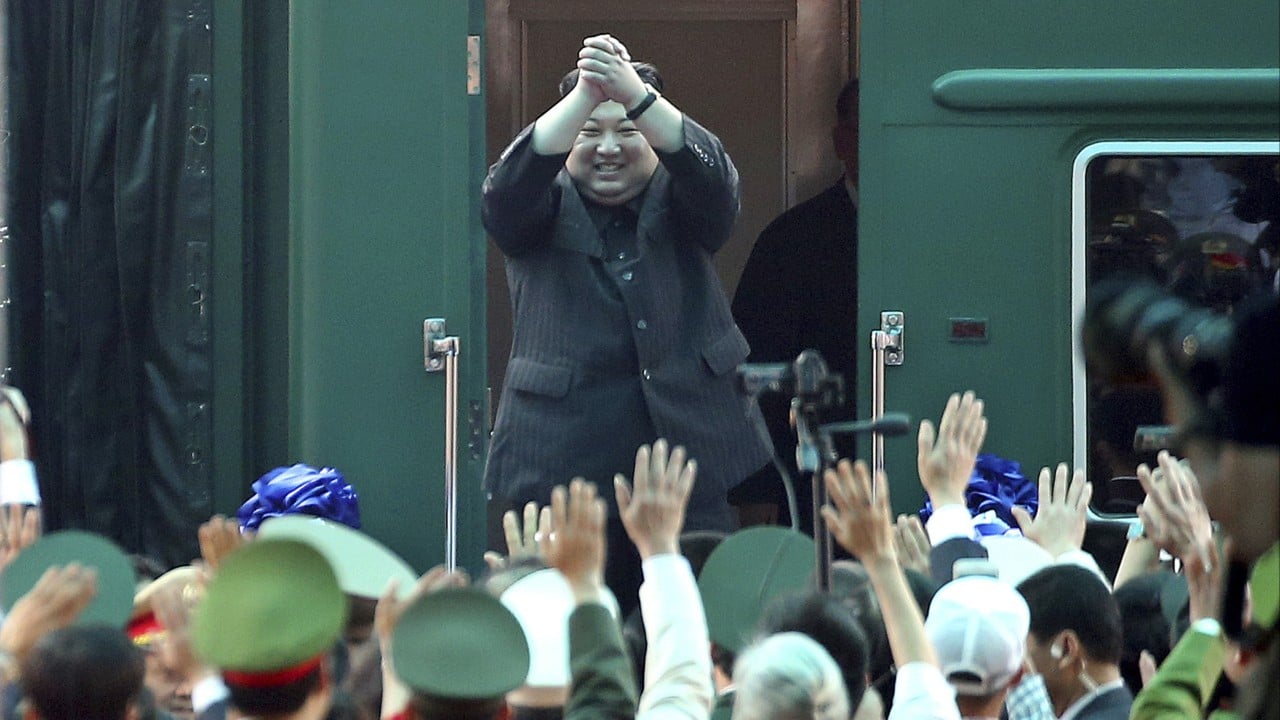
Silence.
That is the first thing you notice when a twenty-one-car green train approaches a border crossing in the dead of night. Before the low, rhythmic thrum of the diesel engines reaches your boots, the world around the tracks simply empties out. Stationmasters vanish into back offices. Local commuters are herded behind bolted wooden doors. Even the stray dogs seem to sense the sudden, unnatural vacuum of human movement.
For most of us, travel is an act of surrender. When you step onto a commercial flight in Mumbai or board a sleeper coach out of New Delhi, you hand your life over to strangers—to air traffic controllers, mechanics, signal operators, and the quiet, unspoken trust that the infrastructure holding you up will not betray you. You look out the window at passing towns and feel small, connected, and delightfully anonymous.
Now, picture the exact opposite. Imagine being a man whose survival depends on never surrendering an inch of control, yet who occasionally has to leave the borders of the only country on earth designed to keep him safe.
When Kim Jong-un travels abroad, he does not merely take a trip. He exports a miniature, heavily armored version of North Korea across international borders, dragging a cocoon of absolute authority behind him at sixty kilometers an hour. We often look at the bizarre spectacle of his foreign journeys—the jogging bodyguards, the aging Soviet aircraft, the private portable toilets—and laugh at the absurdity. It feels like theatre. It feels like a relic from a Cold War spy novel that forgot to end.
That laughter misses the point entirely. Every single quirk of Kim Jong-un’s travel habits is a physical manifestation of terror, pride, and survival calculus. If you want to understand the mind of the world’s most isolated ruler, stop reading his speeches and start looking at how he packs his bags.
The Heavy Ghosts of the Railway
To understand why a twenty-first-century leader with a nuclear arsenal still prefers to crawl across Asia on steel rails, you have to step inside a dark green carriage smelling faintly of floor wax, stale cigarette smoke, and freshly steamed lobster.
Let us construct a hypothetical evening inside that train, grounded strictly in what intelligence agencies, Russian diplomats, and defectors have documented over the decades. Imagine a winter night in 2019. Outside the reinforced, bulletproof glass, the frozen plains of China blur past in monochrome streaks. Inside, the conference car glows under warm, recessed lighting. Pink leather armchairs—the exact ones photographed during his 2018 trip to Beijing—are bolted securely to the floor. At a long table, platters of Swiss cheese, bottles of Bordeaux, and live lobsters flown in from the coast sit beside satellite phones and encrypted laptops.
Why a train? Why endure a sixty-five-hour, four-thousand-kilometer slog from Pyongyang to Hanoi, watching the same endless stretch of track rattle beneath your feet, when a commercial jet could cover the distance in less than five hours?
Fear is the most honest answer, and it is inherited.
Kim Jong-un’s grandfather, Kim Il-sung, and his father, Kim Jong-il, both harbored a deep, visceral dread of flying. For Kim Jong-il in particular, the sky was an ambush waiting to happen. He lived through the assassination attempts of the Cold War, the collapse of the Soviet Union, and the constant awareness that a single surface-to-air missile—or a single compromised pilot—could turn an airplane into falling debris in seconds. On a train, you are tethered to the earth. You can stop. You can reverse. You can surround the tracks with tens of thousands of soldiers.
When Kim Jong-un took power in late 2011, Western analysts initially thought he would break the mold. Educated in Switzerland during his teenage years, he knew what commercial airports looked like. He knew the speed and convenience of modern aviation. And for a brief window, he did fly. He flew to Dalian in China. He borrowed an Air China Boeing 747 to reach Singapore in 2018.
Yet, when the stakes grew highest, he went right back to the rails.
The train—known informally among intelligence circles as Taeyangho, or "Sun"—is less a vehicle and more a rolling bunker. The floor plates are reinforced with thick steel to deflect landmines planted beneath the ties. The walls are armored against heavy gunfire, making the carriages so obscenely heavy that the train cannot exceed sixty kilometers per hour without risking derailment. Ahead of it, two other trains run like mechanical scouts. The first clears the tracks, checking every switch, bridge, and tunnel for explosives. The second carries security personnel and advance teams. Only then does the leader’s train roll through, carrying not just Kim, but a fleet of armored Mercedes-Benz limousines tucked inside a dedicated cargo carriage, ready to roll down custom ramps the moment the wheels stop turning.
I remember standing once near a cordoned-off railway junction in northern India during a high-security VIP movement, feeling the strange, electric tension that descends when ordinary civilian life is abruptly paused for one person’s safety. Multiply that feeling by a thousand, stretch it across thousands of kilometers of foreign territory, and you begin to grasp the sheer logistical exhaustion of Kim’s railway diplomacy. Every station along the route must be cleared. Every bridge must be guarded. Local economies grind to a halt so that one man can sleep soundly in a moving fortress.
Chammae-1 and the Embarrassment of Aging Wings
If the train is a monument to paranoia, Kim Jong-un’s personal aircraft is a monument to pride colliding head-on with economic reality.
Consider the Ilyushin Il-62M. In the 1960s, when the Soviet Union unveiled this four-engine, T-tailed long-range jetliner, it was the pride of Aeroflot—a sleek, loud, fuel-guzzling symbol of socialist engineering. Today, almost every commercial airline on the planet has retired them to aviation museums or scrapyards.
Except North Korea.
Kim Jong-un named his personal Il-62M Chammae-1, after the northern goshawk, North Korea’s national bird. Repainted in crisp white with red and blue stripes down the fuselage and the emblem of the State Affairs Commission emblazoned near the nose, it looks, from a distance, like a proper Air Force One. Up close, however, it tells a much more fragile story.
In June 2018, when Kim prepared to meet Donald Trump in Singapore for their historic first summit, the world watched the skies to see how the North Korean leader would arrive. Chammae-1 actually took off from Pyongyang and flew to Singapore—carrying staff and supplies. Kim himself was nowhere near it. Instead, he boarded a borrowed Air China Boeing 747-400, complete with the Chinese flag painted on its tail, provided courtesy of Beijing.
Pause and think about the humiliation required for a self-styled supreme leader to make that choice.
North Korea’s entire state ideology—Juche, or self-reliance—is built on the premise that the nation needs no one, bows to no one, and possesses the strength to stand alone against global superpowers. To step off a Chinese-owned, American-built airplane in front of thousands of international cameras in Singapore was a quiet, devastating admission of technological vulnerability. The Il-62M was nearly forty years old. Its engines were loud, thirsty, and prone to mechanical quirks. The risk of a mid-air failure—or even the minor, mortifying spectacle of an engine refusing to start on a foreign tarmac—was simply too high.
It was a moment of stark vulnerability disguised as diplomacy. Whenever I think of that borrowed Boeing 747 touching down at Changi Airport, I am reminded of how often geopolitical bravado masks basic, mechanical fragility. You can build intercontinental ballistic missiles in underground bunkers, yet still lack a reliable commercial jet to carry you across the South China Sea without borrowing one from your neighbor.
The Twelve Men in Black Suits
Once the train stops or the plane lands, the choreography shifts from heavy machinery to human flesh. And nothing—not the armored carriages, not the vintage Soviet jets—has captured the global imagination quite like the sight of twelve men in dark suits jogging alongside a moving black limousine.
We saw it first at the Inter-Korean Summit in Panmunjom in April 2018, and again on the humid streets of Singapore and Hanoi. As Kim’s Mercedes-Benz S600 Pullman Guard glided forward at a brisk trot, twelve fit, identically dressed men ran beside the doors in a tight V-formation, their eyes scanning rooftops, bushes, and crowds with unblinking intensity.
To the casual viewer scrolling through news clips on a phone, it looked comical, almost theatrical. Why not put them in escort vehicles? Why make grown men sprint in leather dress shoes and tailored suits in tropical heat?
Because a car door takes two seconds to open, and a bullet travels faster.
These men belong to the Supreme Guard Command, specifically Unit 974, an elite unit selected not just for martial arts mastery and marksmanship, but for ideological purity stretching back three generations. They are chosen to match Kim’s approximate height and build. They are vetted so thoroughly that even a distant cousin with a questionable political record disqualifies them.
In the logic of North Korean security, technology can fail, armor can be breached, and foreign police forces cannot be trusted. Only human bodies—specifically, bodies conditioned from adolescence to absorb a bullet meant for the leader—provide an acceptable final layer of defense. When they jog beside that limousine, they are not showing off. They are forming a literal, living wall around the only person their state considers irreplaceable.
Inside that car, the paranoia deepens into details that border on the surreal.
According to intelligence reports and accounts from former insiders, Kim Jong-un never uses a public restroom abroad. Ever. Whether he is at a summit venue in Singapore, a railway station in China, or a diplomatic hall in Vladivostok, his entourage brings along a dedicated portable toilet—sometimes built directly into one of his armored support vehicles.
Why? Because your biology betrays you.
In the world of espionage, a leader’s stool and urine are goldmines of intelligence. A single sample retrieved from a hotel sewage pipe can reveal blood sugar levels, cardiovascular health, hidden cancers, medication regimens, and life expectancy. For a regime where the sudden death of the leader could trigger an immediate succession crisis or state collapse, Kim’s health is the single most guarded state secret in Pyongyang. Even his cigarette butts and drinking glasses are meticulously collected by aides, wiped down with disinfectants, and packed away so that not a single drop of DNA or trace of a fingerprint remains behind in a foreign room.
Consider the psychological weight of living like that. Imagine never being able to leave a used napkin on a table, never stepping into an uninspected bathroom, never breathing air that hasn't been filtered through the suspicion of a hundred bodyguards. Power, at that altitude, stops looking like freedom and starts looking like solitary confinement with a luxury menu.
The Invisible Map of Geopolitics
If you trace Kim Jong-un’s foreign travel routes on a map since he assumed power in December 2011, a striking pattern emerges. For his first six years in office, he did not leave North Korea once. Not to China, not to Russia, not anywhere. He stayed home, consolidating power, executing rivals—including his own uncle, Jang Song-thaek—and accelerating his nuclear and missile programs until he felt he could negotiate from a position of strength rather than desperation.
Then, in March 2018, the dam broke. Within fifteen months, he made four trips to China, crossed the Demilitarized Zone to meet South Korea’s Moon Jae-in, flew to Singapore, rode the rails to Hanoi, and chugged across the border into Vladivostok to meet Vladimir Putin. After the COVID-19 pandemic slammed North Korea’s borders shut for more than three years, he emerged again in September 2023—rolling slowly on his green train into Russia’s Far East to tour the Vostochny Cosmodrome and cement a new military partnership with Moscow.
Notice what all these journeys have in common.
Every single destination lies within a tight, predictable orbit: Beijing, Dalian, Singapore, Hanoi, Vladivostok, the Vostochny Cosmodrome. Every journey relies either on friendly authoritarian territory—where state security apparatuses can effortlessly silence crowds, shut down highways, and erase the public—or on tightly controlled neutral ground like Singapore, where strict public order laws guarantee zero street protests.
You will never see Kim Jong-un landing at Heathrow, JFK, or Indira Gandhi International Airport. Not merely because of sanctions or diplomatic hostility, but because open societies are fundamentally incompatible with his survival architecture. You cannot clear three million commuters out of New Delhi or London so an armored train can roll through unmolested. You cannot shut down the airspace of a chaotic, democratic metropolis for six hours without triggering public outrage and media scrutiny.
His travel itinerary is, in itself, a map of political control. Where he goes tells you exactly how much coercion the host government is willing to exert on his behalf.
What the Limousines Reveal About Sanctions
There is one final irony tucked inside Kim Jong-un’s traveling circus, and it sits on four rubber tires.
Every time Kim steps out of his train or plane, he climbs into a gleaming, multi-million-dollar Mercedes-Maybach S600 Pullman Guard or an S62—vehicles strictly banned from export to North Korea under United Nations Security Council resolutions targeting luxury goods.
In 2019, investigators at the Center for Advanced Defense Studies tracked how two of those armored Mercedes limousines actually reached Pyongyang. It was a masterclass in maritime deception. The cars left Rotterdam in the Netherlands in a shipping container, traveled through China, stopped in Japan, moved to South Korea, and were loaded onto a mysterious Russian-flagged cargo ship that switched off its tracking transponder in the Sea of Japan before quietly offloading the cargo—likely via Russian air transport—straight into Kim’s hands.
Think about the sheer, obsessive effort required to pull that off. While ordinary North Koreans endured acute food shortages, failing power grids, and suffocating international sanctions, an entire shadow network of shell companies, ghost ships, and illicit brokers worked for months just to make sure the Supreme Leader had the exact German luxury sedans he preferred when he stepped onto foreign pavement.
That contradiction sits at the very heart of Kim Jong-un’s travels.
On the surface, these trips are designed to project strength, modernity, and statesmanship—to show the world, and his own people watching carefully edited broadcasts on Korean Central Television, that their leader stands as an equal beside the presidents of the United States, China, and Russia.
Yet look just beneath the surface of the motorcade, behind the tinted bulletproof glass and the sprinting bodyguards, and the illusion dissolves. You see a man traveling in a forty-year-old Soviet plane he dare not trust over open ocean, riding a train weighed down by so much armor it crawls at the speed of a bicycle, hoarding his own biological waste in a suitcase so enemies cannot read his blood pressure.
The fortress moves. The borders open for a few carefully choreographed hours. Cameras flash, hands are shaken, and treaties are discussed. Then the heavy steel doors clank shut once more, the engines groan back to life, and the green train slides quietly back into the dark—carrying a ruler who can threaten the world with nuclear fire, yet cannot step off a carpet without bringing his own floor along with him.