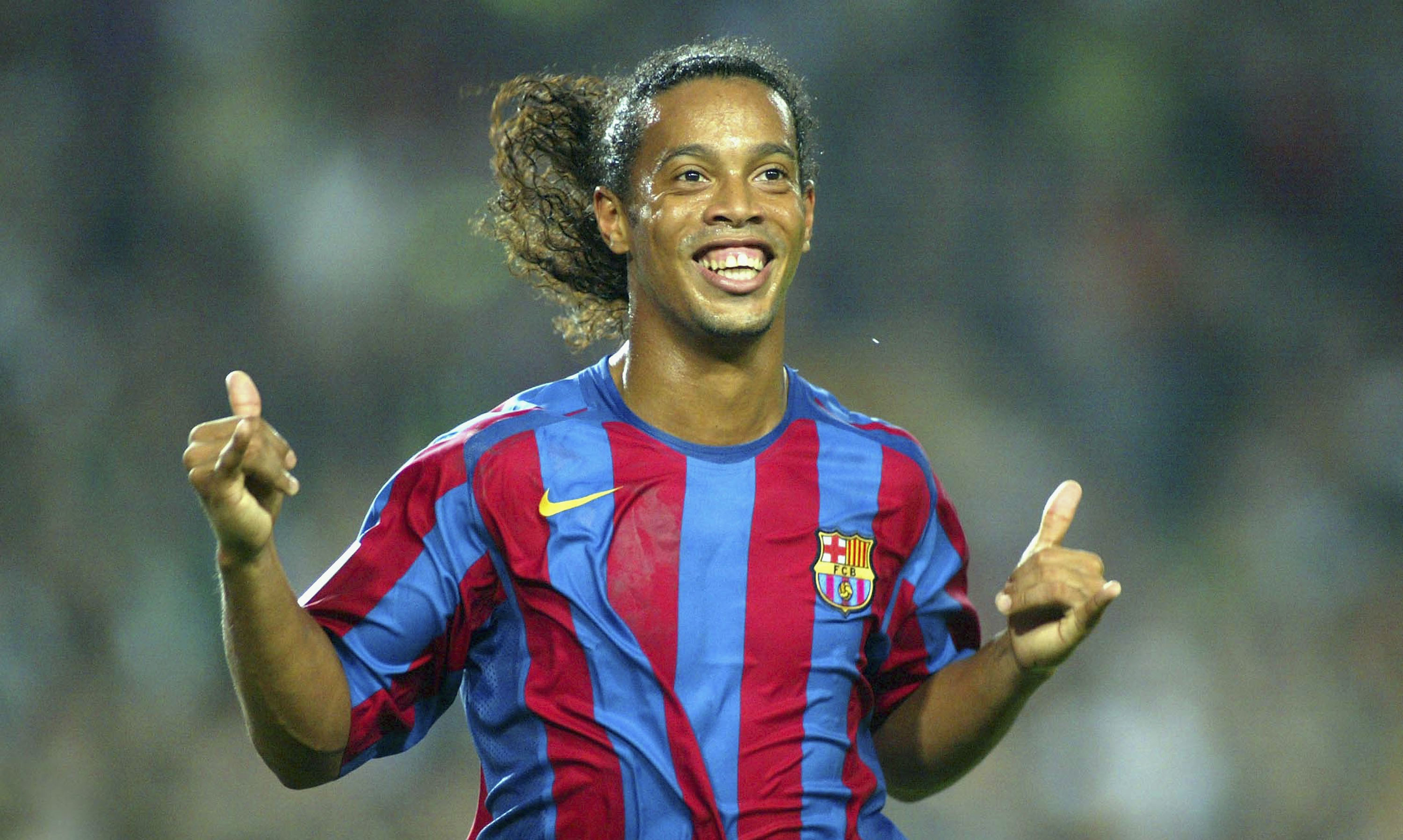
Sports media loves a lazy fairy tale. When word broke that 46-year-old Ronaldinho is lacing up his boots for Ravenna at Forlì next month, the internet collectively lost its mind over a "miracle comeback."
Stop calling it a comeback. It isn't one.
If you think this is about a former Ballon d'Or winner trying to recapture the magic of his 2005 Barcelona peak, you are reading the wrong scoreboard. You are falling for the exact sentimental clickbait that sports aggregators rely on when they do not understand sports finance, attention economics, or how modern lower-tier European football actually survives.
A comeback implies a return to competitive relevance. A comeback means fighting for a roster spot, grinding through double-session pre-season conditioning, and chasing silverware. At 46 years old, a decade removed from his last official competitive appearance with Fluminense in 2015, Ronaldinho is not returning to professional football to test his hamstrings against twenty-something Serie C or Serie D defenders.
He is executing a high-margin liquidity event. And Ravenna is buying the cheapest global billboard in the history of Italian football.
The Anatomy of the Nostalgia Trap
Mainstream sports coverage treats aging superstars like tragic heroes who just cannot let go of the limelight. They write breathless copy about "one last dance" and "the love of the game." That narrative sells ads to casual fans, sure, but it completely misses the structural reality of lower-division football in Italy.
Lower-tier Italian clubs operate on razor-thin margins. In Serie C and Serie D, television revenue is practically nonexistent compared to Serie A. Gate receipts, local sponsorships, and erratic owner injections keep the lights on. For a club like Ravenna, operating outside the top flight means fighting every single week just to stay solvent. You do not build a sustainable business model in the Italian provinces by quietly developing eighteen-year-old center-backs and hoping to sell them for fifty thousand euros three years from now. You need immediate cash flow, global brand equity, and a reason for sponsors outside Emilia-Romagna to pick up the phone.
Enter Ronaldinho.
I have sat in boardrooms with club executives across Europe and North America who routinely burn millions of dollars on washed-up mid-tier veterans thinking it will buy them an extra five hundred season tickets. It never works. Nobody buys a jersey for a thirty-four-year-old journeyman midfielder who once played twelve minutes in the Europa League.
What Ravenna is doing is the exact opposite. They are bypassing the middle class of aging talent and going straight for an icon whose visual brand transcends the sport itself. You do not need to explain who Ronaldinho is to a casual viewer in Tokyo, São Paulo, or New York. The smile, the headband, the no-look pass—these are permanent fixtures in global pop culture.
By putting him on the pitch in Forlì, Ravenna instantly hijacks the global news cycle. Think about the customer acquisition cost here. If Ravenna tried to buy the equivalent global media impressions through traditional digital advertising, PR agencies, and international marketing campaigns, they would exhaust their entire annual operating budget before Tuesday. Instead, they pay an appearance fee, structure a revenue-share on merchandise and broadcast rights, and suddenly their club crest is plastered across every major sports publication on the planet.
Why Your Questions About His Fitness Miss the Point
Whenever a retired legend steps back onto a pitch, the internet immediately floods with predictable, surface-level debates. Let's dismantle the three biggest misconceptions dominating the conversation right now.
Can a 46-year-old actually survive ninety minutes of competitive Italian football?
No. And nobody involved in this transaction expects him to. Asking whether Ronaldinho can press high for ninety minutes against twenty-two-year-old athletes is like asking if a vintage Ferrari can haul gravel. That is not what you bought it for.
In modern sports science, we measure match demands through high-speed running distance, sprint counts, and metabolic power. A standard professional midfielder covers roughly ten to twelve kilometers per match, executing dozens of high-intensity accelerations. A forty-six-year-old body—especially one belonging to a player whose post-retirement lifestyle has been well-documented—does not recover from eccentric muscle damage at the rate required for weekly competitive football. Expect a tightly choreographed cameo. Fifteen to twenty-five minutes. Set pieces. A few signature touches in the center circle where space is protected. Minimal tracking back. Anyone expecting box-to-box industry is delusional.
Does signing a retired icon ruin team chemistry and tactical discipline?
Only if the manager is incompetent. When clubs bring in a marquee veteran expecting them to be the tactical focal point of a promotion push, the locker room fractures. Younger players resent covering the extra ground for a passenger who takes up a massive chunk of the wage bill.
This is different. When an event is framed from day one as a showcase, a celebration, or a specialized appearance, the psychological dynamic shifts entirely. The younger players on Ravenna's roster are not competing with Ronaldinho for a starting spot; they are sharing a pitch with a childhood hero. The visibility spike actually benefits the squad. Scouts, agents, and media outlets who would never otherwise watch a match at Forlì will suddenly tune in. A twenty-one-year-old winger on Ravenna now has millions of eyeballs watching his highlights because Ronaldinho happened to pass him the ball. That is career-altering exposure for an unheralded player.
Is this a sign that Ronaldinho is desperate for money?
People love projecting financial ruin onto retired athletes. While it is public knowledge that Ronaldinho has navigated complex legal and financial battles in Brazil over the past decade—including passport seizures and tax disputes—treating every appearance fee as an act of desperation ignores how modern athlete monetization works.
In the post-playing economy, legends do not make their money from salaries; they make it from intellectual property licensing and appearance arbitrage. Look at the exhibition circuit. Icons like Kaká, Rivaldo, and Luís Figo routinely command six-figure fees for single-match charity appearances, corporate clinics, and promotional tours in the Middle East, Asia, and South America. It is a calculated, repeatable business model. Why grind through an eight-month season for a modest paycheck when you can monetize forty-eight hours of your time for a lump sum and zero long-term physical liability?
The Brutal Truth About Modern Football Entertainment
We need to have an honest conversation about what football actually is in 2026. Purists hate admitting this, but top-level sport is no longer competing solely against other sports. It is competing against Netflix, TikTok, YouTube creators, and live concerts.
Attention spans have collapsed. Younger audiences do not sit down for two hours to watch a tactical 0-0 draw between two mid-table clubs in a regional division. They consume highlights. They watch personalities. They buy into moments.
Look at what Gerard Piqué did with the Kings League in Spain. Traditionalists mocked it. They called it a circus, a gimmick, a disgrace to the purity of the sport. Meanwhile, Piqué filled the Camp Nou with over ninety thousand spectators and drew millions of concurrent viewers on Twitch by blending retired superstars like Ronaldinho with internet streamers and arcade-style rules.
Ravenna's move is cut from the exact same cloth, just dressed up in traditional club attire. They recognized that in the attention economy, relevance is binary. Either people are talking about you, or you do not exist. A standard league fixture at Forlì is a local footnote. A league fixture at Forlì featuring Ronaldinho is a global spectacle.
Let's be clear about the downside of this strategy, because there is always a bill that comes due when you trade competitive integrity for spectacle.
First, you risk alienating your hardcore, die-hard supporters—the ones who stand in the rain on a freezing Tuesday night when there are no cameras around. Traditional ultras do not want their club treated like a traveling circus or a backdrop for a celebrity photo-op. If the team loses focus on its actual league objectives because the front office is too busy managing VIP hospitality and international press credentials, the backlash from the terraces will be swift and merciless.
Second, the sugar high wears off fast. A one-off spectacle creates a massive spike in web traffic, ticket sales, and shirt orders, but retention is notoriously brutal. Once Ronaldinho gets back on his private jet, the stadium empties out again unless the club has built an actual infrastructure to capture and convert those new eyeballs into long-term fans. Most clubs fail at this. They treat the event as the finish line rather than the top of a marketing funnel.
How to Actually Leverage a Spectacle Without Destroying Your Club
If you run a sports franchise, a local team, or even a regional brand trying to punch above your weight class, there is a blueprint hidden inside this madness. You do not need Ronaldinho's budget to apply the mechanics of what Ravenna is pulling off, provided you avoid the traps that kill most promotional stunts.
- Separate the spectacle from the core product. Never let a promotional gimmick dictate your long-term competitive strategy. Keep your coaching staff and core roster laser-focused on the actual season. Treat the marquee event as an isolated commercial vertical with its own dedicated operations team.
- Monetize the secondary assets, not just the gate. Ticket revenue is capped by stadium capacity. Once Forlì sells out, that revenue stream hits a hard ceiling. The real money is in digital distribution, limited-edition merchandise drops, and short-term sponsorship inventory. If you bring in a global icon and do not have a high-margin digital product ready to sell to the spike in website traffic, you left ninety percent of the value on the table.
- Capture the data before the icon leaves. A million views on a highlight clip means nothing if you do not own the audience. Every ticket buyer, every contest entrant, and every merch customer needs to be funneled into an owned database. If Ravenna does not walk away from next month with tens of thousands of new email addresses and mobile numbers, they merely rented fame instead of building equity.
- Control the narrative around physical expectations. Overpromising performance leads to public backlash. Remember when Lionel Messi sat on the bench during Inter Miami's pre-season tour in Hong Kong? Fans rioted, politicians demanded refunds, and the brand took a massive reputational hit because the promoters sold a guarantee that biology could not cash. Smart operators manage expectations ruthlessly. Sell the presence, the aura, and the historical moment—never guarantee ninety minutes of peak athletic output.
The Verdict on Forlì
Next month, cameras will flash in Forlì. Social media will explode the second Ronaldinho steps over the white line. Someone will clip a five-second video of him doing a step-over or pinging a forty-yard diagonal pass, and the comments section will fill up with people crying about how "class is permanent" and begging him to play one more season.
Enjoy the highlights. Appreciate the nostalgia. Just do not confuse a brilliant piece of sports marketing for an athletic resurrection.
Ronaldinho is not coming back to save football, and he certainly isn't coming back to prove anything to the critics. He is showing up to collect a check, remind the world why they fell in love with him twenty years ago, and hand Ravenna the biggest publicity windfall in the club's history. Everyone gets paid. Everyone gets clicks. And the moment the final whistle blows, reality resumes.