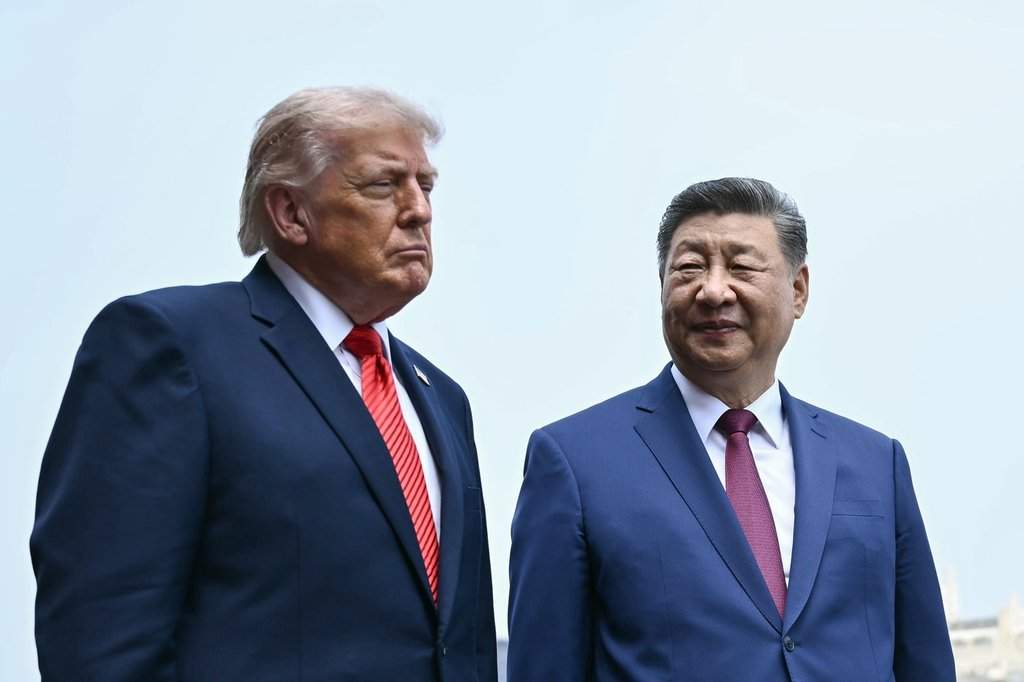
The coffee in the glass pitcher had gone cold an hour ago. Outside the tall windows, the evening traffic hummed along a wet asphalt artery, indifferent to the weight sitting on the mahogany table inside. Two delegations sat across from one another. Ties were loosened. Sleeves were rolled up. On paper, they represented competing superpowers—the United States and China—vying for supremacy over the next century of human progress. But in this quiet conference room, staring at dense spreadsheets and translated transcripts, they looked less like adversaries and more like two exhausted architects realizing they had accidentally built a house too tall for its foundation.
They were not here to talk about trade deficits or territorial boundaries. They were here to discuss something far more fragile: code that thinks, predicts, and decides.
To understand why representatives from Washington and Beijing are meeting behind closed doors to hammer out artificial intelligence guardrails, you have to strip away the glossy marketing campaigns and the apocalyptic Hollywood tropes. You have to look at the raw mechanics of what is happening in server farms from Northern Virginia to Shenzhen. We are currently living through a structural shift in how civilization processes information. For millennia, tools required human muscle or human direction. A hammer waits for a hand. A spreadsheet waits for an input. Today, systems are being deployed that generate their own hypotheses, write their own software patches, and synthesize human language with an fluency that mimics consciousness.
And neither side knows quite what to do with the creature they have uncaged.
The first and most pressing concern on the table is the militarization of autonomous decision-making. Imagine a radar screen in a command center. A blip appears. It moves at supersonic speed. Decades ago, human operators had minutes to weigh the trajectory, consult manuals, and make a terrifying call. In a conflict shaped by algorithmic velocity, those minutes shrink to milliseconds. A human brain simply cannot process tactical data at the speed of silicon.
This creates a terrifying gravitational pull toward fully autonomous defense systems. If one nation delegates lethal authority to an algorithm because waiting for a human means losing the engagement, its rival is forced to do the exact same thing out of sheer survival instinct. It is an arms race where the weapon's primary feature is its refusal to wait for permission. Both superpowers recognize this edge-case nightmare. They know that an unmonitored flash-crash in financial markets can wipe out trillions in seconds; a similar glitch in an autonomous defense network could start a war by accident.
That is why these diplomatic sessions exist. They are not born out of sudden altruism or mutual affection. They are born out of a shared terror of escalation loops that no human can interrupt.
Yet, stepping back from the battlefield reveals an even stranger domestic crisis: the interpretability problem.
Engineers call it the black box. When a massive neural network processes petabytes of text, video, and code, it forms complex webs of mathematical weights. It arrives at a conclusion—diagnosing a rare medical condition, approving a loan, or flagging a security threat—with staggering accuracy. But if you ask the system why it made that choice, it cannot give you a linear explanation. It can only point to a trillion floating-point calculations.
We have created engines whose inner workings we can no longer audit. We are deploying intelligence that we cannot fully inspect. During these bilateral discussions, technical experts from both nations whisper about the quiet dread of building systems whose failures might be entirely invisible until they cascade into catastrophe. When a bridge collapses, inspectors can trace the rusted bolt or the flawed stress calculation. When an autonomous economic model or societal infrastructure planner makes a catastrophic error based on a hidden bias in its training weights, the trail turns into a labyrinth of probability distributions.
Compounding this intellectual vertigo is the physical reality of the race. Silicon is the oil of the twenty-first century, and the supply chain is dangerously brittle.
To train the models that dominate headlines, companies require thousands of specialized microchips—units of hardware forged through manufacturing processes so precise they border on alchemy. The machines that etch these microscopic circuits are produced by a handful of companies, drawing on minerals mined across scattered continents. When U.S. and Chinese delegates sit down, they are acutely aware of the physical bottlenecks binding their digital ambitions. Export controls, semiconductor sanctions, and intellectual property disputes form a tense choreography of economic friction.
China has spent years pouring immense capital into domestic semiconductor manufacturing to bypass foreign chokepoints, while the United States has enacted strict legislative barriers to keep advanced processing hardware out of competitor hands. Both strategies carry immense risk. Choke off trade too tightly, and you incentivize a fractured technological ecosystem where two incompatible internets evolve in isolation, multiplying the chances of miscalculation and misunderstanding. Leave the taps open, and you risk seeding a rival military apparatus with the very tools designed to outpace you.
There is a profound human irony in all of this. We spent the last century trying to connect the globe through fiber-optic cables and open-source protocols, building a collective human library where anyone anywhere could access the sum of our knowledge. Now, the architects of that very network are frantically drawing borders inside the code, erecting digital walls, and negotiating treaties over who gets to own the future of cognition.
As the meeting in Geneva or Washington winds down, the participants will draft a joint statement. It will feature careful diplomatic language about transparency, risk mitigation, and collaborative research safety. Press releases will call it a constructive step. Pundits will debate whether it went far enough.
But outside that room, the servers continue to hum.
In a sterile, windowless facility somewhere in the Nevada desert, racks of GPUs flicker with silent blue light, processing millions of tokens every second. Thousands of miles away, in a sprawling tech campus outside Beijing, another cluster of silicon drinks megawatts of electricity, optimizing weights, searching for patterns, learning the contours of human expression.
The diplomats can sign papers. They can establish hotlines and agree on red lines. But the code does not care about treaties. It only cares about the next parameter, the next optimization step, the next horizon of possibility. We have set a wheel spinning that requires no further human push to gather momentum, and the people tasked with steering it are finally realizing how small their hands look against the wheel.