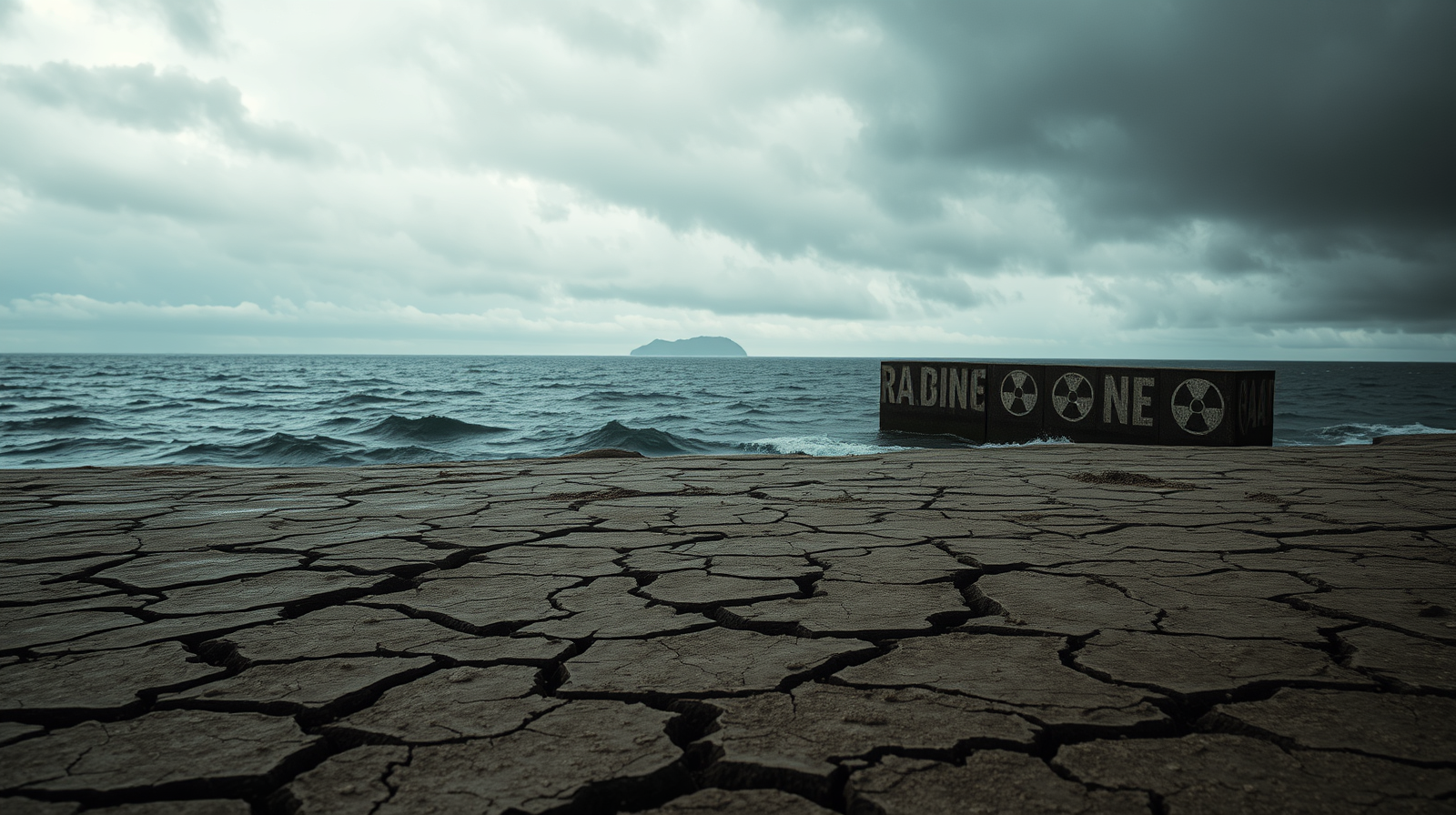
You've probably never heard of Runit Dome. Most people haven't. It's a massive concrete structure built on a tiny coral island in the middle of the Pacific Ocean, and it holds a terrifying secret. The United States military dumped roughly 85,000 cubic meters of radioactive debris right there during the Cold War.
Let's talk about what actually happened on Enewetak Atoll.
Back in the 1940s and 1950s, the US government turned this remote Pacific paradise into a nuclear testing ground. They detonated 44 atomic and thermonuclear bombs on the atoll. The blasts vaporized entire islands, poisoned the ocean, and left behind a massive crater filled with radioactive soil, scrap metal, and military equipment contaminated with plutonium.
Instead of shipping that toxic nightmare back to the mainland, the military decided to bury it right there.
How They Built a Nuclear Tomb on a Beach
In the late 1970s, troops scraped up thousands of cubic yards of radioactive muck from the surrounding islands. They dumped it all into the Cactus Crater—a hole left behind by a 1958 nuclear detonation.
Then came the engineering fix. They poured a thick concrete cap over the top. That cap is what people call Runit Dome, or sometimes the "Cactus Dome."
It sounds like a tidy solution. It isn't.
The engineers didn't line the bottom of the crater with concrete. They basically built a giant bowl with a lid, leaving the bottom open to the groundwater and the surrounding ocean. Radiation doesn't just stay put because you poured a slab over it. Tides rise and fall through the bottom of the crater. Water washes in, touches the radioactive waste, and washes back out into the Pacific.
Honest mistake? Maybe. Massive environmental hazard? Definitely.
The Rising Sea Level Threat
Climate change is making a bad situation worse. Sea levels are rising fast in the Marshall Islands. High tides and storm surges already wash right over parts of Runit Island.
The concrete cap is cracking. Decades of harsh tropical weather, intense heat, and salt water have taken a heavy toll on the structure. Cracks run across the surface. Rainwater seeps in, and radioactive fluid leaks out.
Independent researchers from Columbia University tested the area a few years ago. They found that the soil outside the dome is heavily contaminated. In some spots, the background radiation is actually higher than it is near Chernobyl.
People living in the Marshall Islands are paying the price for a mess they didn't create.
What the Government Says Versus Reality
The US Department of Energy insists that the dome is holding up fine. They claim that the sediment in the lagoon is already so polluted from the original nuclear tests that the leakage from the dome doesn't make a statistically significant difference.
Think about that logic for a second. Because the ocean is already poisoned, a leaking nuclear tomb doesn't matter? That argument doesn't fly with the locals.
Families still fish in these waters. They rely on the ocean to survive. Telling them that a cracked concrete vault of plutonium is no big deal because the ecosystem is already ruined is cold comfort.
A 2020 report to Congress by the Department of Energy admitted that the dome is vulnerable to rising seas and major storms, but they stopped short of committing funds to clean it up properly. They argued that excavating the waste and moving it safely would cost billions and pose massive logistical risks.
So the dome sits there. Cracking. Leaking. Waiting.
Why This Story Matters Right Now
History has a funny way of catching up with us. We tend to think that out-of-sight means out-of-mind. We sweep toxic waste under the rug—or in this case, under a concrete lid on a forgotten beach—and move on.
Nuclear power and military defense have steep environmental costs. Those bills always come due.
If you want to understand how humanity treats the planet, look at Runit Dome. It stands as a monument to short-term thinking. We solved a 1970s cleanup problem by kicking the can down the road, and now the ocean is eating away at our mistakes.
Stop ignoring nuclear legacy waste. Demand better accountability from governments that treat remote islands as disposable dumping grounds.


