Every few months, a new diplomatic summit hits the headlines and people wonder if the fighting is finally ending. It hasn't.
When you look closely at past talks involving Russia and Ukraine, the pattern isn't just frustrating—it's predictable. From the earliest ceasefire attempts in 2014 to the high-stakes meetings in Belarus and Turkey during 2022, negotiations have repeatedly collapsed because both sides treat diplomacy as an extension of the battlefield rather than a substitute for it. If you're trying to understand why diplomats walk away empty-handed time after time, you have to stop listening to official press releases and look at the irreconcilable demands sitting underneath them.
The Illusion of the Minsk Agreements
Most casual observers think the diplomatic breakdown started in February 2022. That's a mistake.
The blueprint for failure was actually drafted back in 2014 and 2015 in Minsk, Belarus. Following Russia's annexation of Crimea and the outbreak of fighting in the Donbas region, French and German leaders brokered two separate deals—Minsk I and Minsk II—intended to halt the bloodshed. On paper, the agreements looked reasonable enough. They called for an immediate ceasefire, the withdrawal of heavy weapons, prisoner exchanges, and eventual local elections in the occupied territories.
In practice? Nobody ever implemented the core political provisions.
Ukraine viewed Minsk II as an agreement signed at gunpoint while its troops were surrounded near Debaltseve. Kyiv argued that security had to come first—meaning Russia needed to pull out its fighters and return control of the international border before Ukraine would change its constitution to grant special status to Donetsk and Luhansk. Moscow flipped the sequence entirely. The Kremlin insisted Kyiv pass constitutional reforms and hold elections first, which would have effectively handed Russian-backed proxies a permanent veto over Ukraine's foreign policy.
For eight years, the Organization for Security and Co-operation in Europe (OSCE) documented thousands of ceasefire violations while diplomats argued over comma placement. Neither side trusted the other to keep its word once concessions were made. By the time Russian tanks rolled across the border in full force in 2022, the Minsk process wasn't merely stalled—it was completely dead.
What Really Happened in Belarus and Istanbul in 2022
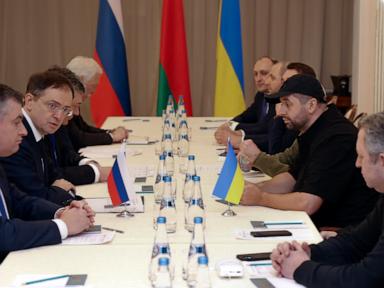
When the full-scale invasion began in February 2022, diplomats actually moved surprisingly fast to open channels. Within days, delegations met near the Belarusian border, and by late March, they reconvened at the Dolmabahçe Palace in Istanbul.
For a brief window, an outline seemed possible. Ukrainian negotiators floated a framework based on permanent neutrality. Under this proposal, Ukraine would abandon its ambition to join NATO and prohibit foreign military bases on its soil. In exchange, Kyiv demanded ironclad security guarantees from major powers—including the United States, the United Kingdom, France, China, and even Russia itself—that would obligate those nations to defend Ukraine if it were attacked again.
Then the talks disintegrated. Why?
First, realities on the ground shifted dramatically. In late March and early April 2022, Russian forces retreated from the outskirts of Kyiv after failing to capture the capital. As Ukrainian troops entered towns like Bucha and uncovered evidence of mass civilian killings, domestic political support in Ukraine for any compromise with Moscow evaporated overnight. You can't easily ask a population to sign a neutrality treaty with an army whose atrocities are dominating every news broadcast.
Second, the technical details in the draft Istanbul communiqué were poisoned from the start. Russia demanded a veto power over whether guarantor states could actually come to Ukraine's defense in a future crisis. Think about how absurd that is. If Russia attacked Ukraine again, Moscow wanted the legal right to block Britain or America from intervening. Ukraine obviously rejected that clause, along with Russian demands to drastically shrink the size of the Ukrainian military to a level that would leave the country defenseless.
Why Territorial Concessions Remain a Brick Wall
Strip away the diplomatic jargon, and every negotiation hits the exact same obstacle—lines on a map.
In September 2022, Moscow staged widely condemned referendums and formally claimed to annex four Ukrainian regions—Donetsk, Luhansk, Zaporizhzhia, and Kherson—even though Russian troops didn't fully control any of them at the time. By writing those four provinces alongside Crimea into the Russian constitution, Vladimir Putin locked himself into a maximalist corner. Under Russian law, handing back any of that territory is now technically unconstitutional.
Ukraine faces an equally rigid reality. President Volodymyr Zelenskyy signed a decree ruling out negotiations with Putin after the annexation announcement, and Ukrainian public opinion consistently opposes trading land for a temporary pause in fighting. Ukrainians remember what happened after 2014. Giving up Crimea didn't buy peace; it bought Russia eight years to prepare a larger invasion.
When one side demands recognition of annexed territory as a precondition for talking, and the other demands a full withdrawal to the 1991 borders before signing anything, there isn't a middle ground left to split. Diplomats can't compromise on sovereignty the way they compromise on trade tariffs.
The Problem With Partial Ceasefires
Whenever comprehensive peace deals look impossible, outside observers usually suggest a smaller step. Why not just freeze the front lines where they are?
Because a freeze benefits the side that needs time to rearm. Military analysts at institutions like the Institute for the Study of War and Chatham House have repeatedly pointed out that operational pauses historically allow Russian defense factories to replenish artillery shells and missile stockpiles without facing immediate battlefield attrition. Ukraine fears a frozen conflict would simply turn into a waiting room for the next offensive, while simultaneously drying up Western financial and military aid as foreign voters assume the crisis is over.
Third-Party Mediators and Their Competing Agendas
Over the past few years, nearly every major global player has tried to position itself as a peacemaker. None have succeeded, mostly because their proposed frameworks reflect their own geopolitical interests rather than the actual security concerns of the combatants.
- Turkey managed to broker the Black Sea Grain Initiative in July 2022, proving that narrow, transactional deals are possible when commercial interests align. Even that agreement collapsed a year later when Russia pulled out over sanctions complaints.
- China released a 12-point position paper calling for respect for sovereignty and a ceasefire, yet avoided naming Russia as the aggressor or calling for troop withdrawals, leaving Kyiv deeply skeptical of Beijing's neutrality.
- African and Latin American delegations visited both Kyiv and Moscow hoping to curb global food and energy inflation, only to discover neither capital was willing to budge on core security demands.
- Switzerland hosted a high-profile peace summit in June 2024 focusing on nuclear safety, food security, and prisoner exchanges, deliberately sidestepping territorial questions because Russia wasn't invited and wouldn't attend anyway.
Notice what actually works in that list. Prisoner swaps still happen regularly through quiet backchannels mediated by countries like the United Arab Emirates and Saudi Arabia. Bodies of fallen soldiers are exchanged. Grain shipments were temporarily secured. Small, verifiable transactions survive because neither side has to trust the other's long-term intentions. Grand peace treaties fail because they require massive trust that simply doesn't exist.
What People Miss About Leverage and Timing
There's a common misconception that wars end simply because leaders get tired of fighting or diplomats find clever wording. History shows the opposite. Wars end when one or both sides conclude they can no longer improve their position through violence.
Right now, both Moscow and Kyiv still believe time can work in their favor. The Kremlin bets that Western political will will fracture, election cycles in Europe and the United States will reduce weapons deliveries, and Russia's larger population and industrial base will eventually grind Ukraine down. Kyiv bets that sustained Western air defenses, long-range strikes on Russian energy infrastructure, and economic pressure will eventually make the cost of occupation unsustainable for Moscow.
As long as both capitals think the next six months on the battlefield will give them better cards to play at the negotiating table, any summit will remain mostly theater.
How to Read Future Peace Announcements Without Falling for Hype
Next time you see breaking news claiming a breakthrough in Russia-Ukraine peace talks, ignore the headlines and check three specific benchmarks before taking it seriously:
- Look at who is in the room. If senior military intelligence officials and top decision-makers aren't attending directly, the meeting is exploratory noise rather than a real negotiation.
- Check the sequence of security guarantees. Any viable framework has to answer how Ukraine is protected before it makes concessions, not after. Vague promises without binding military commitments are identical to the failed 1994 Budapest Memorandum.
- Watch the front lines, not the podiums. Real de-escalation shows up first in sustained reductions in missile barrages and verifiable pullback of heavy artillery, never in joint press conferences.
Until those three indicators shift together, diplomatic summits will remain a stage for shaping international opinion rather than a serious off-ramp from the war.