Trust in financial institutions vanishes overnight when people realize their government views private savings as state property. Right now, everyday citizens across Russia are quietly pulling massive amounts of cash out of local banks. They aren't panicking over standard inflation rates or minor market corrections. They're terrified that the Kremlin will sweep in and freeze or confiscate their deposits to fund an ongoing military campaign.
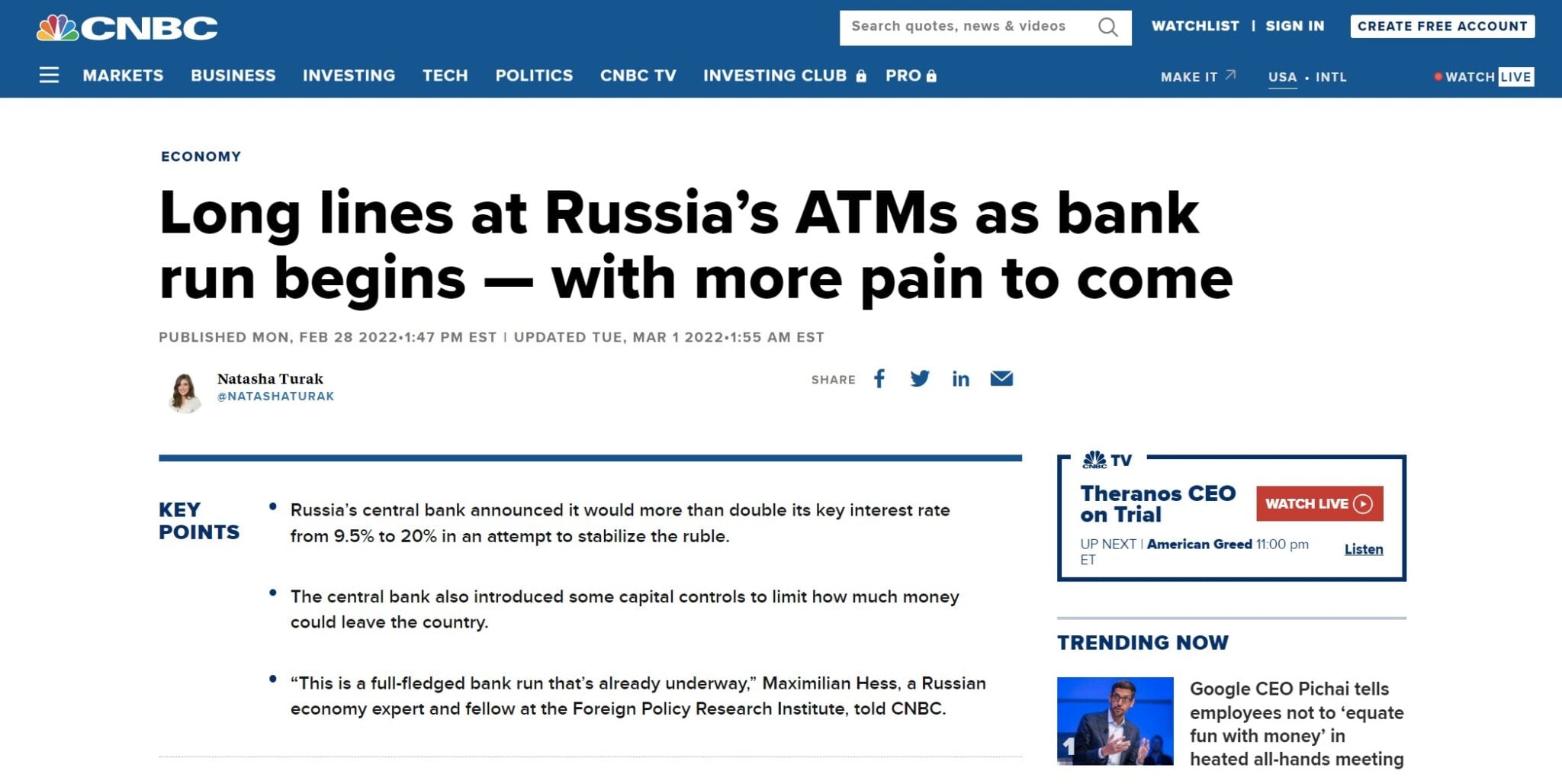
When you look closely at recent banking data from the Central Bank of Russia, the panic isn't a secret. Billions of rubles are disappearing from traditional accounts. People are hoarding physical cash, buying foreign currency, or pouring wealth into hard assets like real estate and gold. They've lived through economic collapses before. They know the playbook. If you liked this piece, you might want to look at: this related article.
Understanding this phenomenon means looking past official state reassurances. Governments facing massive wartime expenditures often eye domestic liquidity reserves with a lot of temptation. Let's break down why this capital flight is happening, what history tells us about wartime financial controls, and how ordinary savers protect themselves when the state becomes a predator rather than a protector.
The Reality of Wartime Financial Controls
Wars cost an astronomical amount of money. When a nation faces heavy international sanctions and soaring military budgets, standard tax revenues rarely cover the deficit. Leaders look for alternative funding sources. Domestic bank deposits represent a massive pool of accessible capital sitting right inside the country's borders. For another angle on this development, refer to the latest update from TIME.
Historically, authoritarian regimes rarely hesitate to tap into these pools. They frame it as national defense or patriotic duty. Savers call it outright theft.
When you deposit money into a commercial bank, you're essentially extending an unsecured loan to that institution, which in turn holds government bonds or relies on central bank stability. If the central government decides it needs those funds to keep factories running or pay soldiers, emergency decrees can change the rules of withdrawal instantly.
We saw flashes of this vulnerability when sweeping sanctions hit Russia's financial sector early in the conflict. Western restrictions froze hundreds of billions in foreign reserves held abroad. That shockwave hit home. If foreign assets could vanish with the stroke of a pen, domestic assets suddenly looked awfully exposed.
Why Traditional Savings Accounts Feel Like a Trap
Keeping rubles in a standard savings account feels increasingly risky for anyone paying attention. Interest rates might look attractive on paper, but high inflation eats away at real purchasing power. More importantly, the threat of capital controls hangs over every transaction.
If the government implements withdrawal limits, your digital balance becomes just a number on a screen that you cannot touch. You can't buy groceries with a frozen account. You can't pay medical bills.
This creates a massive trust deficit. People trust physical cash under a mattress or foreign currency in a safety deposit box far more than a digital ledger managed by state-aligned banks.
- Digital balances can be restricted with a single regulatory update.
- Currency conversions face tightening restrictions and high fees.
- Capital flight monitoring systems flag large transfers immediately.
When faced with these hurdles, people adapt. They pull cash before restrictions tighten further. They treat liquidity as a survival tool rather than an investment strategy.
Historical Parallels You Can't Ignore
Financial history repeats itself because governments facing existential fiscal crises always resort to the same mechanisms. During major conflicts throughout the twentieth century, governments routinely suspended gold standards, forced conversion of foreign currencies, and locked down bank deposits.
Think about the bail-ins and deposit freezes seen during various emerging market crises across Latin America and Eastern Europe over the last few decades. Argentina's infamous corralito in 2001 locked citizens out of their bank accounts to prevent a total banking collapse. People stood outside locked bank branches screaming at security guards.
When Russian citizens withdraw billions today, they are reacting to this exact historical template. They know that when state survival overrides the rule of law, private property rights are the first casualty.
It's not about being unpatriotic. It's basic self-preservation. If you have worked decades to build a nest egg, watching it get absorbed into a war chest is a nightmare scenario you will try to avoid at all costs.
How People Are Moving Their Money
Hiding cash under the floorboards isn't the only move. People are getting creative with asset protection.
Foreign cash remains king. US dollars and Euros are traded heavily on unofficial or semi-official markets, despite official restrictions on cash imports. People want hard currency that holds value independently of the ruble.
Real estate is another magnet for fleeing capital. Even with domestic property prices fluctuating wildly, owning physical land or apartments feels safer than holding bank deposits that might be devalued or frozen. Bricks and mortar don't disappear because a bureaucrat signs an emergency decree.
Gold and other precious metals have also seen spikes in retail demand. Small gold bars and coins offer a portable store of value that bypasses the banking system entirely. You don't need a brokerage account to keep a gold coin in your pocket.
What This Means for the Broader Economy
A population draining its own banking system creates a vicious cycle. When banks lose their core deposit base, their ability to lend to businesses and consumers collapses. Credit tightens. Businesses struggle to find operating capital. The domestic economy slows down even more.
To compensate, the central bank has to pump liquidity back into the commercial banking sector, which fuels domestic inflation. It's a lose-lose scenario for monetary policymakers. They can try to force banks to hold government debt, but that only deepens public distrust.
The flight of capital also signals a deep psychological break between the citizen and the state. When people stop trusting the financial architecture of their own country, fixing that trust takes generations.
Protecting your wealth shouldn't require dodging your own government. Yet, for millions of people navigating high-stakes geopolitical conflicts, managing personal finance has turned into an exercise in guerrilla survival. Keep your assets liquid, diversify away from vulnerable fiat systems where possible, and never assume that a bank deposit is entirely safe when the state decides it needs your money more than you do.