Finding a glass meth pipe and a discarded drug bag on your front lawn on your daughter's birthday isn't just unsettling. It's a sign that your neighborhood is slipping away from you. That's exactly what happened to Rutland resident Kris Hyam, and his story is no longer an anomaly in this corner of Kelowna.
For years, Rutland residents have complained that municipal resources, security patrols, and political attention wrap around the downtown core while their own streets inherit the overflow of the city's social crises. The numbers back up this frustration. The City of Kelowna’s 2026 Citizen Survey revealed a sharp drop in community safety perception. Among locals who reported a declining quality of life, 29% pointed straight to crime and safety. That's more than double the 13% reported just two years ago.
Tired of waiting for a systemic fix that never seems to arrive, ordinary citizens are stepped up to police their own parks, while the city rushes to patch over the gaps ahead of the upcoming municipal election.
The Birth of the Ben Lee Community Watch Group
When you can't comfortably let your kids play in your own front yard, the status quo has failed. The epicenter of the current neighborhood movement sits right around Ben Lee Park, a public space that families say has been overrun by public drug use, street fires, and individuals passed out on private lawns.
In response, lifelong Rutland resident Sharlene Drohomereski and fellow neighbor Kitana Toland mobilized the community to form the Ben Lee Community Watch Group. This isn't a passive online forum. Neighbors are organizing foot patrols to keep watch over trouble spots and establishing a localized network of safe havens where vulnerable residents can seek immediate shelter if they are followed or harassed.
Drohomereski, who previously fought to shut down a notorious drug house on Homer Road, recognizes the shift in the neighborhood. The feeder roads stretching from Hollywood Road down to Lester and Nickel have faced an influx of individuals dealing with unaddressed complex care needs and chronic homelessness. Local parents report seeing people lighting open fires to cook drugs right next to residential housing complexes where kids play.
The grassroots watch group aims to recreate an old-school block watch mentality. It's about direct accountability because relying purely on the standard channels hasn't kept the park safe.
Businesses Fight Back with the Return of URBA Ambassadors
The crisis isn't contained to residential properties. Local commercial hubs are dealing with identical disruptions. Harjit Toora, owner of a family-run bakery in Rutland, recently dealt with a fourth major security incident at his shop, causing a severe financial and operational setback for his business.
To counteract this pattern, the Uptown Rutland Business Association (URBA) is re-launching its on-call ambassador program after a six-month hiatus due to funding constraints. Led by URBA president Jason Bullock, who also runs OK Tire Rutland, the program functions similarly to downtown Kelowna's well-known "red shirt" initiative.
Starting in the morning hours, these private ambassadors will handle direct complaints from business owners regarding:
- Aggressive panhandling and loitering
- Property mischief and vandalism
- Open drug use near store entrances
- De-escalation and garbage removal
While business owners welcome the return of these street patrols, the reality is that the program is entirely dependent on securing more long-term funding. It's a temporary bandage on a wound that requires deep surgical intervention.
City Hall Redirection and the Election Context
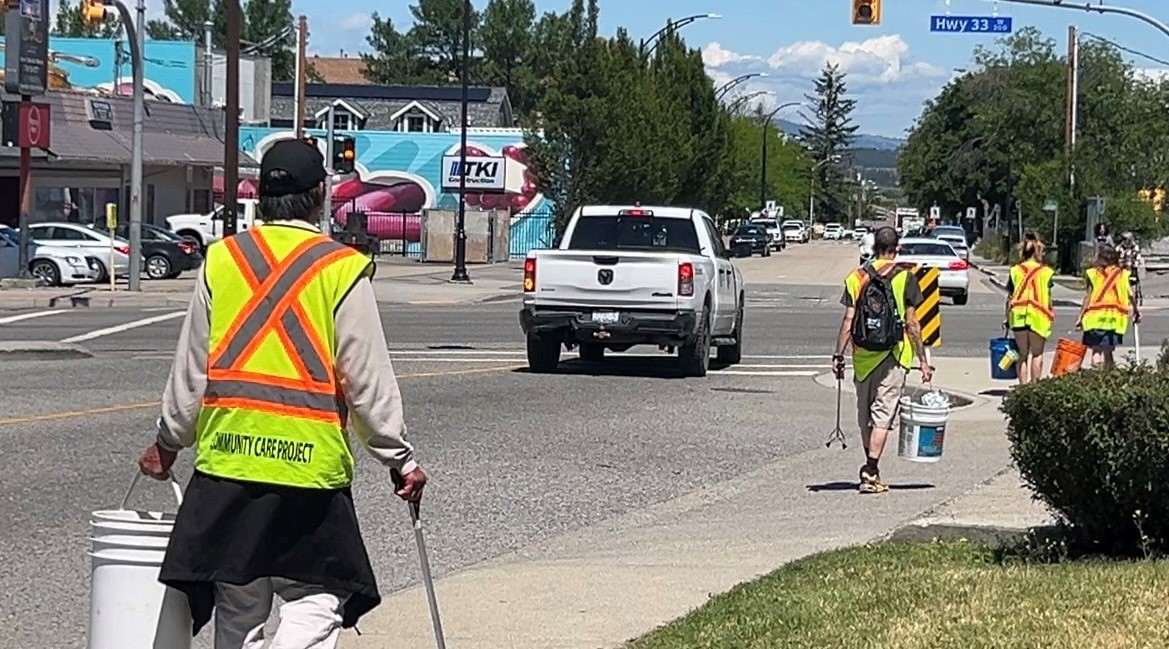
With the municipal election just over four months away, the political suddenness of the city's response hasn't escaped the notice of local critics. Kelowna Mayor Tom Dyas is pushing forward a proposal to expand the "Community Care" clean-up initiative in Rutland from three days a week to five days. This program employs vulnerable individuals to remove street litter, needles, and debris from public pathways.
While keeping the streets clean matters, it doesn't solve the underlying security deficit. During city council debates, some officials have openly questioned whether the municipality's heavy financial investments into traditional policing are yielding actual results on the ground. Councillor Loyal Woolridge noted that simply putting more money into law enforcement hasn't improved the social side of the crisis, pointing to a revolving-door justice system that leaves frontline police officers frustrated and unable to enforce lasting order.
What Rutland Needs to Actually Reclaim Its Streets
Grassroots foot patrols and extended garbage cleanup schedules are decent short-term defensive measures, but they don't fix a neighborhood's long-term trajectory. If Rutland is going to recover its reputation as a safe, working-class family hub, local advocacy needs to target specific policy shifts.
Demand Equity in Street Disorder Teams
Downtown Kelowna receives dedicated, consistent foot patrols and rapid-response teams. Rutland needs its own permanent, neighborhood-specific street disorder unit. Rotating officers in and out who don't know the local chronic offenders or specific problem properties doesn't work. Residents should pressure city council to partition permanent law enforcement and bylaw resources exclusively for the Rutland grid.
Strict Enforcement on Absentee Landlords
Many of the chronic issues stem from neglected, low-income rental properties and abandoned spaces that act as magnets for criminal activity. Bylaw enforcement needs to aggressively fine out-of-town property owners who refuse to secure their premises, install adequate lighting, or clean up illegal encampments on their land within a strict 24-hour window.
Coordinated Provincial Pressure
The root causes of the disorder—mental health crises, severe addiction, and homelessness—fall under provincial jurisdiction. Local action groups need to document specific incidents with dates, times, and photographic evidence, then flood the offices of local MLAs Gavin Dew and Kristina Loewen. Municipal taxes cannot fund the massive influx of detox beds and complex-care housing units that Interior Health needs to deploy to get people off the asphalt and into recovery.
If you want to get involved with the newly formed Ben Lee Community Watch Group or share information on local safety initiatives, you can reach out directly to the organizers via their community network at Droski4@hotmail.com or join the private Ben Lee Community Watch group on Facebook. Sitting back and hoping the problem stays downtown is no longer an option.