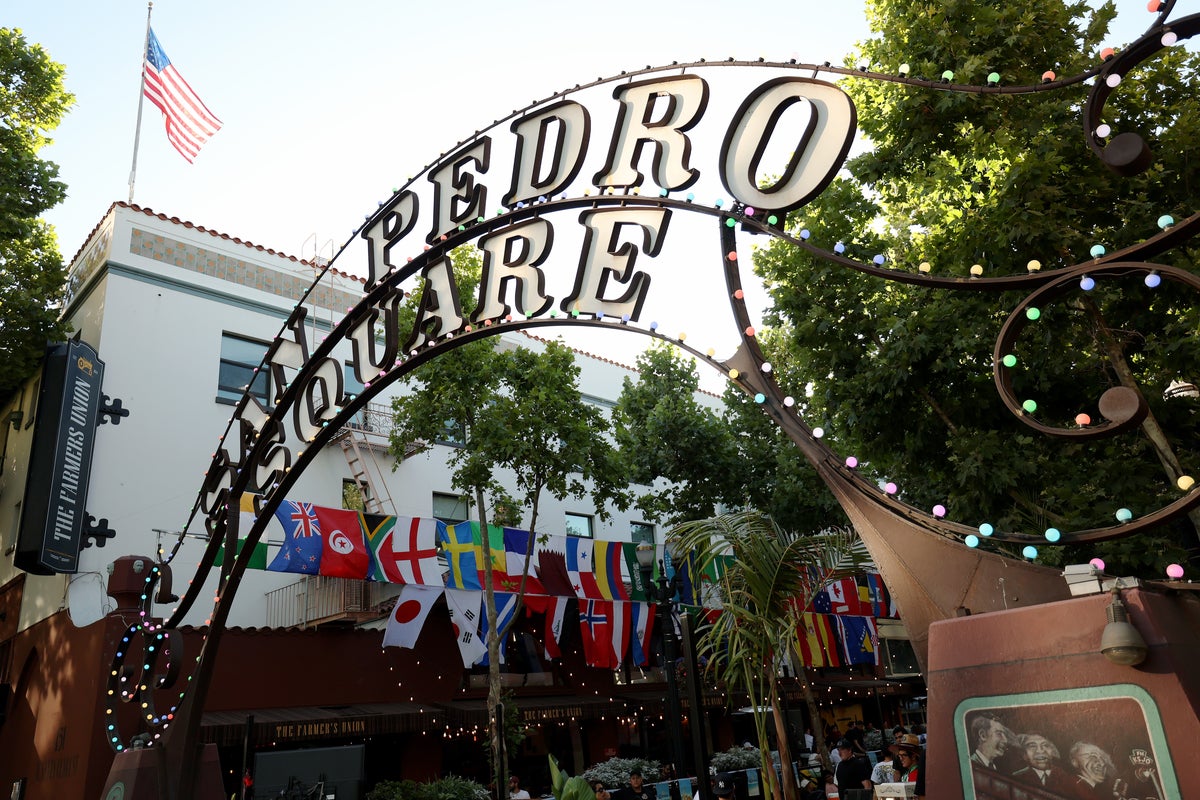
The headlines write themselves. A shooting occurs near a World Cup fan zone, and the media immediately deploys the standard script. Panic. Outrage. Demands for localized crackdowns, tighter perimeters, and more metal detectors. The lazy consensus blames a lack of immediate tactical presence or a failure of the specific venue's perimeter.
They are looking at the wrong map.
When a violent incident spills onto the periphery of a massive global sporting event, treating the fan zone as an isolated fortress is a fundamental misunderstanding of urban security. You cannot sanitize a three-block radius in the middle of a major metropolis and expect it to remain immune to the systemic issues of the host city.
The obsession with "hardened perimeters" creates a dangerous illusion of safety while actually shifting the risk to more vulnerable, crowded bottlenecks just outside the gates.
The Illusion of the Sacred Perimeter
Security theater relies on clear boundaries. Turnstiles, bag checks, and private security guards give attendees a warm, fuzzy feeling of absolute protection. But security operations experts know a harsh truth: hardening a specific zone does not eliminate threat vectors; it merely displaces them.
When you create a hyper-secure fan zone, you inadvertently assemble a massive, dense target right outside the security checkpoint. Hundreds of people waiting in line, bottlenecked by slow security screenings, become infinitely more vulnerable than they would be inside.
- The Bottleneck Effect: Forcing thousands of people into tightly packed queues outside a venue creates a high-density target area with zero protection.
- Resource Drain: Flooding a fan zone with hundreds of law enforcement officers strips the surrounding neighborhoods of patrols, creating tactical blind spots ripe for exploitation.
- The False Sense of Security: Attendees lower their situational awareness the moment they get near the venue, making them easier targets in the immediate gray zones just outside the perimeter.
I have spent years analyzing urban crowd dynamics during high-profile public gatherings. Municipalities routinely blow millions of dollars on temporary fencing and private security contracts, only to realize they just pushed the chaos one block over. If the underlying city dynamics are volatile, a piece of chain-link fence and a metal detector will not change that reality.
Dismantling the Commotion Around Mass Event Safety
Whenever these tragedies occur, the public asks the wrong questions. The "People Also Ask" columns fill up with queries that expose our fundamental misunderstanding of public safety.
Can Cities Guarantee Absolute Safety Inside Fan Zones?
No. And anyone who claims they can is selling you snake oil. True security in an open, public space is a statistical impossibility. A city can deploy facial recognition, counter-snipers, and triple-tiered fencing, but human error, insider threats, and unpredictable urban variables mean the risk can never be reduced to absolute zero. The expectation of total safety is a modern luxury that clashes violently with reality.
Do More Security Guards Prevent Outer-Perimeter Violence?
Rarely. Private security guards hired for mega-events are usually underpaid, under-trained, and legally unauthorized to intervene in violent altercations outside their immediate property line. Relying on temporary event staff to manage the complex, underlying criminal elements of a host city is a recipe for failure. They are there for crowd management and insurance compliance, not urban warfare.
The Data Behind the Displacement Reality
Look at the historical data of major tournament disruptions over the last two decades. The vast majority of severe violent incidents associated with mega-events do not happen inside the stadiums or the primary, heavily policed fan zones. They happen at transit hubs, secondary viewing areas, and makeshift gatherings blocks away from the official perimeters.
| Event Location | Primary Security Focus | Actual Vulnerability Point |
|---|---|---|
| Official Fan Zone | High-density metal detectors, ID checks, heavily armed police presence. | The surrounding transit stations and unpoliced feeder streets. |
| Stadium Outer Ring | Vehicle barricades, credential checks, perimeter fencing. | Crowded public plazas two miles away where un-ticketed fans gather. |
| City Center Hubs | Light roving patrols, reliance on existing CCTV infrastructure. | Packed bars and public squares lacking designated exit routes. |
By treating the fan zone as a separate entity from the city itself, organizers create a artificial oasis. It is a tactical error that ignores how crime and violence actually flow through an urban environment.
Stop Hardening the Zone. Fluidify the City.
The standard playbook demands that we build higher walls and restrict movement even further. That is exactly how you make the problem worse. The more you restrict flow, the more you create stagnant pockets of vulnerable people.
Instead of trying to turn public spaces into military compounds, event organizers and city leadership need to pivot to a model of fluid security.
- Deconstruct the Bottlenecks: Eliminate massive, centralized checkpoints that force thousands of people to stand stationary in unpoliced public zones. Implement decentralized, rolling security checks further back along transit lines.
- Acknowledge the Downsides: A fluid security model means less control over exactly who stands where. It means accepting that you cannot vet every single individual who walks down a public sidewalk. It trades the feeling of absolute control for the reality of reduced target density.
- Integrate Local Intelligence: Stop flying in external security consultants who do not understand the localized gang territories, drug corridors, and social fault lines of the host city. If your event security plan does not directly align with the daily precinct reality of the local beat cops, your plan is useless.
The tragic reality of violence near public gatherings cannot be solved by a reactive scramble for more checkpoints. It requires a cold, unsentimental admission that a fan zone is only as safe as the city it sits in. Stop buying into the theater of the fortress perimeter. It won't save you when the reality of the streets catches up to the gates.
Don't wait for the city to build a bigger wall. Watch your own back, identify the bottlenecks before you get stuck in them, and stop assuming a plastic wristband makes you invincible.