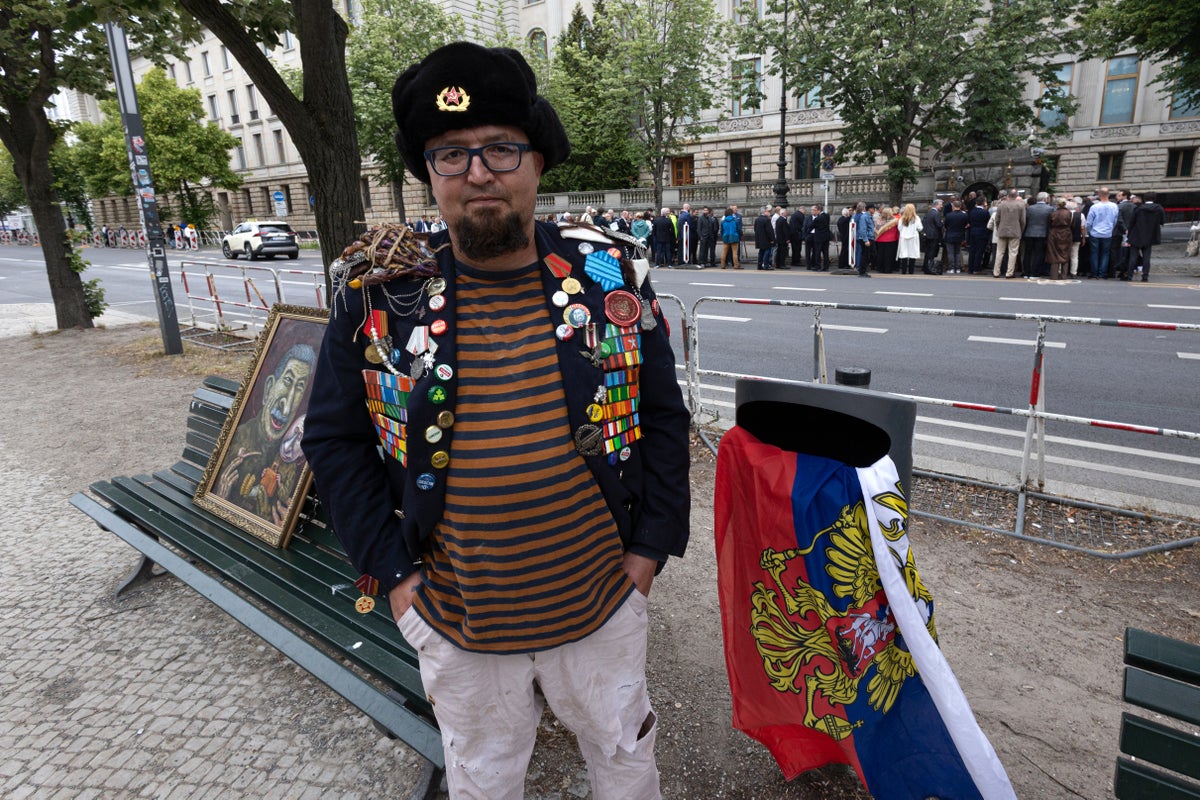
Nowhere is safe if you pull the bear's tail. That is the grim lesson echoing across Europe after Semyon Skrepetsky was shot dead on a pedestrian path in eastern Poland. The assassination of the 44-year-old Russian artist, whose real name was Robert Kuzovkov, happened broad daylight on June 15, 2026. It shattered the illusion that fleeing Moscow buys absolute security.
Skrepetsky spent years weaponizing paint and ink against the Kremlin. He drew vicious, psychedelic caricatures mocking Vladimir Putin, Chechen strongman Ramzan Kadyrov, and Soviet dictator Joseph Stalin. His signature piece reinterpreted a traditional Orthodox icon, showing a grim Stalin cradling an infant Putin like the Virgin Mary holding Jesus.
He thought moving to the Polish town of Biała Podlaska in 2021 would keep him alive. He was wrong. The town sits just 40 kilometers from the Belarusian border. It proved to be a lethal location.
The Cold Execution in Biała Podlaska
The hit was fast, precise, and undeniably brutal. Around 10 a.m. on Monday, a gunman cornered Skrepetsky on a walking path near his home. The attacker opened fire, hitting the artist three times.
Skrepetsky collapsed. The shooter did not just run away. He walked closer to the bleeding artist and fired two final rounds directly into his chest and head at point-blank range. Five bullets total. It is the classic signature of a professional contract killing.
Assassination Timeline: June 2026
- June 12: Skrepetsky protests at the Russian Embassy in Berlin, holding his infant Putin caricature.
- June 15, 10:00 AM: Gunman shoots Skrepetsky five times in Biała Podlaska, Poland.
- June 15, Afternoon: Polish authorities secure the scene and move Skrepetsky's family to a safe house.
- June 16: Prosecutors announce the detention of two Belarusian nationals near a local consulate.
Polish police mobilized instantly, locking down the residential sector and setting up regional checkpoints. They secured local surveillance footage and forensic data. Meanwhile, special forces rushed Skrepetsky’s terrified family members into protective custody at a secret location.
The physical shooter managed to vanish into thin air, but the dragnet caught two men. Polish prosecutors confirmed they detained two Belarusian nationals near the Belarusian consulate in Biała Podlaska. As of Tuesday, June 16, they remain locked in a cell for questioning. No official charges have hit them yet.
The Warning Signs the Artist Ignored
This murder did not happen in a vacuum. Skrepetsky knew people wanted him dead. In the weeks leading up to the attack, the artist posted warnings on his social media accounts. He revealed that Chechen operatives loyal to Ramzan Kadyrov had tracked down his home address and logged his IP addresses. The threats were explicitly violent.
Despite the blinking red lights, Skrepetsky refused to hide. Just three days before his execution, he traveled to Germany for Russia Day on June 12. He stood directly outside the Russian Embassy in Berlin, proudly hoisting his offensive Stalin-Putin artwork. A month earlier, he was in Italy, collaborating with members of the feminist punk collective Pussy Riot to protest the Russian pavilion at the Venice Biennale.
"Poland had previously offered official state protection to the artist," revealed Polish government spokesman Adam Szlapka during a Tuesday press conference. "He declined the offer."
That refusal proved fatal. Dissidents often struggle to balance their personal freedom with the suffocating reality of round-the-clock bodyguards. Skrepetsky chose freedom, assuming a quiet Polish border town offered enough anonymity. He underestimated the reach of his enemies.
A Border Town Caught in a Shadow War
Biała Podlaska is no longer just a quiet transit stop. Its geographic location makes it a front line in a dirty espionage conflict. For years, Poland has warned that Russia and Belarus are utilizing the border zone to launch hybrid warfare operations against Western Europe.
Warsaw is currently tracking a massive surge in hostile foreign operations on its soil. The International Centre for Counter-Terrorism recently logged 151 sabotage and espionage incidents across Europe since 2022. A staggering 31 of those operations targeted Poland alone, making it the primary theater for Kremlin-backed disruption.
Hostile Foreign Operations in Poland
- Target Identity: Logistics hubs, military transit networks, and political dissidents.
- Common Tactics: Arson, cyber attacks, illegal border staging, and targeted hits.
- High-Profile Precedent: The 2024 disruption of a plot to assassinate Ukrainian President Volodymyr Zelenskyy at Rzeszów-Jasionka airport.
Bartosz Grodecki, head of Poland's National Security Bureau, made the stakes crystal clear on social media. He warned that if a foreign state order is confirmed, it marks a dangerous escalation of cross-border terrorism. "Poland cannot become a space for such actions," Grodecki stated.
How to Protect Yourself in Exile
If you are a political activist, journalist, or vocal critic fleeing an authoritarian regime, the Skrepetsky murder changes the calculation. You cannot rely on geographic distance to keep you safe. Western intelligence agencies are stretched thin, and border security is highly porous. You must take your safety into your own hands.
- Accept State Security: If a European government offers you a security detail or a spot in a safe house program, take it. Your pride is not worth your life.
- Scrub Your Digital Footprint: Use premium, dedicated hardware VPNs. Never post real-time locations on social media. Turn off all location metadata on uploaded photos.
- Avoid Border Zones: Living near the frontier of an adversarial state like Belarus makes it incredibly easy for operatives to slip across the border, pull a trigger, and flee back into safe territory within 30 minutes. Stay deeper inside Western territory.
- Vet Your Inner Circle: Kremlin intelligence frequently uses compromised exiles or criminal syndicates to do their surveillance. If someone suddenly shows an unusual interest in your daily routine or home layout, cut them off.
European officials are panicking because this hit proves that Europe’s borders are failing to protect the people who trust them. Pina Picierno, vice president of the European Parliament, noted that Skrepetsky’s death fits a horrific, systemic pattern of overseas assassinations. From the polonium poisoning of Alexander Litvinenko to the Novichok attack on Sergei Skripal, the message from Moscow is simple. We can touch you anywhere.