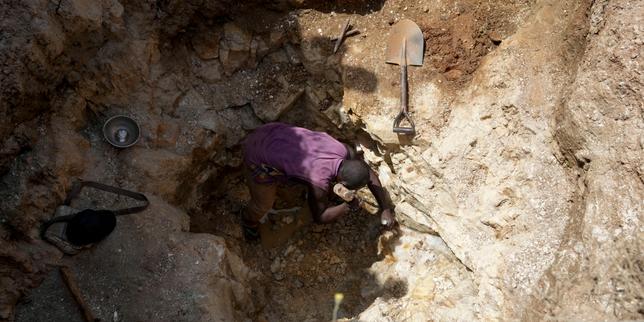
Every electric vehicle rolling off an assembly line today depends on a steady stream of white powder. Lithium sits at the center of the global transition to green energy. While countries rush to lock down supply chains in Chile, Australia, and China, a different kind of scramble is playing out across the Sahel.
Politologist and researcher Bradley Mortin recently highlighted a dark side to this green rush. Armed groups and criminal networks across the Sahel are tapping into lithium extraction to fund their operations. Instead of bringing economic stability, the scramble for critical minerals is fueling insurgency and conflict in fragile states.
The Green Transition Meets a Security Crisis
The International Energy Agency projects continuous growth in global lithium demand. Automakers and tech giants need batteries, and they need them now. Africa has seen massive spikes in mineral output to meet this hunger. Yet, large portions of the Sahel operate outside strict central government control.
When valuable resources sit beneath the soil in ungoverned or contested spaces, militant factions move in fast. Insurgents don't just tax traditional smuggling routes anymore. They muscle their way directly into the informal mining economy. They extract rents from local diggers, tax transport trucks, and sometimes run extraction sites themselves.
How Criminal Networks Cash In on Critical Minerals
Control over territory means control over trade. In regions where state authority is weak, armed factions act as shadow regulators. They collect protection money from artisanal miners who dig for lithium by hand using rudimentary tools.
Smugglers then move the raw ore across porous borders to avoid export taxes and international scrutiny. Once across these borders, the mineral enters global supply chains, losing its dirty origin story along the way. Multinational corporations buying refined battery components often have zero visibility into whether the raw material started in an artisanal pit controlled by violent extremists.
The Limits of State Control
Many Sahelian governments face massive security pressures, leaving them ill-equipped to police remote mining regions. Military regimes in countries like Mali, Burkina Faso, and Niger grapple with widespread insurgencies daily. Securing every remote lithium deposit is practically impossible when state forces are spread thin protecting urban centers and major transit corridors.
Foreign powers stepping into the region often focus heavily on military assistance or securing formal mega-mines. But formal security frameworks miss the dispersed, artisanal nature of informal lithium extraction. Artisanal and small-scale mining spreads across vast, empty expanses. Criminal networks thrive precisely in these hidden gaps.
Breaking the Cycle of Resource Curse
Transforming lithium from a conflict commodity into a driver of legitimate development requires more than corporate compliance checklists. International buyers must demand strict traceability standards that account for artisanal production realities. Without transparency, the green energy transition in Western capitals directly bankrolls violence on the ground in West Africa.
The danger is clear. If local populations see critical minerals bring only war and exploitation rather than prosperity, the social fabric of the region will fracture further. Fixing this starts with acknowledging that modern batteries carry a heavy human and security toll far down the supply chain.