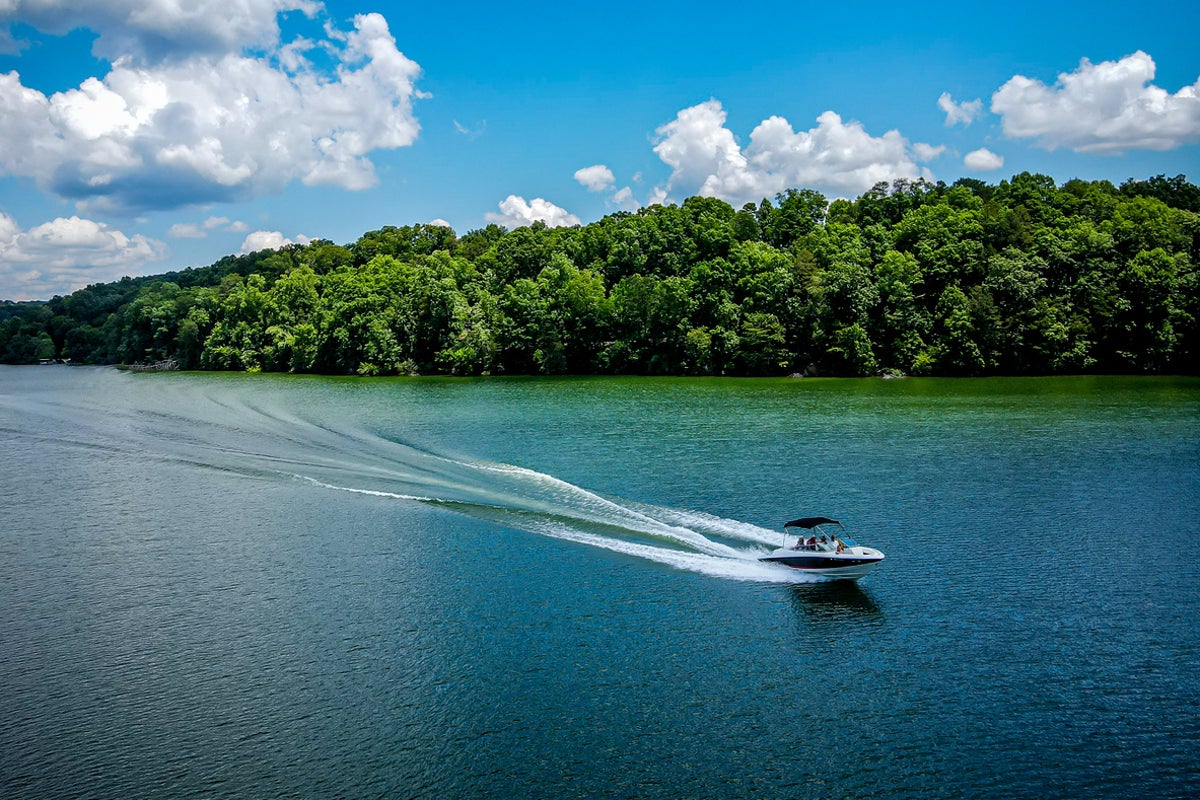
The fiberglass hull chops through the wake, hitting the water with a dull, heavy thud that vibrates straight through the soles of your shoes. If you close your eyes, the smell is exactly what you remember from childhood. Sunscreen baking on hot vinyl. Two-stroke engine exhaust drifting over the transom. The sharp, clean bite of open water.
For generations of Americans, this specific sensory cocktail was the ultimate marker of freedom. You worked forty, fifty, sixty hours a week under fluorescent lights just to buy your way onto the water for forty-eight hours. The boat ramp on a Saturday morning was a sacred space, chaotic and loud, a democratic arena where mechanics, corporate lawyers, and construction foreman backed their rigs into the green water side by side. Also making waves lately: Why San Francisco Destroyed Its Historic Lake Merced Gun Club.
Then came the numbers at the pump.
This summer, a quiet tension hangs over the marinas and boat launches from the Great Lakes to the Florida Keys. The price of marine fuel has crept up to a point where a standard fill-up no longer feels like a routine transaction. It feels like a second mortgage payment. For a family owning a modest twenty-four-foot center console with a twin-engine setup, topping off a one-hundred-gallon tank can easily clear five hundred dollars. Do that twice a week, and the math becomes brutal. More insights on this are detailed by Apartment Therapy.
So, the American boater is rewriting the rules of the weekend. They aren't selling their boats. Giving up the water feels too much like giving up a piece of the soul. Instead, they are adapting with a mix of stubborn ingenuity and calculated frugality. The era of the endless cruise is giving way to something new.
Call it the stationary summer.
Consider a hypothetical, yet entirely representative, boater named Marcus. Marcus lives twenty miles outside of Annapolis, Maryland. For the past decade, his routine rarely varied. Every Saturday morning in July and August, he would fire up his bowrider, pack a cooler with turkey sandwiches and sports drinks, and run thirty miles down the Chesapeake Bay to a secluded beach. It was a high-speed, high-energy ritual.
This year, Marcus faces a different reality. The math is simple, cold, and unyielding. Running that distance at thirty-five knots burns roughly fifteen gallons of fuel per hour.
Marcus hasn't abandoned the bay. But his behavior has radically shifted. Now, he launches the boat, drives exactly three miles to the nearest sheltered cove, drops a heavy galvanized anchor, and shuts the engine down.
The boat has ceased to be a vehicle for exploration. It has become a floating island.
This shift from active cruising to "sandbar social hour" is reshaping the entire marine economy. Marina owners report that while their fuel docks are noticeably quieter, their slips and transient docks are packed to capacity. Boaters are arriving on Friday night, tying up, and staying put. They are trading the thrill of open-water speed for the slower, more deliberate pleasures of a fixed location.
The change requires a psychological pivot. For decades, the boating industry marketed speed and distance. Advertisements showed gleaming vessels slicing through pristine ocean waves, kicking up massive walls of white spray as they raced toward the horizon. The unstated promise was that success meant moving fast.
But when moving fast costs five dollars a mile, speed loses its luster.
Now, the focus has turned inward, toward the micro-experience of the vessel itself. Boaters are investing in upgrades that make staying stationary more comfortable. High-end marine audio systems, premium coolers that hold ice for a week, and elaborate canvas shade extensions are flying off the shelves. If you are going to spend eight hours sitting in one spot, you want that spot to feel like a luxury resort.
The sandbars themselves have transformed into floating neighborhoods. Raft-ups—where multiple boats tie up side-by-side to create a massive, interconnected wooden and fiberglass playground—have grown in size and complexity. On any given Sunday in places like the flats off Key West or the shallow bays of Lake Michigan, hundreds of vessels now lock together.
Children jump from bow to bow. Grills are clamped onto stern railings, searing burgers over the water. Neighbors who used to pass each other at thirty miles an hour with a brief, polite wave are now sharing guacamole and talking about their kids' college plans.
There is an unexpected beauty in this forced deceleration. By shrinking their geographical footprint, boaters are expanding their community footprint. The high cost of fuel has inadvertently cured the isolation of the open water.
Still, the underlying anxiety remains. This shift is born of necessity, not purely of choice. The modern boat owner is engaged in a delicate balancing act, constantly calculating the invisible stakes of their leisure time.
The pressure is felt most acutely by families who rely on the water for a sense of connection. In a world dominated by algorithms, screens, and relentless notifications, a boat was the last place where a teenager couldn't easily walk away from a conversation. You were locked in together, bound by the perimeter of the hull.
Parents are fiercely protective of that space. They will cut back on restaurant meals, delay home renovations, and skip traditional vacations just to keep the boat registered and wrapped. The weekend on the water is the hill they are willing to die on, financially speaking.
To make the budget work, many are turning to meticulous fuel management strategies that read like advanced fluid dynamics homework. The old habit of slamming the throttle forward and letting the bow rise into the sky is gone.
Instead, captains are obsessed with finding the exact "sweet spot" of their hull's planing efficiency. They watch the digital gauges with hawkish intensity, tweaking the trim tabs by fractions of an inch to lower the engine RPMs while maintaining speed. They are cleaning the growth off the bottom of their boats more frequently, knowing that even a light film of algae creates drag that robs them of fuel economy.
Others are changing how they use power altogether. A quiet revolution is happening in the auxiliary market. Sales of small, portable solar panels designed for marine use have surged. Boaters use them to keep their house batteries charged while anchored, running the stereo, the refrigerators, and the livewells without needing to idle the main engine or run a noisy, gas-guzzling generator.
The landscape of American recreation has always been shaped by economic friction. The station wagon trips of the 1970s shrank when the oil crises hit. The sprawling suburban amusement parks felt the pinch during the housing crash of 2008. Now, it is the maritime weekend's turn to adapt.
As the sun begins to dip below the tree line on a warm July evening, the scene at the boat ramp tells the story of this transition better than any spreadsheet.
The line of trucks waiting to pull trailers out of the water moves with its usual rhythmic, practiced choreography. A man in a faded salt-stained hat guides his center console onto the rollers. His skin is tanned, his kids are asleep on life jackets in the back of the truck, and his wife is organizing the empty cans in the recycle bin.
He didn't go far today. He didn't see the outer reefs, and he didn't burn through a single tank of gas. His GPS track for the day looks like a tiny, tight knot just a mile from the dock rather than a grand, sweeping arc across the ocean.
But as he cranks the winch line tight and secures the safety chain, he looks back at the water with a quiet, unmistakable satisfaction. The day was different than it used to be. It was shorter, slower, and closer to home.
Yet, the water was just as blue. The air was just as warm. The family was still together, floating on a tiny piece of the world that belonged entirely to them, refusing to let the horizon drift out of reach.