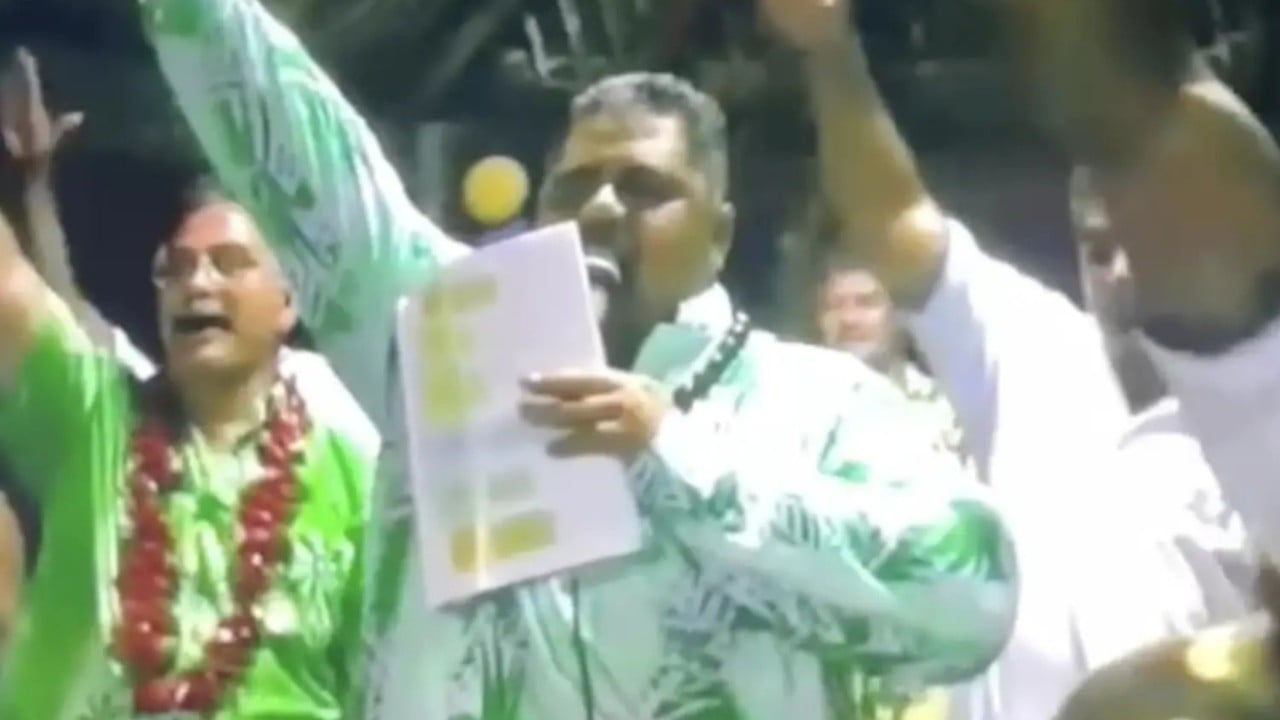
Political scandals rarely age well, but some resurface from decades past with bizarre contradictions that defy easy explanation. When a video from 2007 leaked showing Samoa Prime Minister Laʻauli Leuatea Schmidt performing a Nazi salute and shouting "Heil Hitler" at a family gathering, it sent shockwaves through international media. For a leader who famously wrapped himself in a Jewish prayer shawl and entered his 2025 swearing-in ceremony to the sound of a ceremonial shofar horn while declaring total political support for Israel, the footage created an immediate crisis of credibility.
If you are wondering how a staunchly pro-Israel Pacific leader ends up apologizing for a fascist slogan recorded nearly twenty years prior, the answer sits at the intersection of private carelessness, historical ignorance, and high-stakes local politics.
The Anatomy of a Leaked 2007 Video
The footage didn't emerge from a deep investigative probe into government archives. It surfaced via the Samoa Observer, a local media outlet currently locked in a bitter feud with the sitting administration. Schmidt’s government had previously barred the publication from covering official news conferences and events following disputes over coverage. Publishing the clip felt like a calculated counterstrike.
In the short clip, Schmidt stands among family members holding a microphone. He directs the group to raise their right hands and repeats the infamous Nazi phrase.
When the video broke publicly, the political fallout was swift. Schmidt issued an apology, distancing himself entirely from the ideology captured on tape. He explicitly rejected nazism, antisemitism, racism, and political extremism of every variety. Yet, his statement left crucial gaps, offering no context on what prompted the toast or why anyone present thought mimicking a fascist dictator was acceptable entertainment.
The Pro-Israel Paradox and Public Backlash
What makes this scandal particularly jarring for political observers is Schmidt's recent public posture. Upon taking office in 2025, he made distinct gestures toward Jewish tradition and Israeli state alignment. Wearing a tallit during his swearing-in and proclaiming that Samoa stands with the "holy land of God" signaled a deliberate diplomatic alignment.
Critics and commentators immediately pointed out the glaring disconnect. How could a head of government who actively courts ties with Israel and adopts Jewish religious symbols participate in such blatant antisemitic play-acting?
The incident highlights a troubling global phenomenon where historical symbols of mass atrocities are stripped of their historical weight in distant regions, treated instead as edgy shock value or casual jokes without realizing the severe offense they cause. For Pacific island nations with little to no local Jewish community or direct historical connection to the Holocaust, education surrounding twentieth-century European fascism is often abstract. That doesn't excuse a national leader, but it explains how casual historical appropriation happens behind closed doors.
Media Freedom Wars in Samoa
Beyond the moral failure of the gesture itself, the scandal exposed deep fractures in Samoa's domestic press freedom. The fact that the incriminating video was brought to light by the Samoa Observer—a paper actively frozen out by Schmidt's office—turned the leak into a proxy war over censorship and government accountability.
When leaders weaponize state access against independent newspapers, they rarely anticipate that archives or old personal media will be used to retaliate. The leak weaponized public embarrassment against a leader who tried to control the national narrative by silencing critical journalists.
Schmidt attempted to draw a line under the controversy by declaring the matter addressed, pushing his administration to refocus on pressing economic and social hurdles facing the island nation. But public trust is fragile. While an apology satisfies formal diplomatic protocol, the lingering images from that 2007 family gathering will likely shadow his administration for the remainder of his term.


